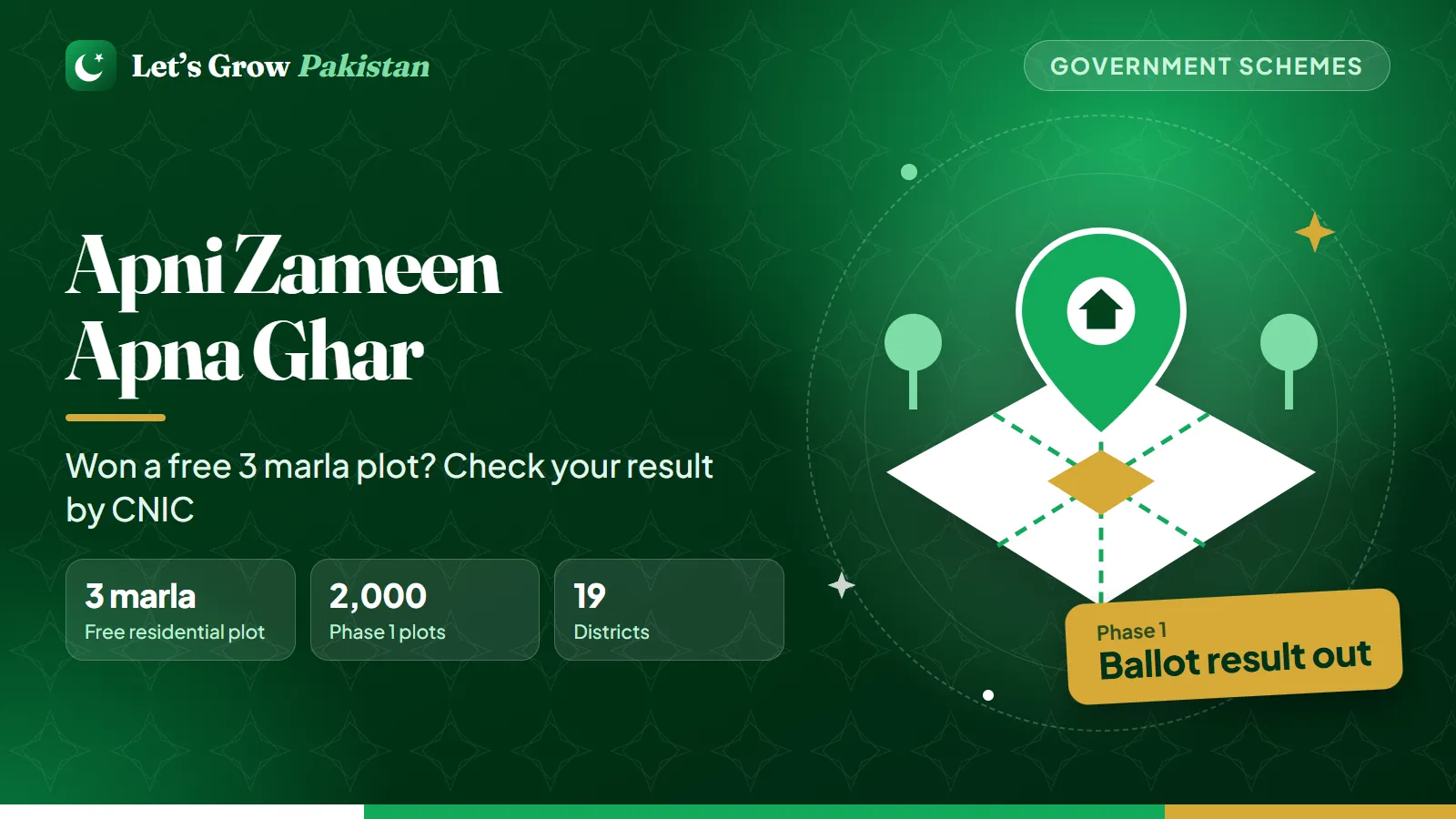
Apni Zameen Apna Ghar balloting result, check by CNIC
Apni Zameen Apna Ghar checked 14 November 2026: ballot result by CNIC, free 3 marla plots in 19 Punjab districts, quota list, plot rules and phase 2 status.
6 min readGovernment schemes
169 listed
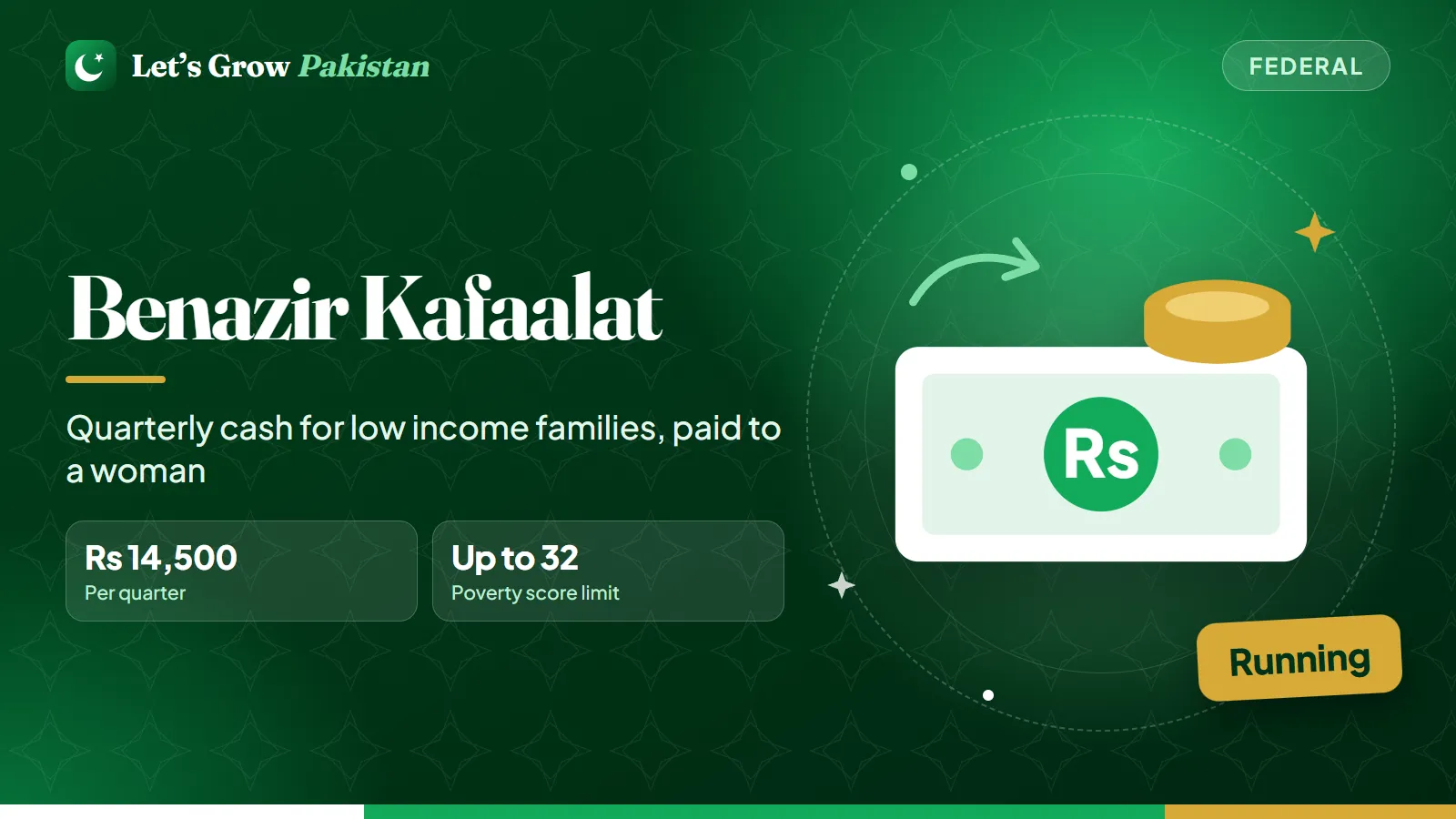
Benazir Kafaalat gives low income families quarterly cash, paid to a woman of the household. The payment is Rs 14,500 a quarter, up from Rs 13,500.
BISP is moving payments onto SIMs and digital bank accounts for its beneficiaries. The aim is that they can draw their money, in full or in part, from any bank without agents.
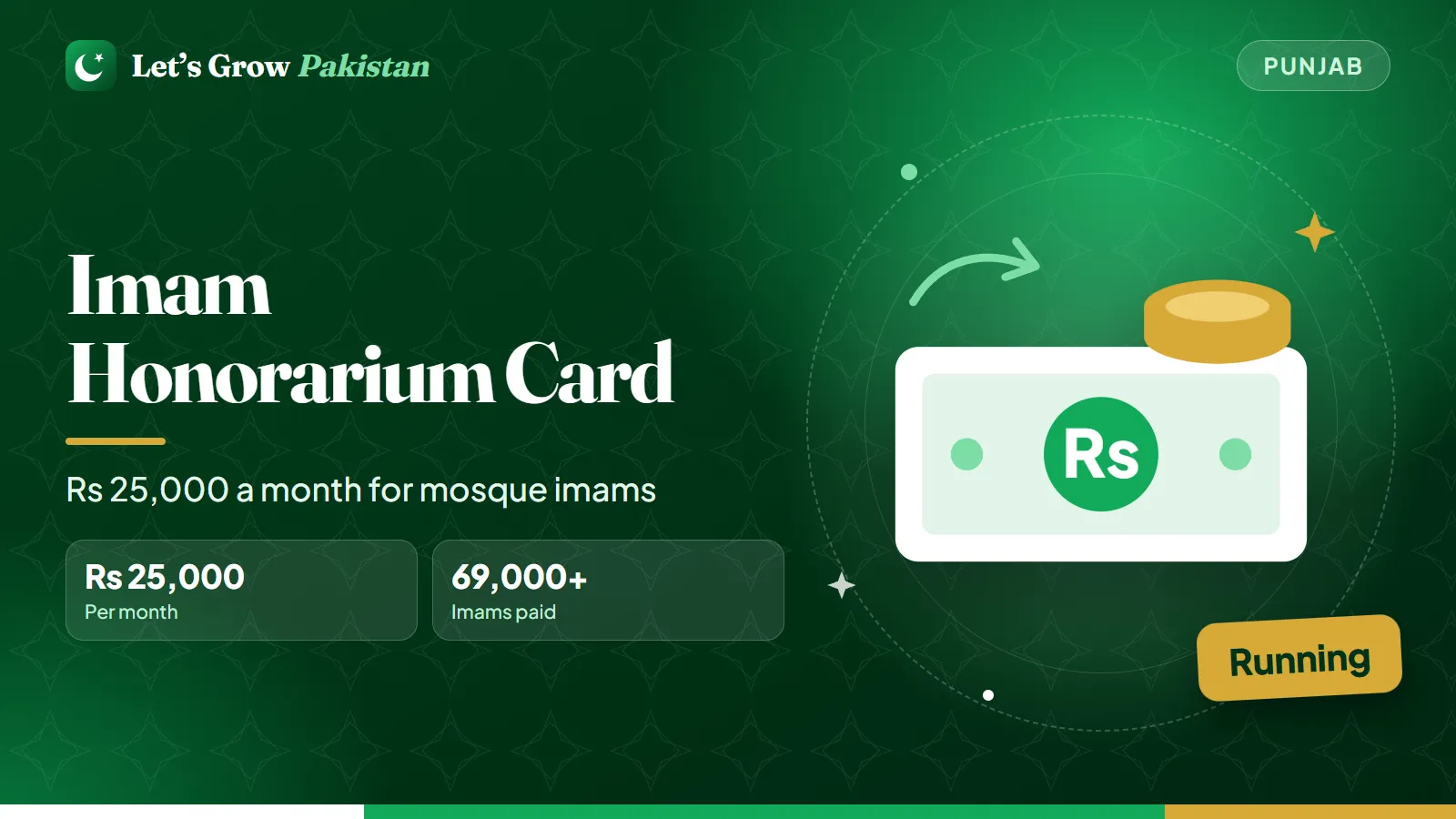
Rs 25,000 a month for the serving imam of each registered mosque in Punjab, paid on a Bank of Punjab card since January 2026. Over 69,000 imams are paid. Registration runs through the assistant commissioner, with security vetting.
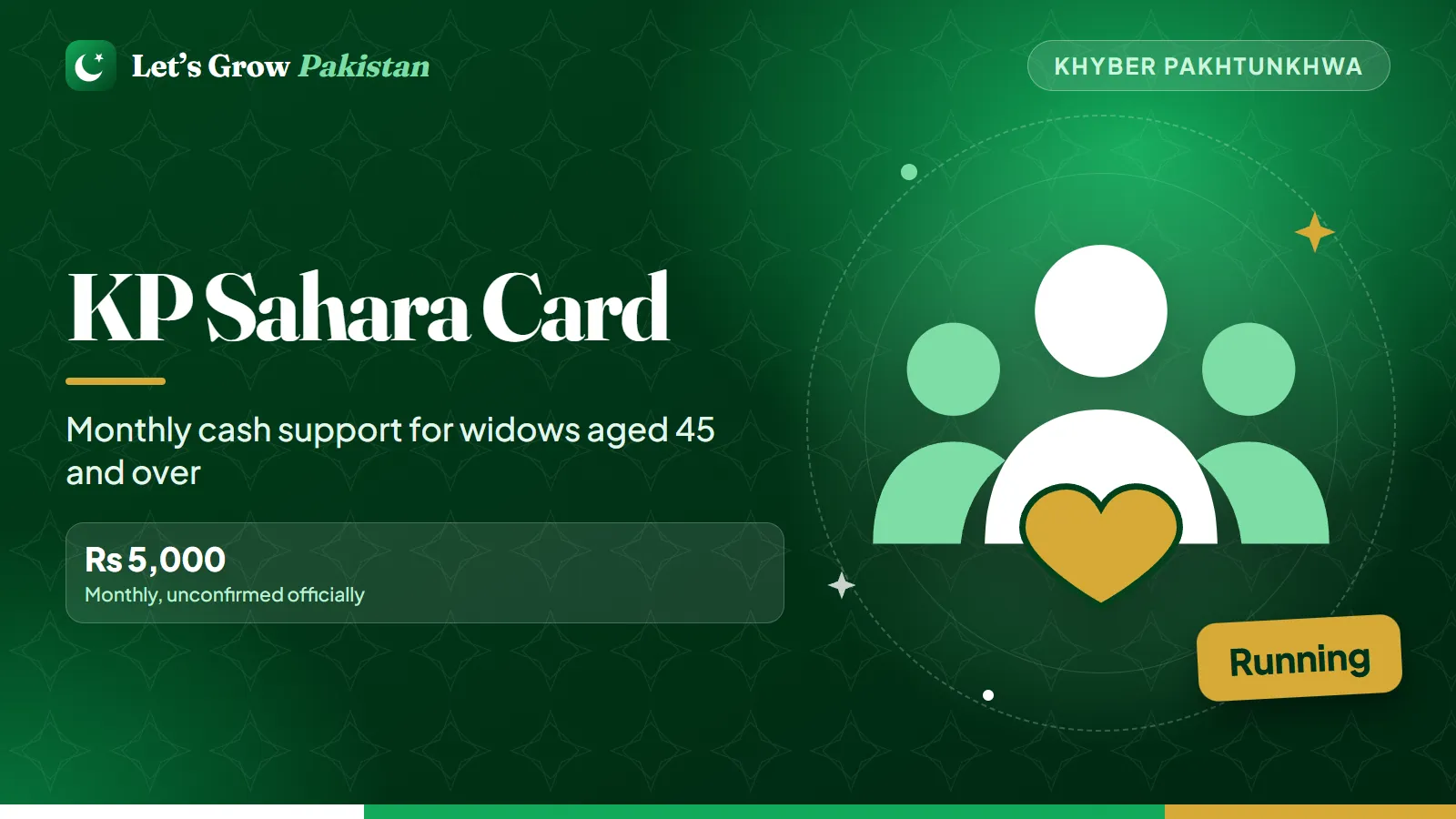
Widows aged 45 and over in Khyber Pakhtunkhwa receive Rs 5,000 a month, chosen on merit. Some reports say Rs 10,000, so the exact amount needs official confirmation.
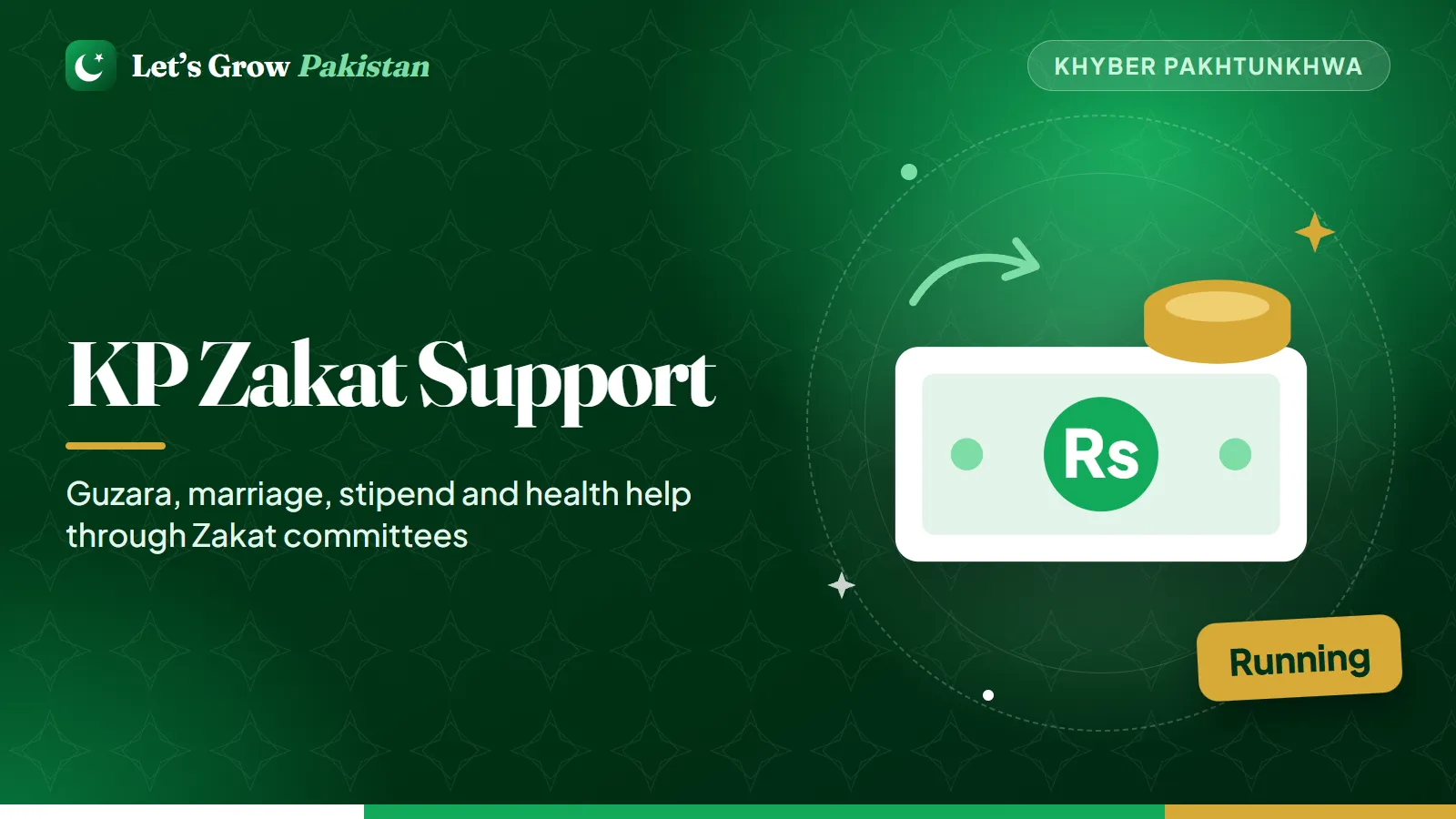
District and local Zakat committees in Khyber Pakhtunkhwa help deserving people with guzara, marriage aid, education stipends and health costs. The old guzara rate was Rs 1,000 a month; no current rate was found.
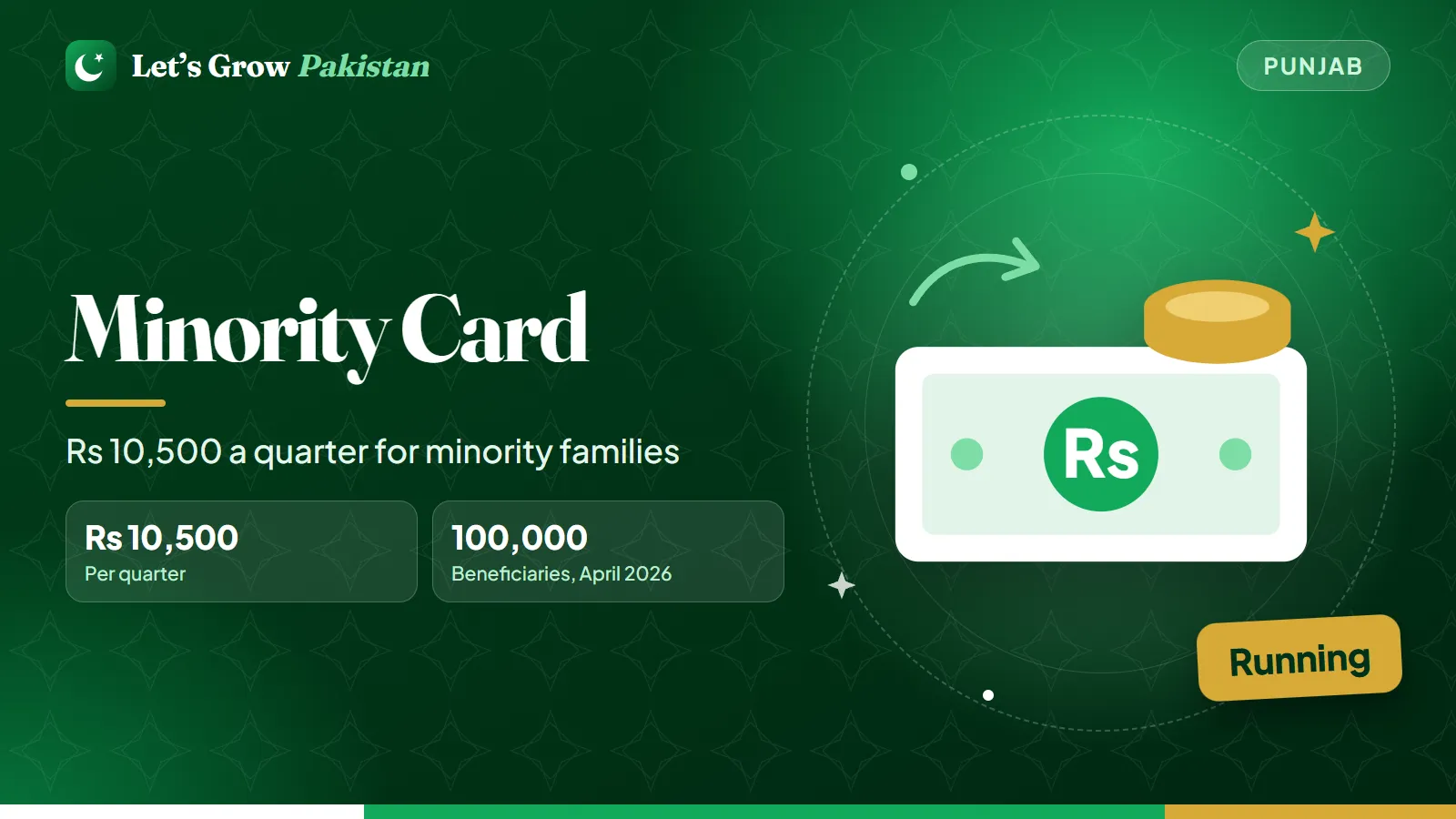
Rs 10,500 every quarter for Christian, Hindu, Sikh and other minority families in Punjab, paid to the head of the family on a Bank of Punjab card. The family needs a PMT score of 45 or less. The 2026 registration closed on 5 June.
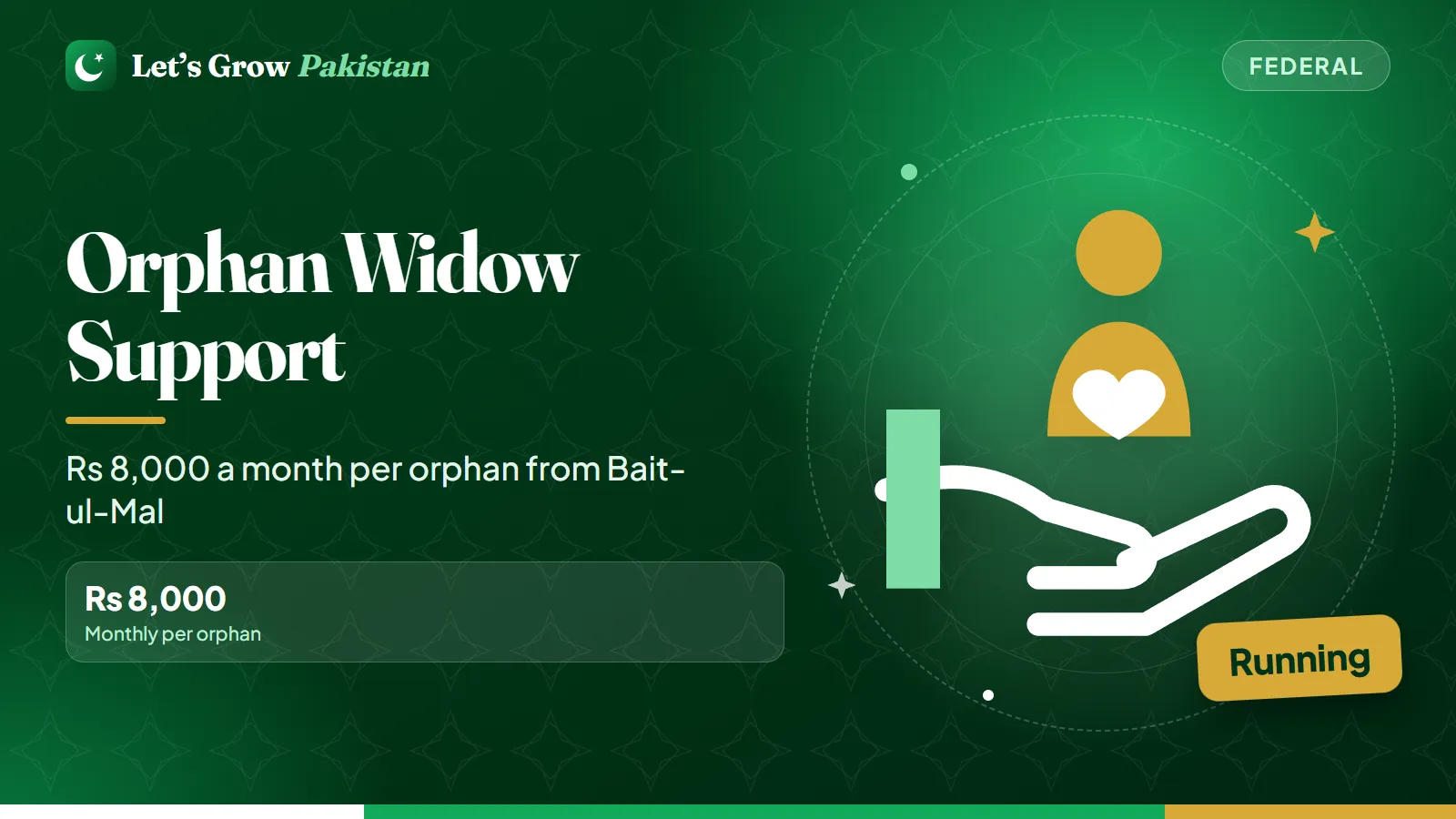
Pakistan Bait-ul-Mal supports orphans and widows with a regular monthly allowance. Each orphan receives Rs 8,000 a month from the programme.
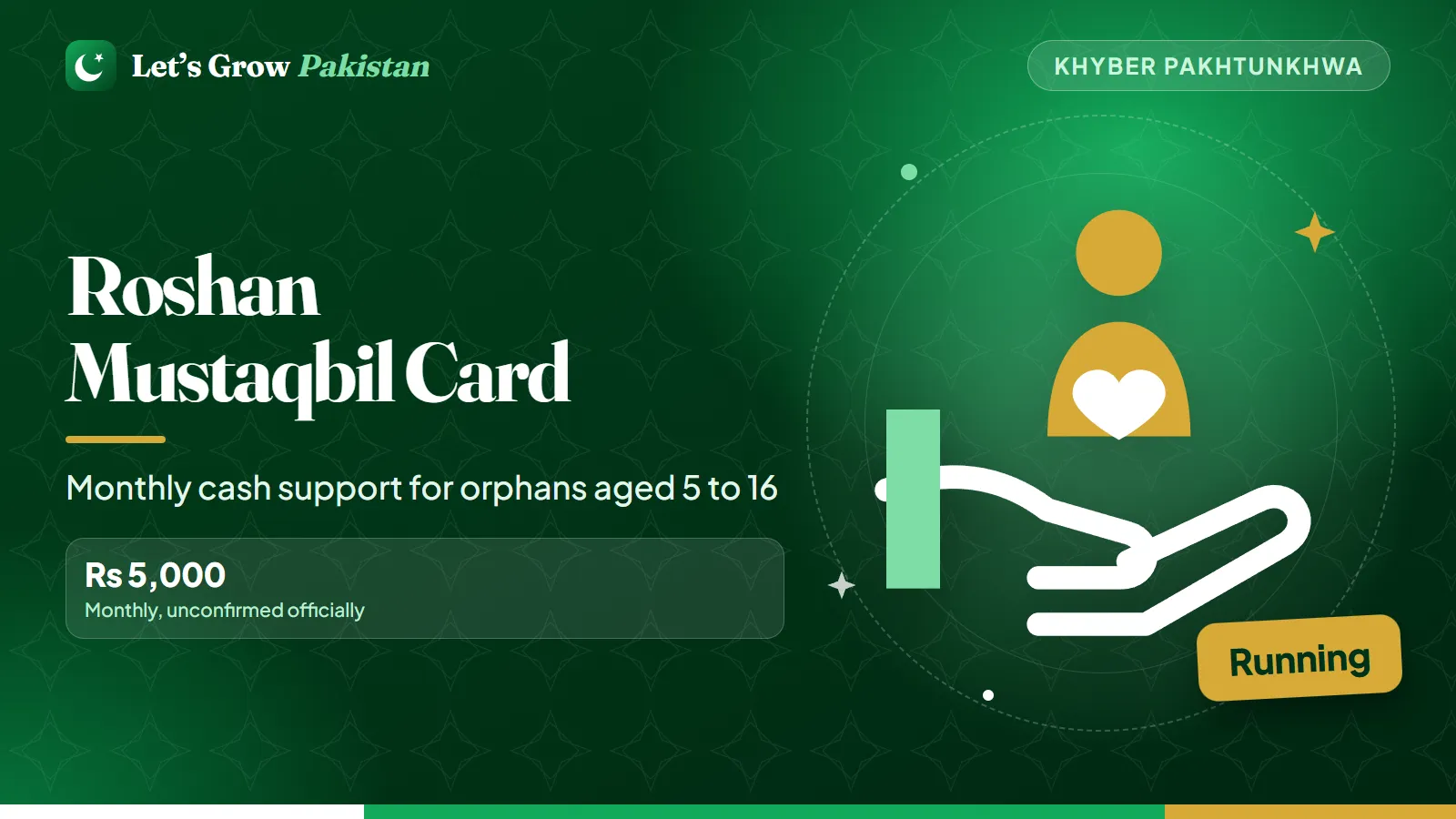
Orphans aged 5 to 16 in Khyber Pakhtunkhwa receive Rs 5,000 a month, selected on merit. Some reports give Rs 10,000, so the amount should be confirmed with the Zakat Department.
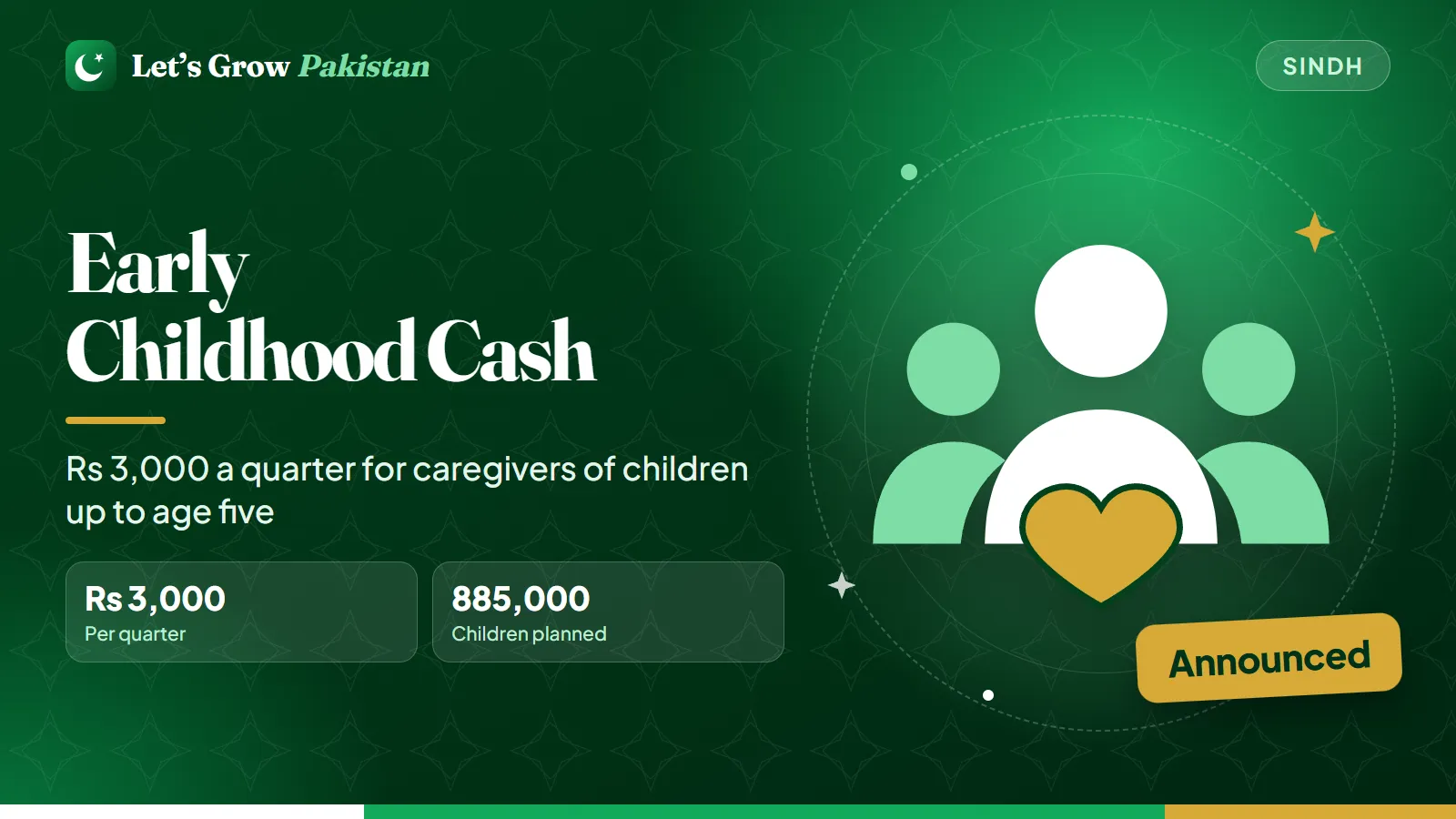
A planned Sindh cash programme paying Rs 3,000 a quarter to caregivers of 885,000 children up to age five, with a rural focus. It is funded by KfW and approved only on paper so far.
Zakat is collected federally and passed to the provinces by formula, and local committees pay it out. What it offers in 2026 is not confirmed, including the Guzara rate for Islamabad.
District and local Zakat committees in Islamabad that support deserving people. No 2026 rate has been found, and who qualifies and what is paid are not confirmed.
For registered transgender persons in Punjab: Rs 3,000 a month for the elderly, Rs 2,000 for the differently abled, loans up to Rs 100,000 and medical camps. It is unverified.
Relief payments by card for families hit by the 2025 floods in 27 districts of Punjab, such as Rs 1 million for a death and up to Rs 1 million for a destroyed concrete house.
A monthly stipend of Rs 5,000 for older Punjab artists, writers, poets and media people who are over 50 and have a low income. Its status is unverified, as the page is undated.
Local Zakat and Ushr committees in Sindh identify deserving people for a monthly guzara allowance of Rs 1,000 and an Eid package. No 2026 rate has been found, so current rules are unconfirmed.
Ehsaas Emergency Cash was a time limited cash programme run during COVID. It is closed and no one can join now, and the amounts paid are not confirmed here.
Ehsaas was the old brand for federal welfare and it no longer runs. Its programmes went back to Benazir names, so Ehsaas Kafaalat is now simply Benazir Kafaalat under BISP.
This was federal help after the 2025 floods, and it is now over. It waived one month of residential power bills and gave Rs 25,000 per family through BISP in some areas.
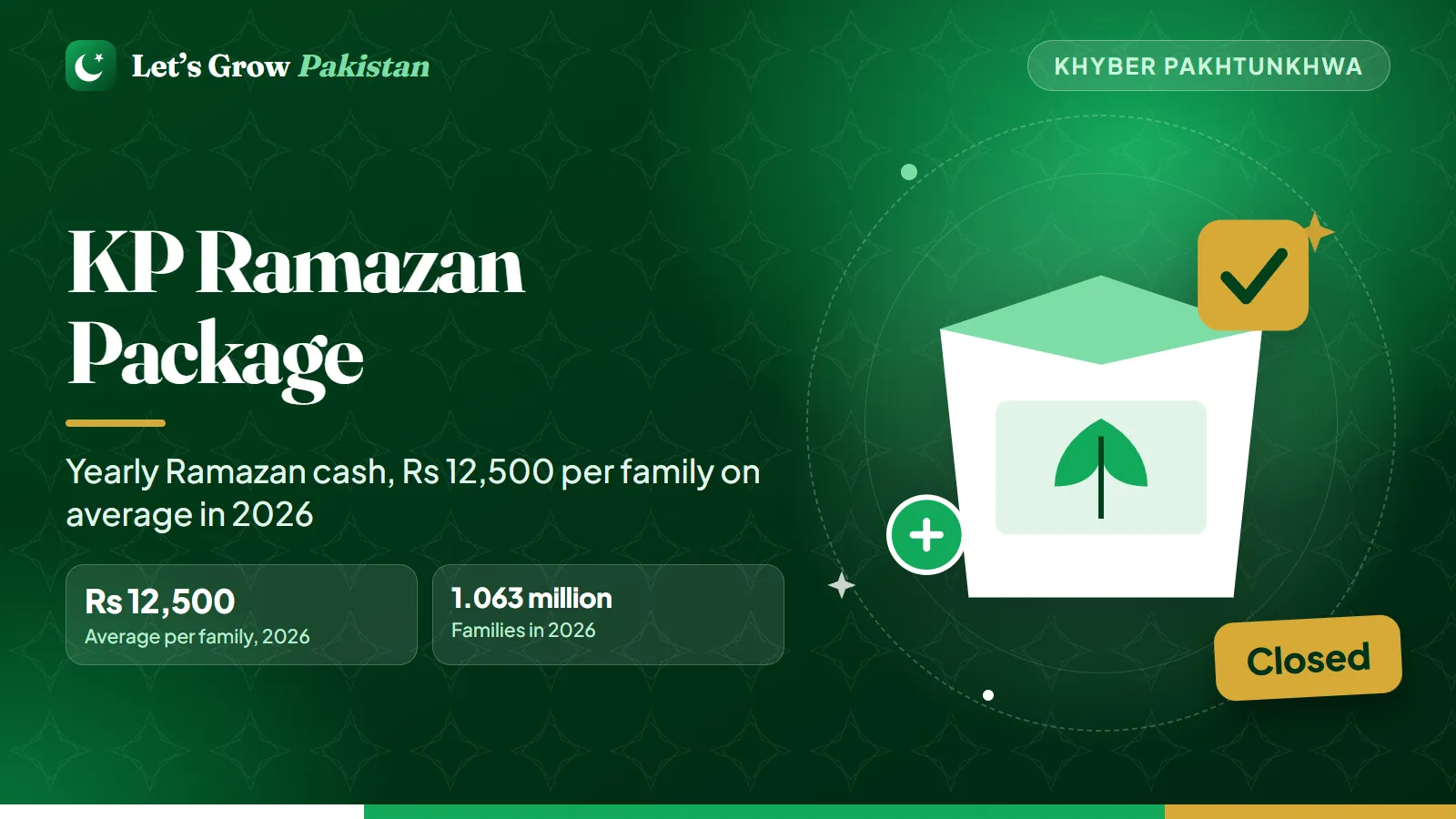
Khyber Pakhtunkhwa's yearly Ramazan cash package gave Rs 12,500 per family on average to 1.063 million families in 2026, about Rs 12 billion in all. That round has closed.
The Ramzan Relief Package is a seasonal cash payment to families, and it is closed until the next edition. In 2026 it paid Rs 13,000 per family, up from Rs 5,000 in 2025.
A seasonal Ramazan 2026 package that gave Punjab families Rs 10,000 on a Bank of Punjab card for essentials and cash. The Rs 47 billion package is now closed.
Sindh's 2024 Ramazan package gave Rs 5,000 in cash to selected families, at a total cost of about Rs 22 billion. It is closed, and no 2026 cash package has been confirmed.
Apna Ghar helps first time home buyers get a bank loan of up to Rs 10 million. The rate is 5% fixed for the first 10 years of a loan that can run up to 20 years.
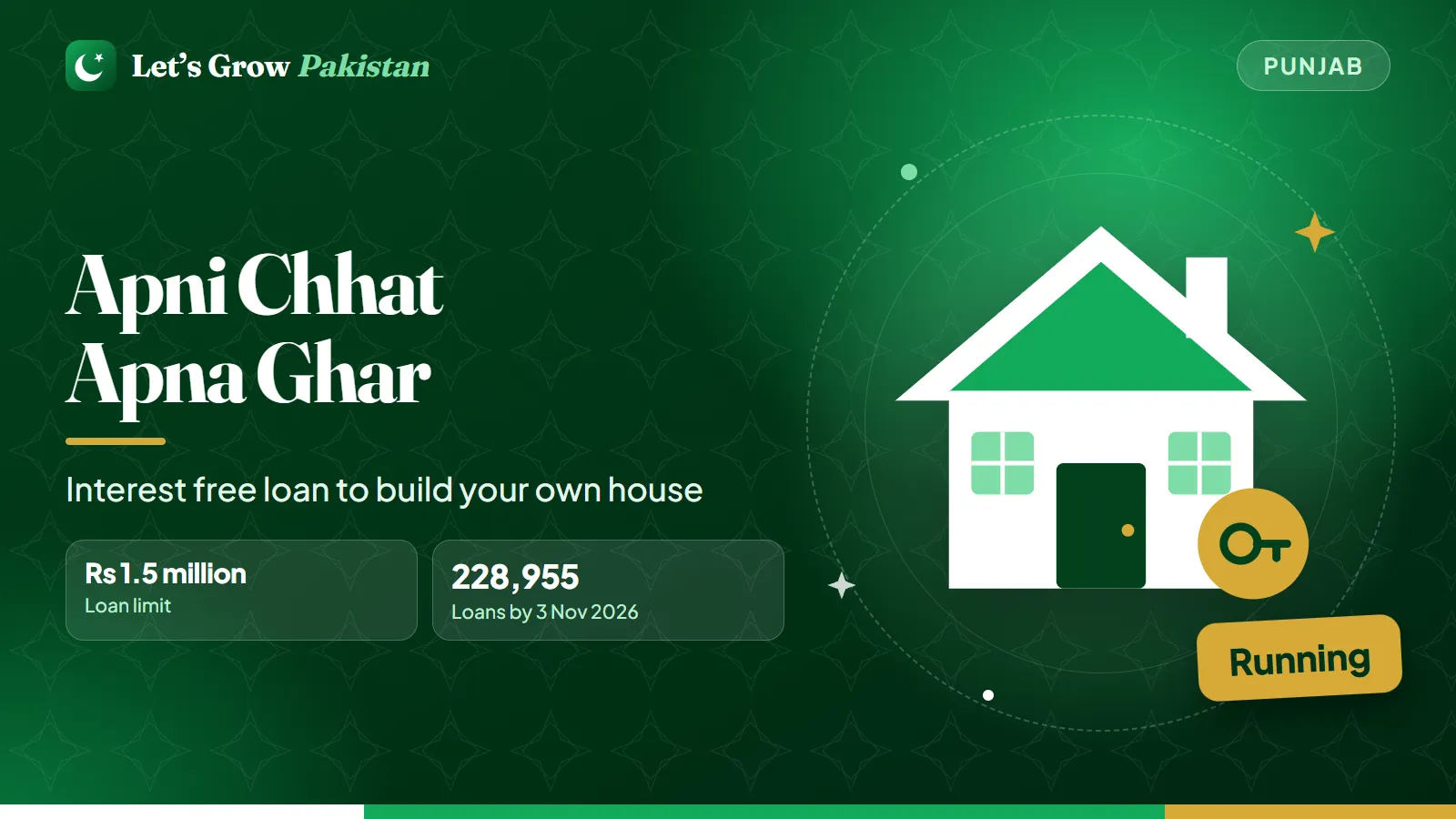
A Punjab government housing loan for people who own a small plot and want to build on it. It is interest free, up to Rs 1.5 million, and paid out in stages as construction moves ahead.
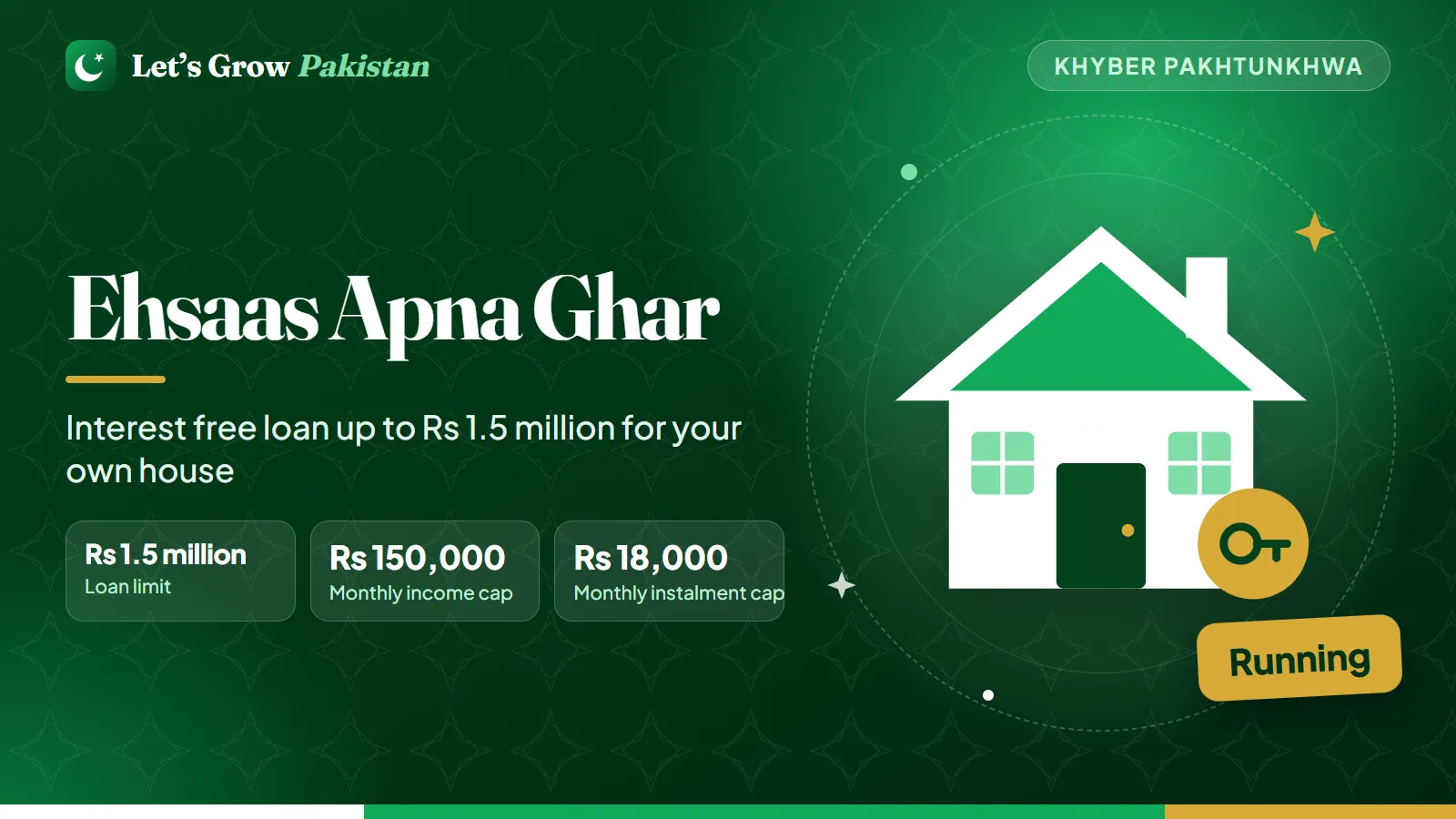
An interest free loan of up to Rs 1.5 million for KP residents to build, extend or repair a house on land they own. It is repaid over seven years, at no more than Rs 18,000 a month. Bank of Khyber handles the loans. Phase 2 was announced in April 2026 but had not opened by November.
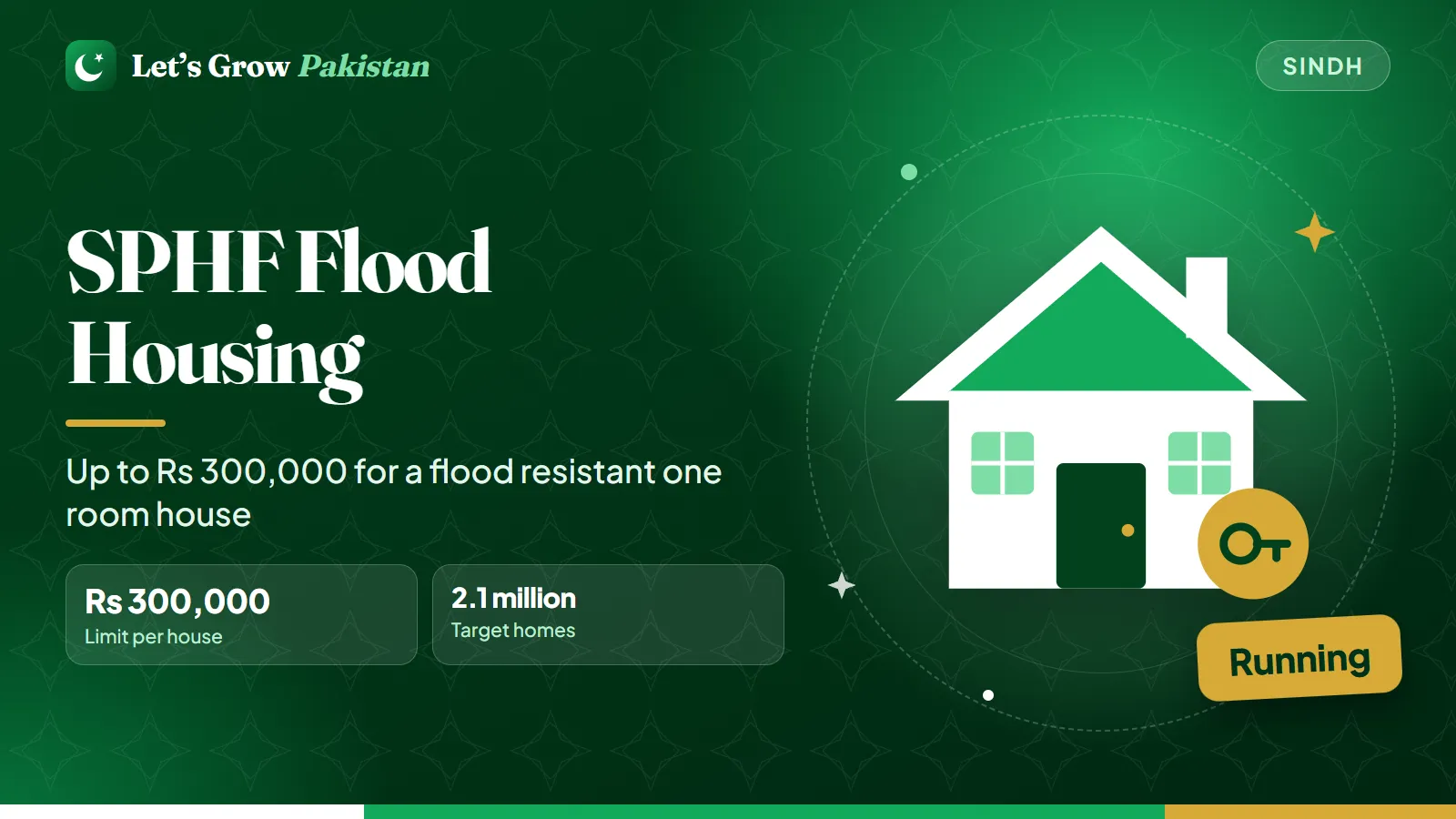
Sindh's housing programme for flood hit households offers up to Rs 300,000 for a one room flood resistant house, paid in four instalments. Land titles go to women heads of household.
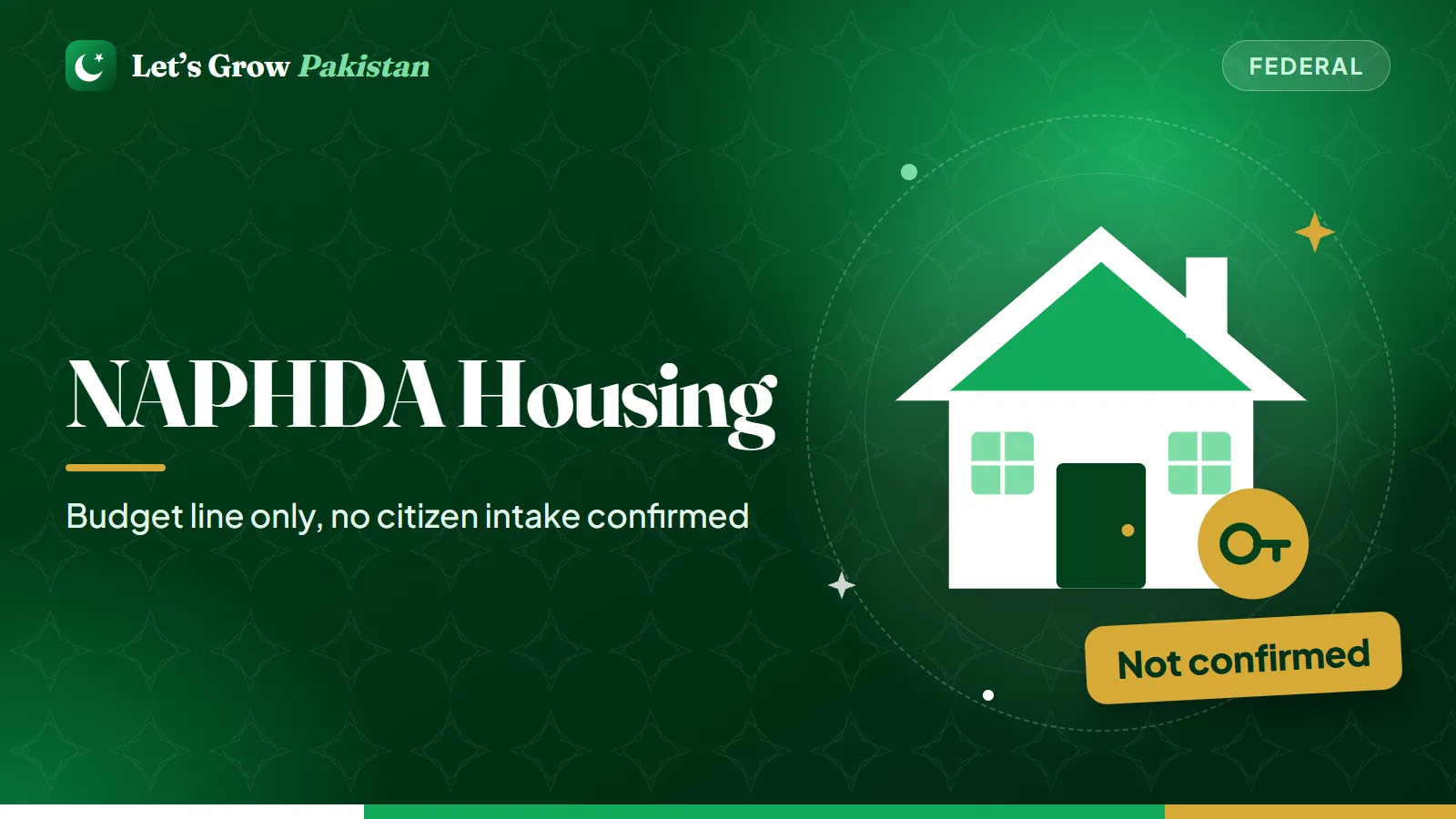
The Naya Pakistan Housing Authority appears in the federal budget with a Rs 1 billion subsidy. It is not confirmed that ordinary citizens can apply or receive any benefit.
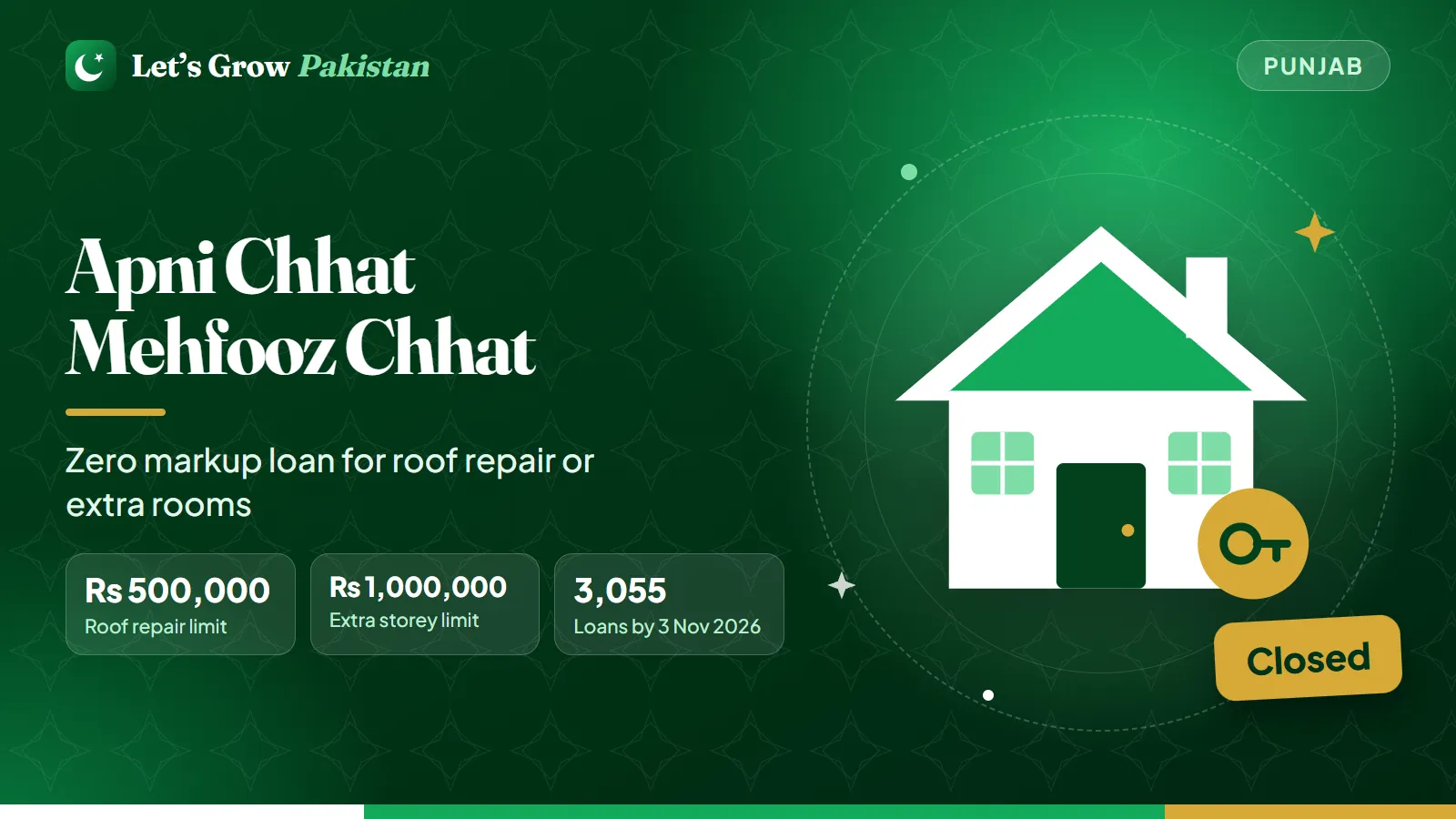
A Punjab loan with zero markup for people who already own a small house. It pays up to Rs 500,000 to make a weak roof safe or add a room, or up to Rs 1,000,000 for an extra storey. Applications were declared complete on 3 November 2026.
Mera Pakistan Mera Ghar was an older housing finance scheme. It is closed to new applicants, and the Apna Ghar programme has replaced it.
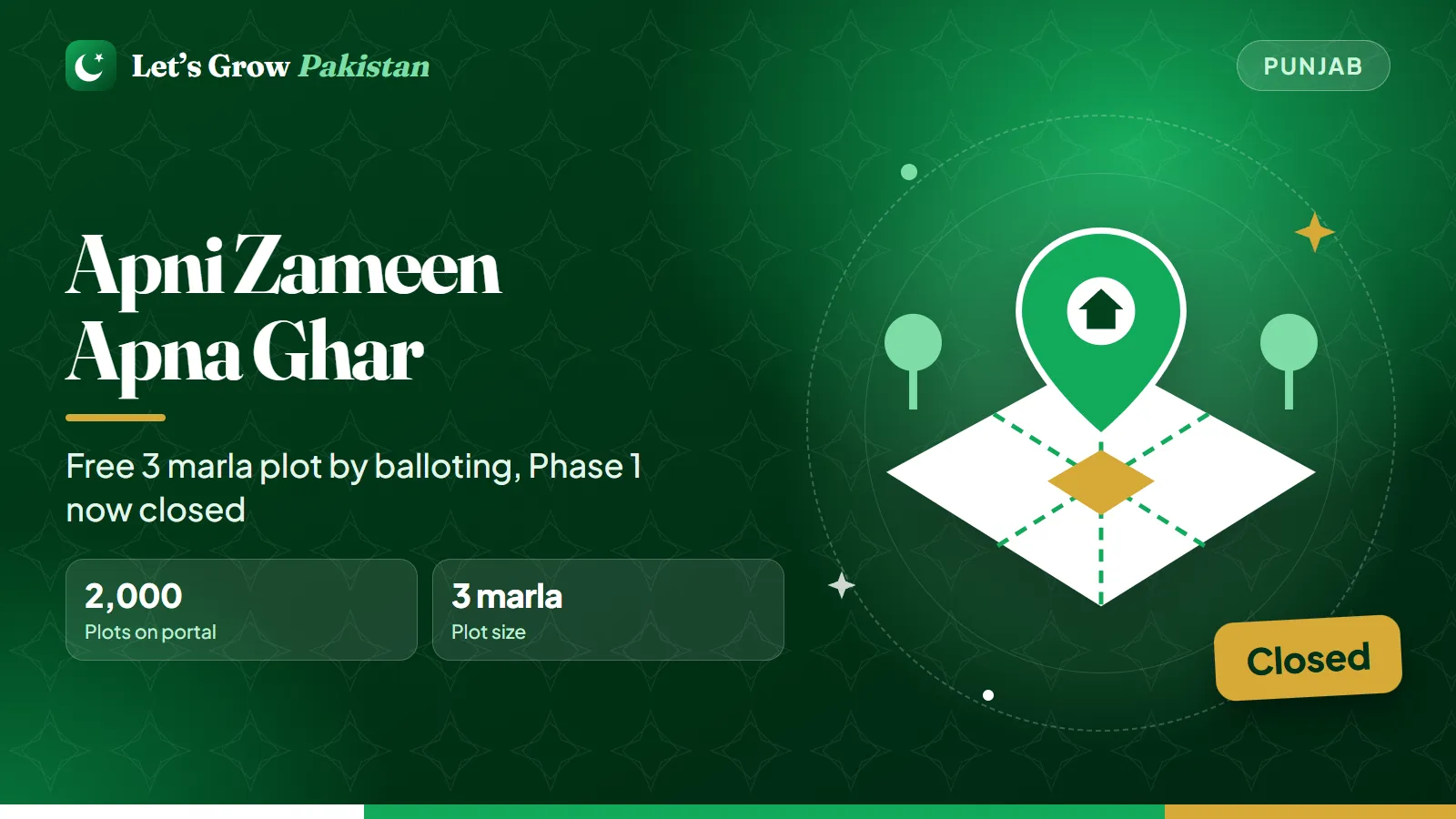
A Punjab plan to give landless families a free 3 marla residential plot by balloting in 19 districts. Phase 1 is now closed, and winners must build within set deadlines.
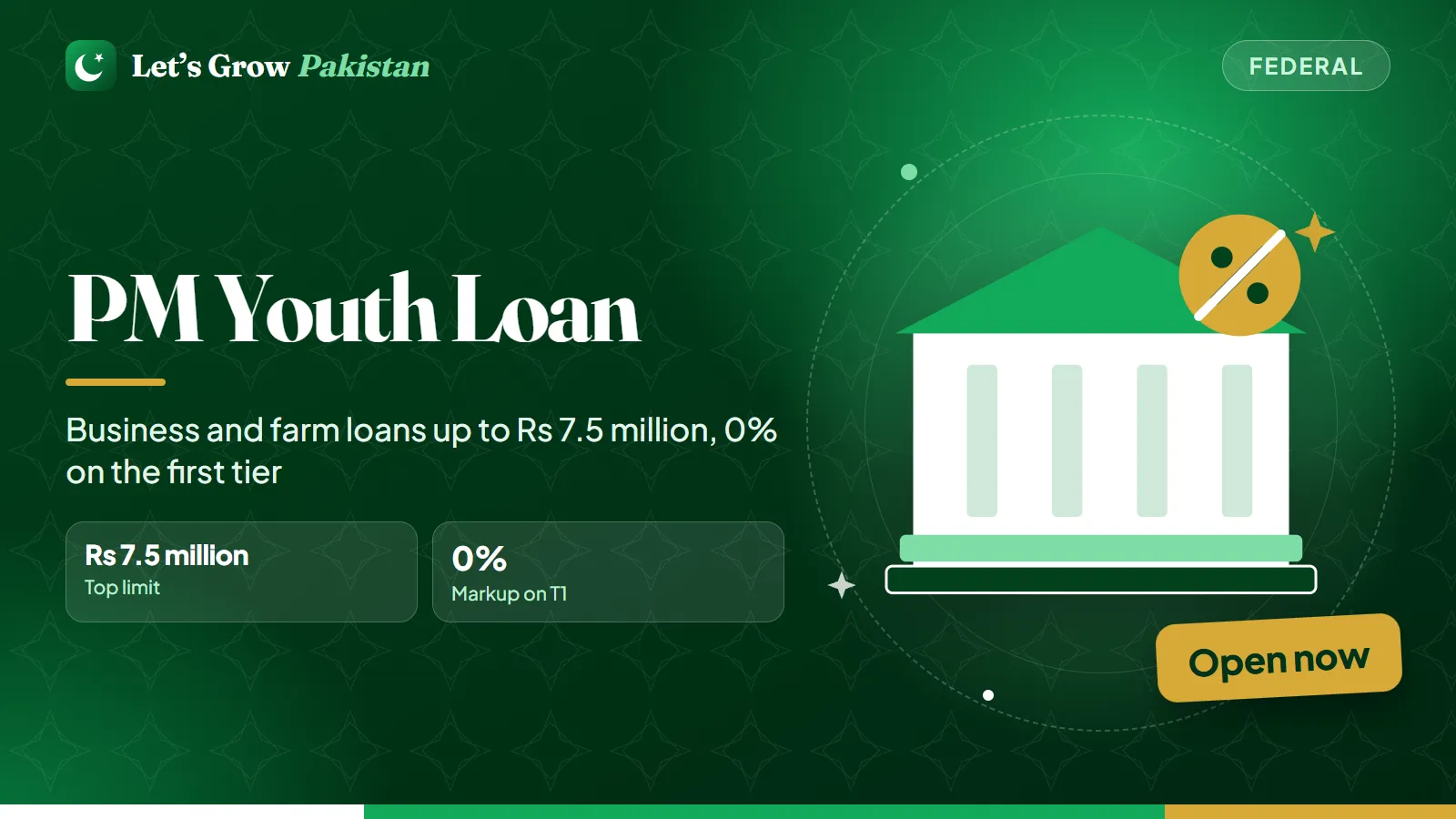
Young Pakistanis aged 21 to 45 can borrow for a business or farm, with loans up to Rs 7.5 million. The smallest tier, up to Rs 0.5 million, carries 0% markup.
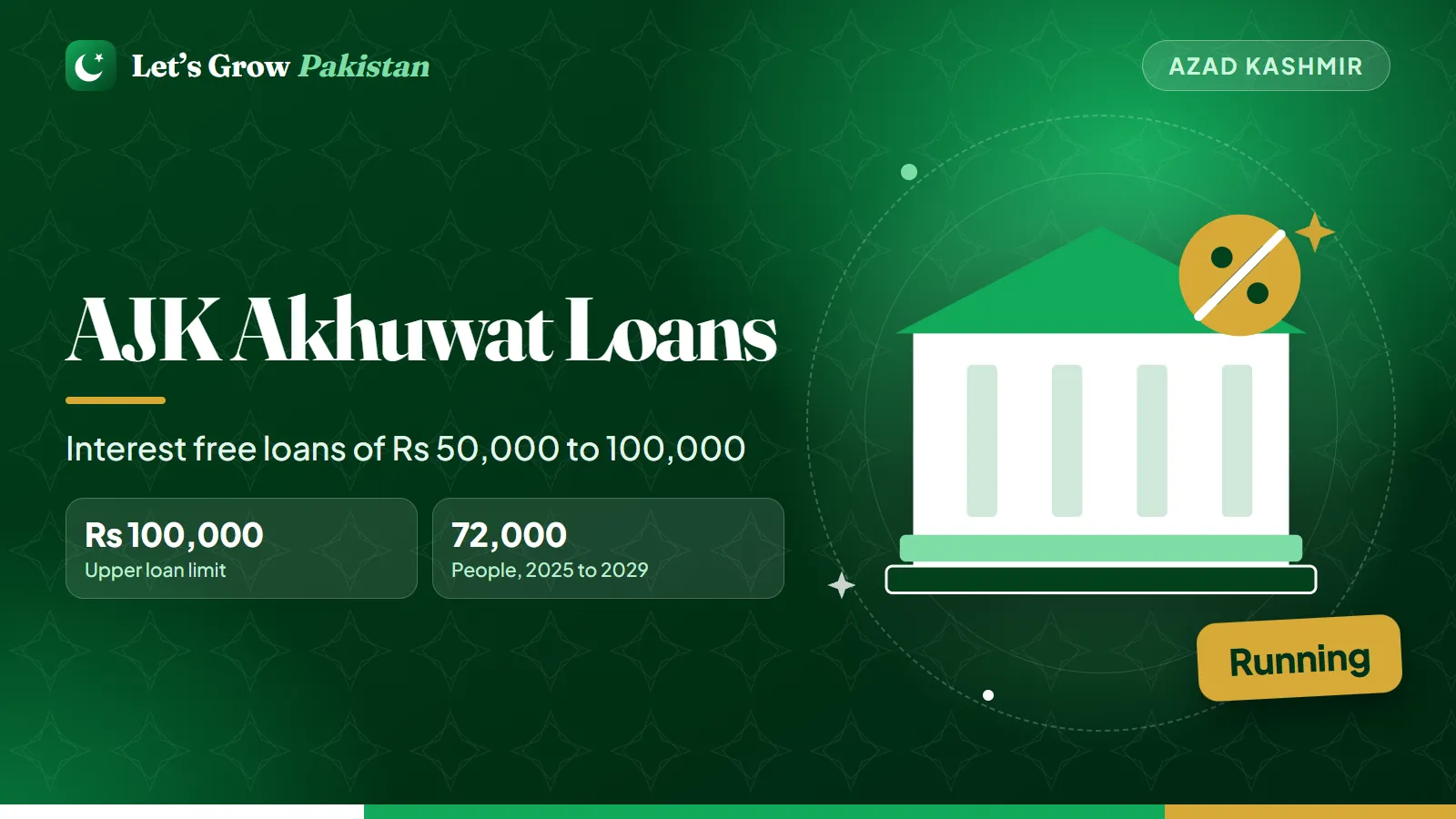
Azad Kashmir offers interest free loans of Rs 50,000 to 100,000 through Akhuwat. The plan covers 72,000 people from 2025 to 2029, and the latest budget funds 30,000 borrowers.
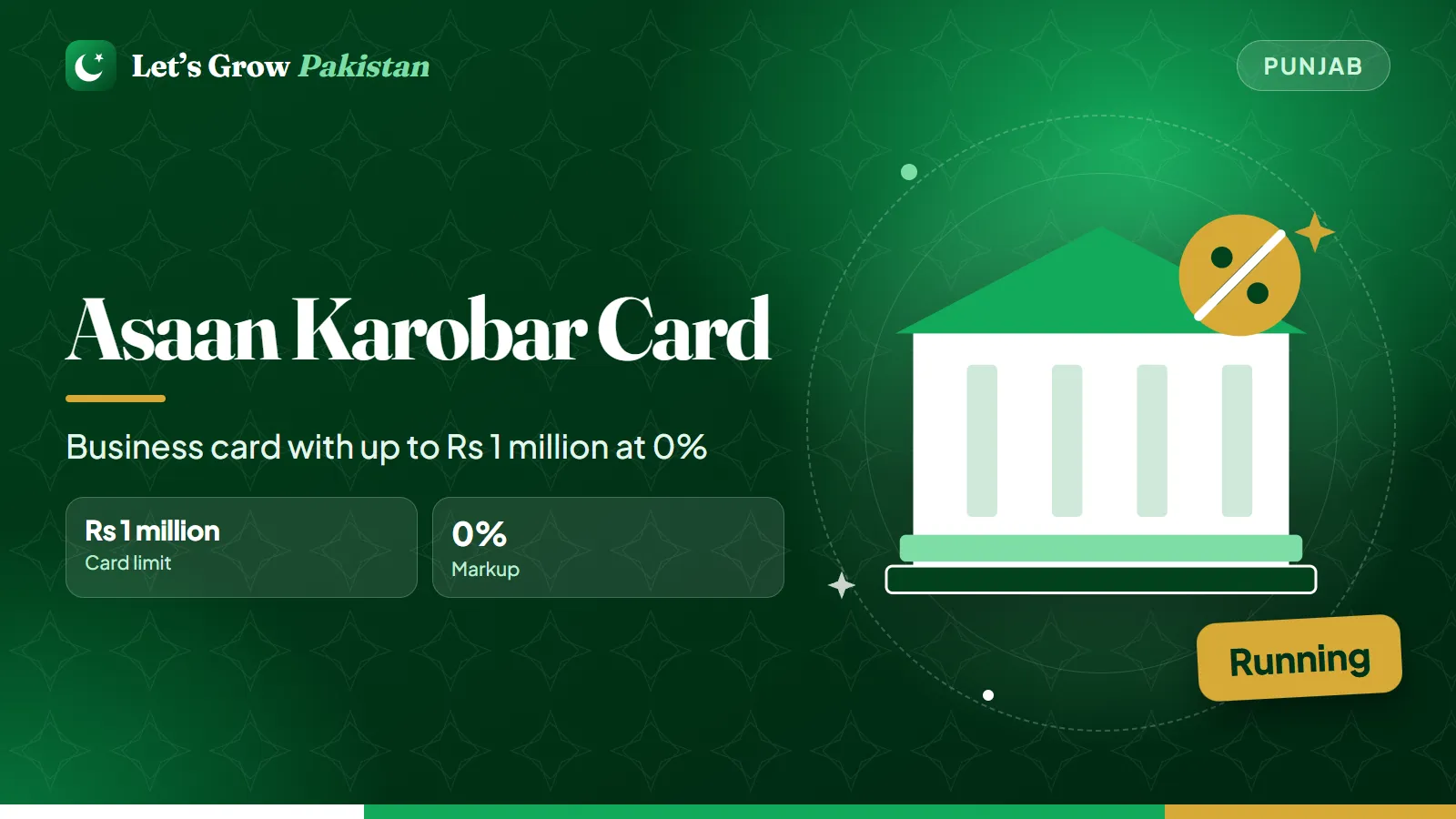
A business card for Punjab residents aged 21 to 57, offering up to Rs 1 million at 0%. The limit revolves for 12 months and is released in two parts over 3 years.
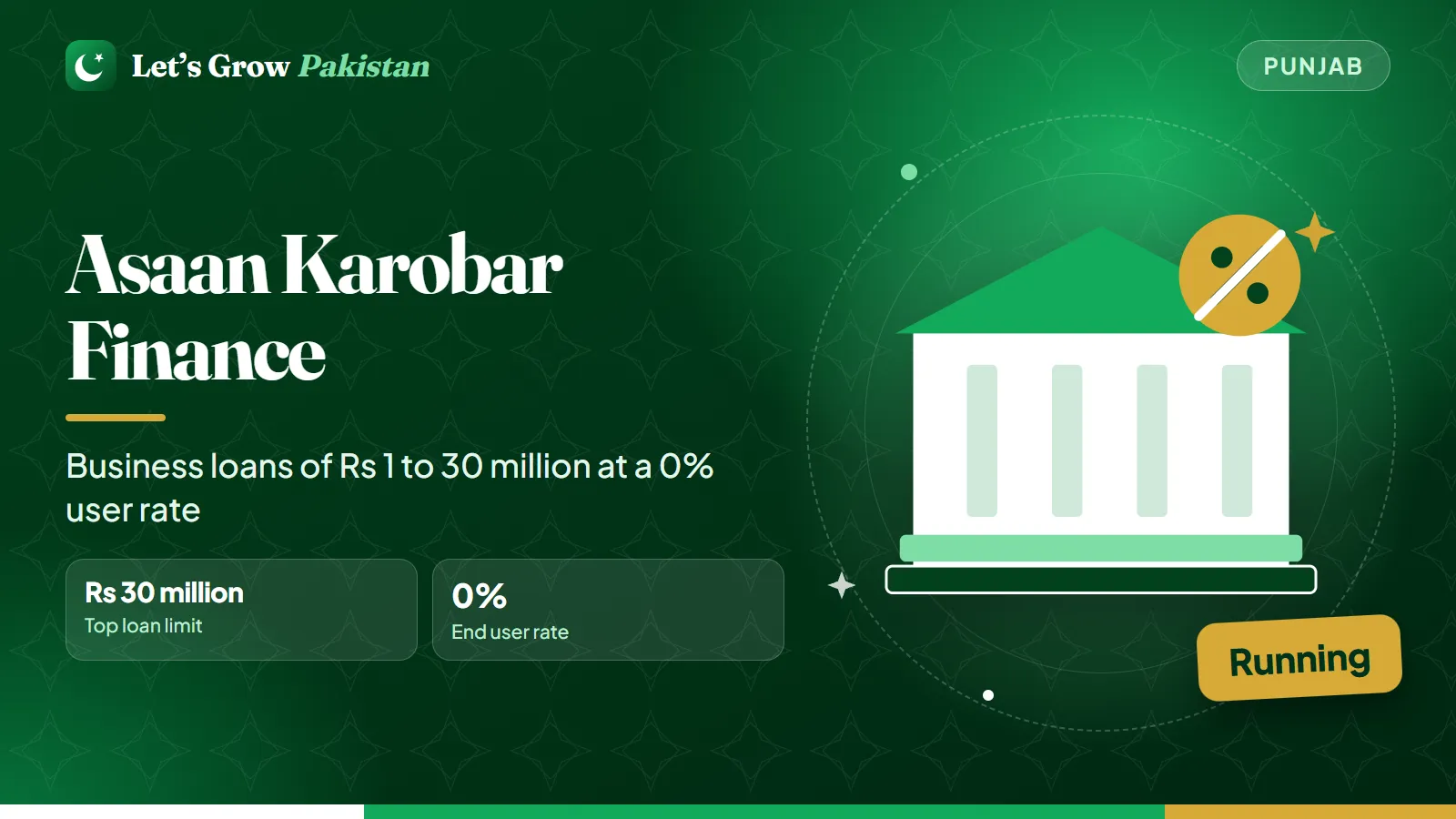
Business loans of Rs 1 to 30 million at a 0% user rate for Punjab tax filers aged 25 to 55, with a personal guarantee for smaller loans and security for larger ones, over up to 5 years.
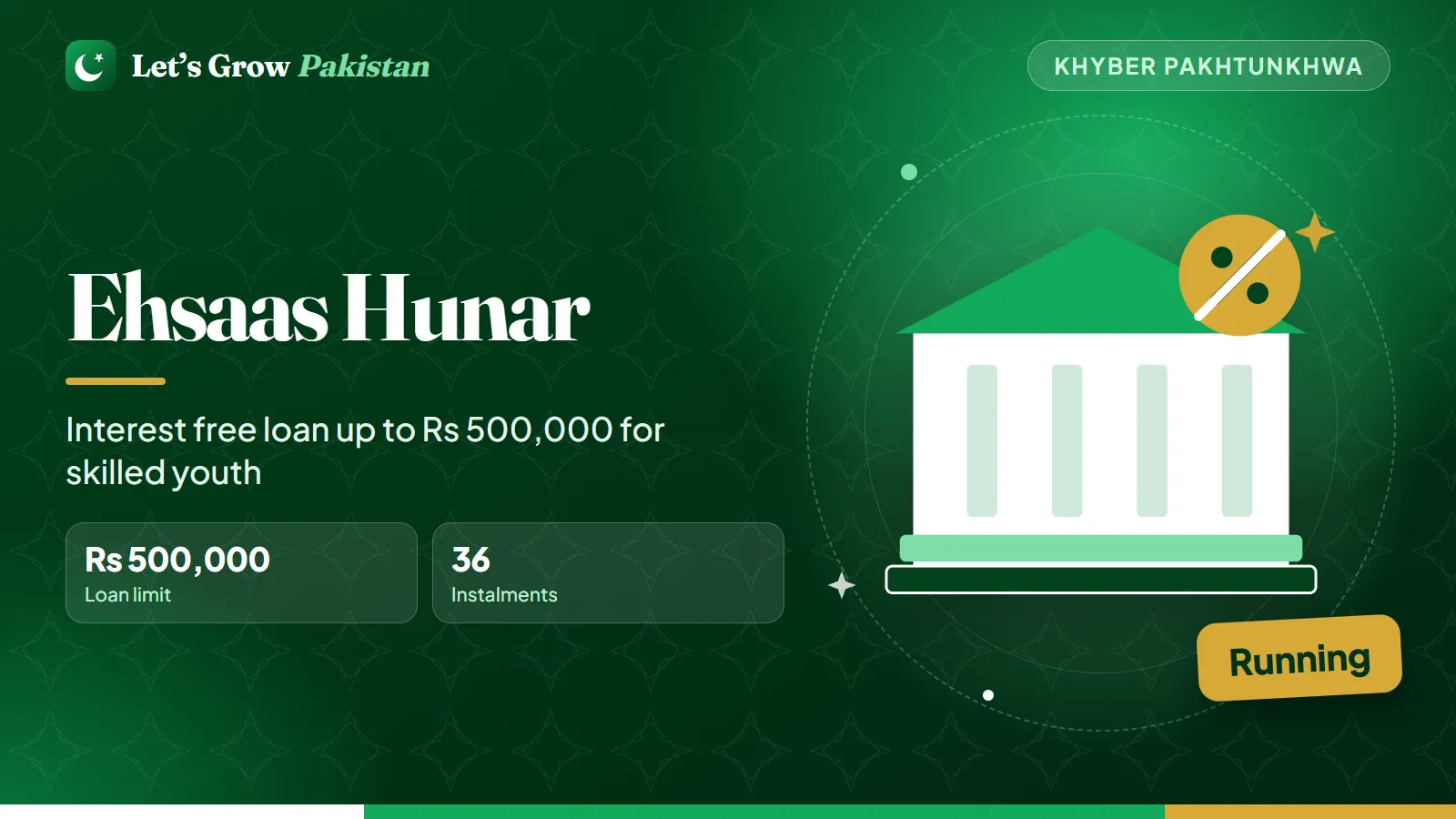
Skilled young people in Khyber Pakhtunkhwa can borrow up to Rs 500,000 interest free and repay it in 36 instalments. Rs 307 million had reached 647 people by July 2025.
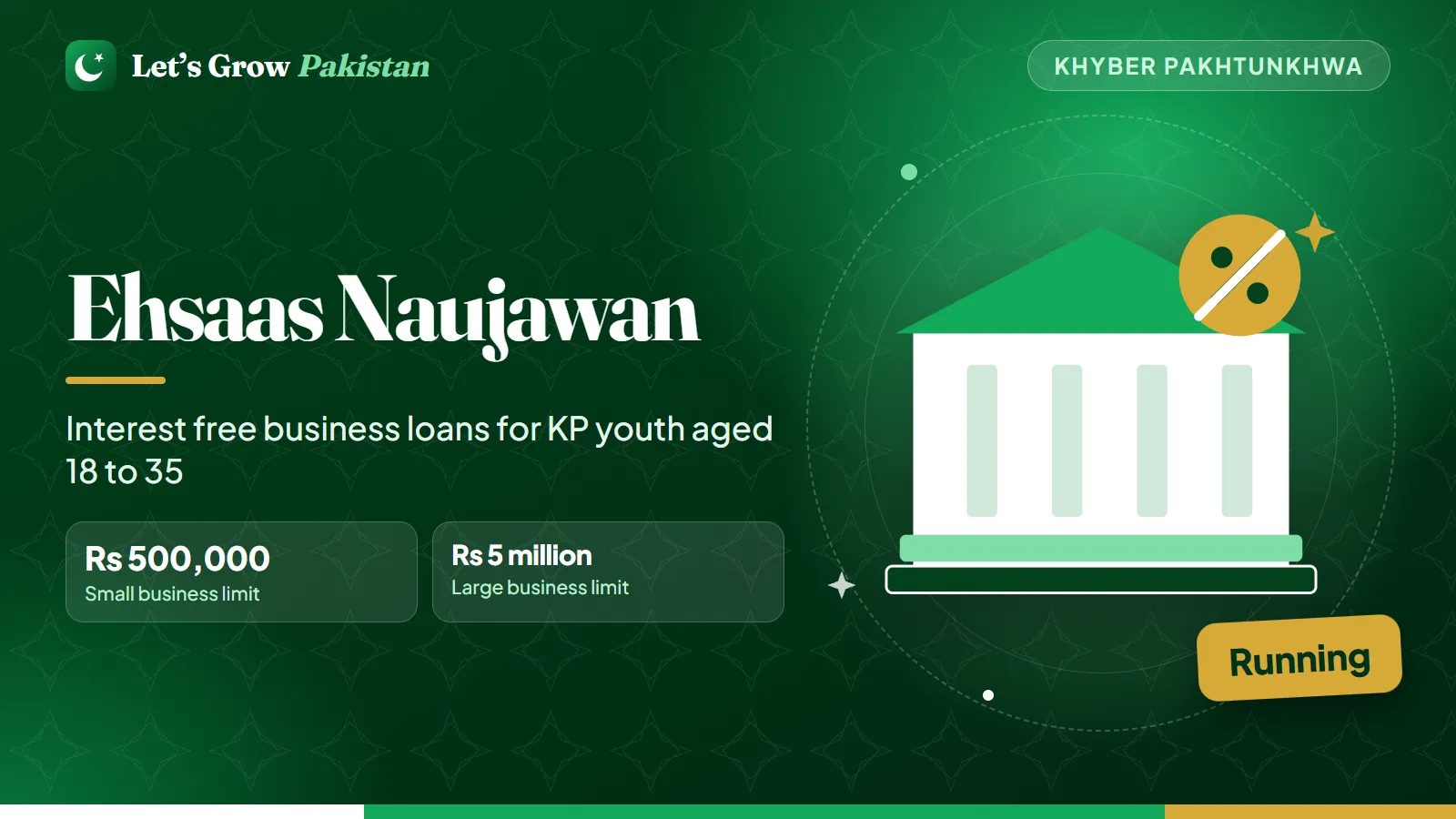
Khyber Pakhtunkhwa gives youth aged 18 to 35 interest free business loans: up to Rs 500,000 for small ventures, and Rs 1 million to Rs 5 million for larger ones through Bank of Khyber.
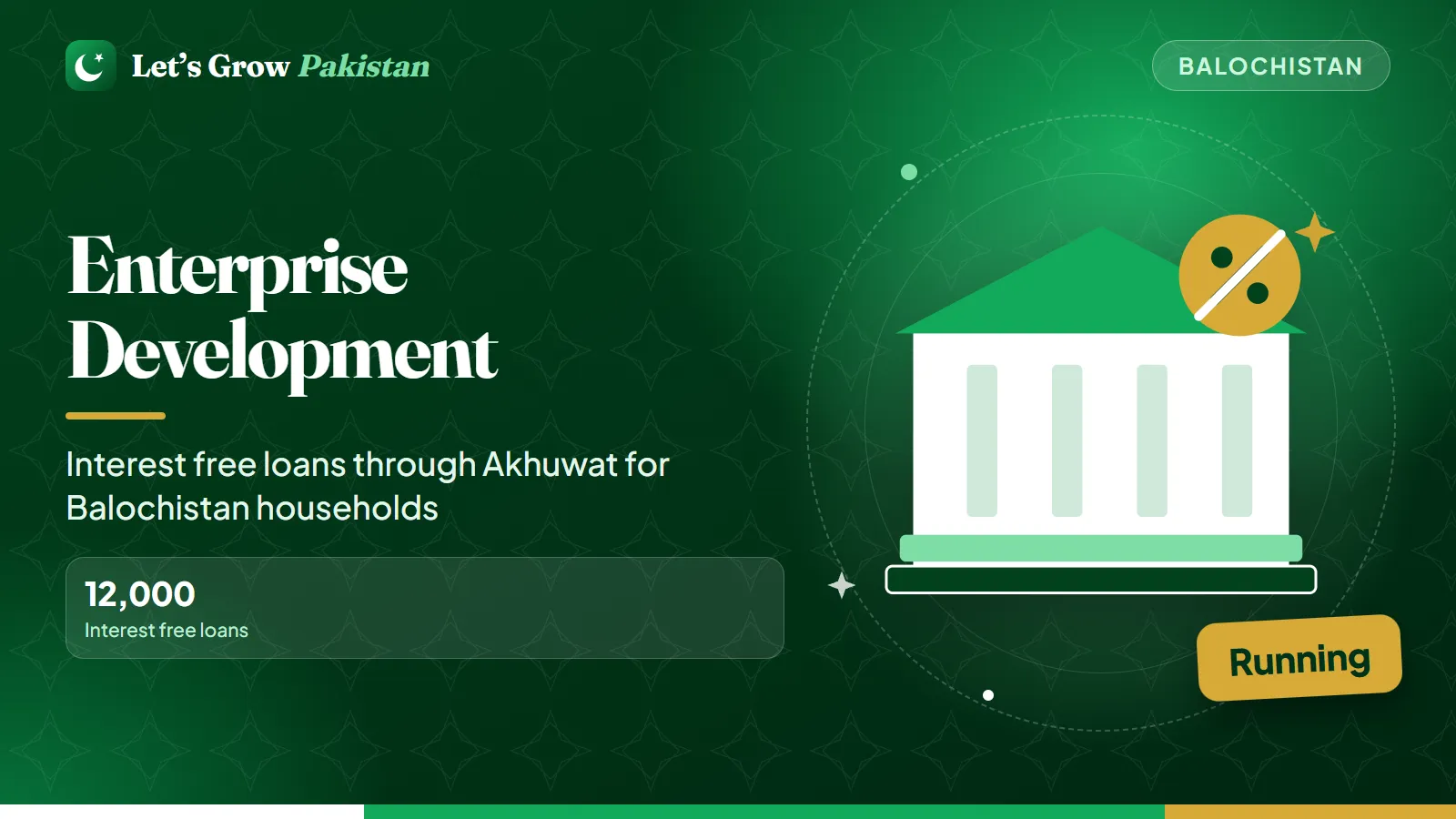
Balochistan funds 12,000 interest free loans through Akhuwat, reaching 80,000 households, with the programme extended to Gwadar, Kech and Awaran. Loan terms and eligibility are not confirmed.
A group of State Bank refinance lines for exporters and millers, including export finance and Sindh rice husking. The limit, markup and repayment period differ from line to line.
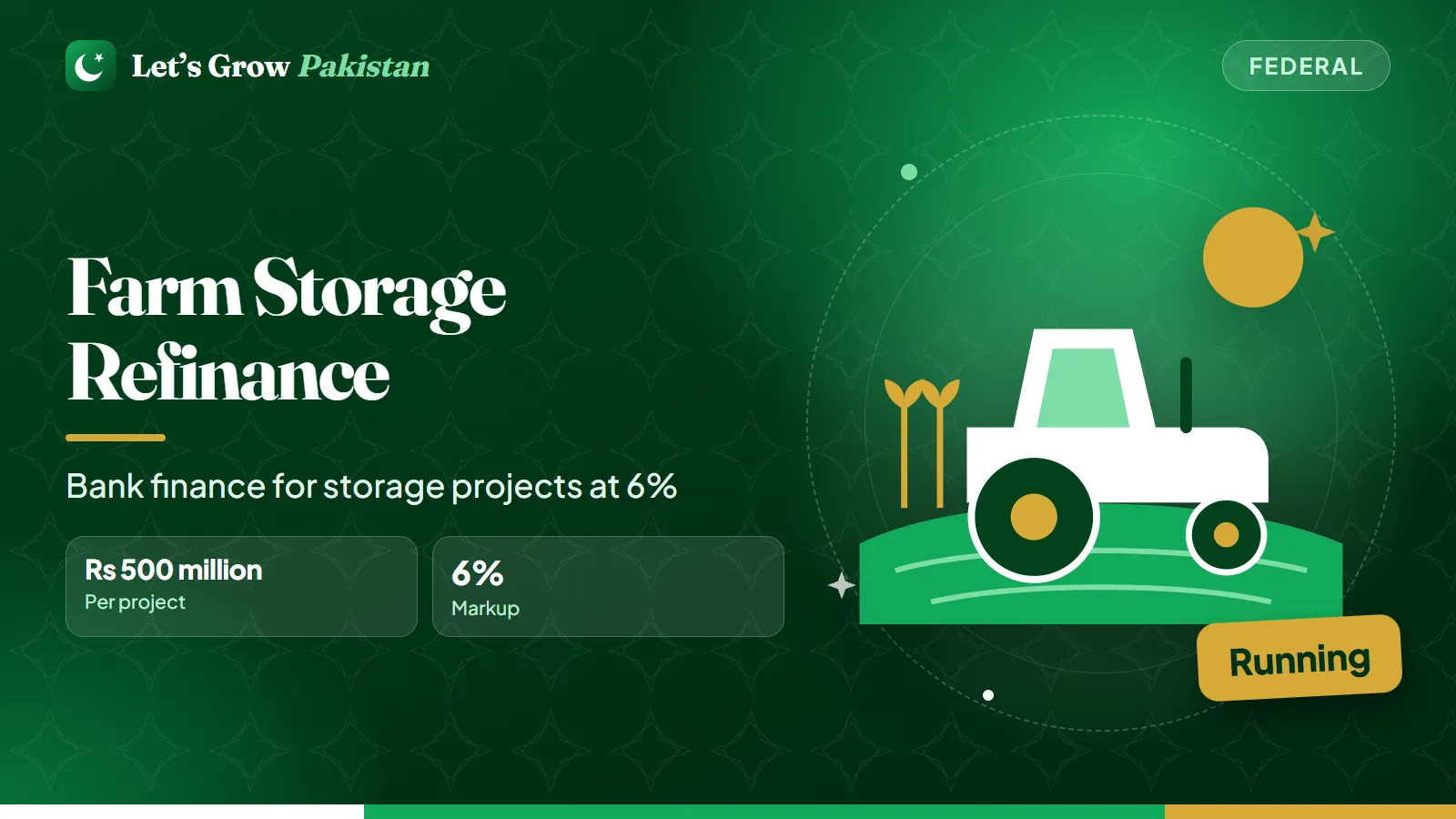
Businesses can borrow to build or upgrade silos, warehouses and cold stores for farm produce. Banks lend up to Rs 500 million per project at 6%, repayable over as long as 10 years.
An interest free loan for Punjab residents with a job offer abroad. It covers medical, visa, protector, ticket, skill test and OEP fees. The loan amount is not stated.
Interest free community loans in rural Sindh, given through support bodies. One round in Sanghar gave 100 loans worth Rs 2,321,000. Who qualifies is not confirmed.
Small and medium firms can get long term bank finance at 6% to modernise, for up to 10 years. Small firms may borrow up to Rs 25 million and medium firms up to Rs 200 million.
A one year State Bank refinance line gives small and medium firms working capital at 6%. Small firms can borrow up to Rs 25 million and medium firms up to Rs 50 million.
The Rozgar Scheme has only been announced. The budget speech of 12 June 2026 promised financing for small businesses and young entrepreneurs, but no terms, banks or portal had appeared by 14 November 2026.
Rs 300 billion in concessional finance at 0% to 5%, announced under Punjab's PIVOT Plan for eligible commercial categories. It is only announced, and eligibility is not stated.
A Khyber Pakhtunkhwa plan for interest free loans of up to Rs 200,000, announced in 2024. No way to apply has been found, so its status is not confirmed.
A reported loan for people aged 21 to 45 who want to work abroad, covering training, travel and visa costs. It is not confirmed for 2026. The report said up to Rs 1 million.
A small interest free loan run through PPAF, listed at up to Rs 75,000 in a September 2024 brochure. Whether it is lending in 2026 is not confirmed.
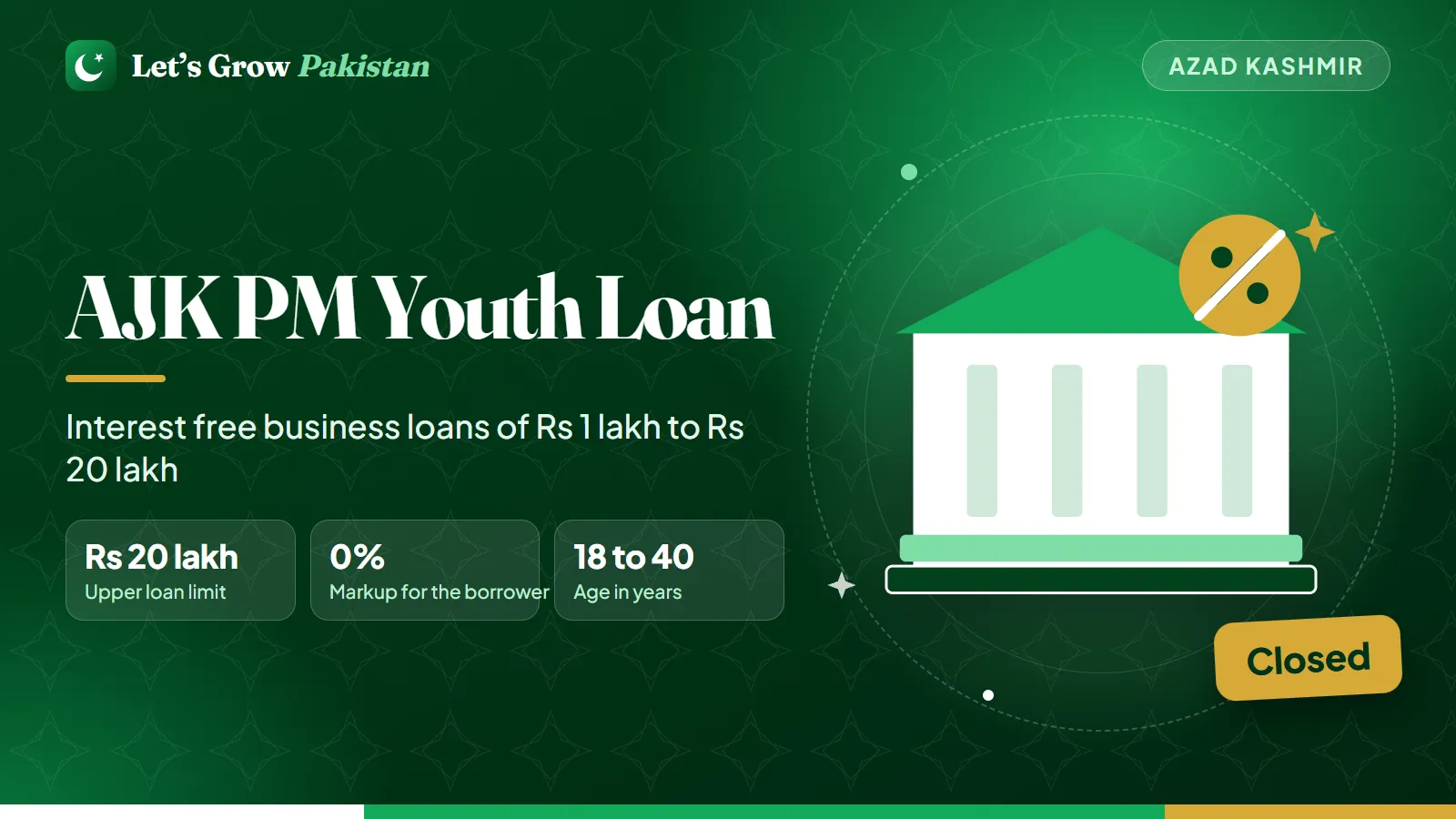
Interest free business loans of Rs 1 lakh to Rs 20 lakh for Azad Kashmir residents aged 18 to 40, lent by the Bank of AJK with markup paid by the government. The last round closed on 20 January 2026 after 35,000 applications. Applicants can track their form by CNIC.
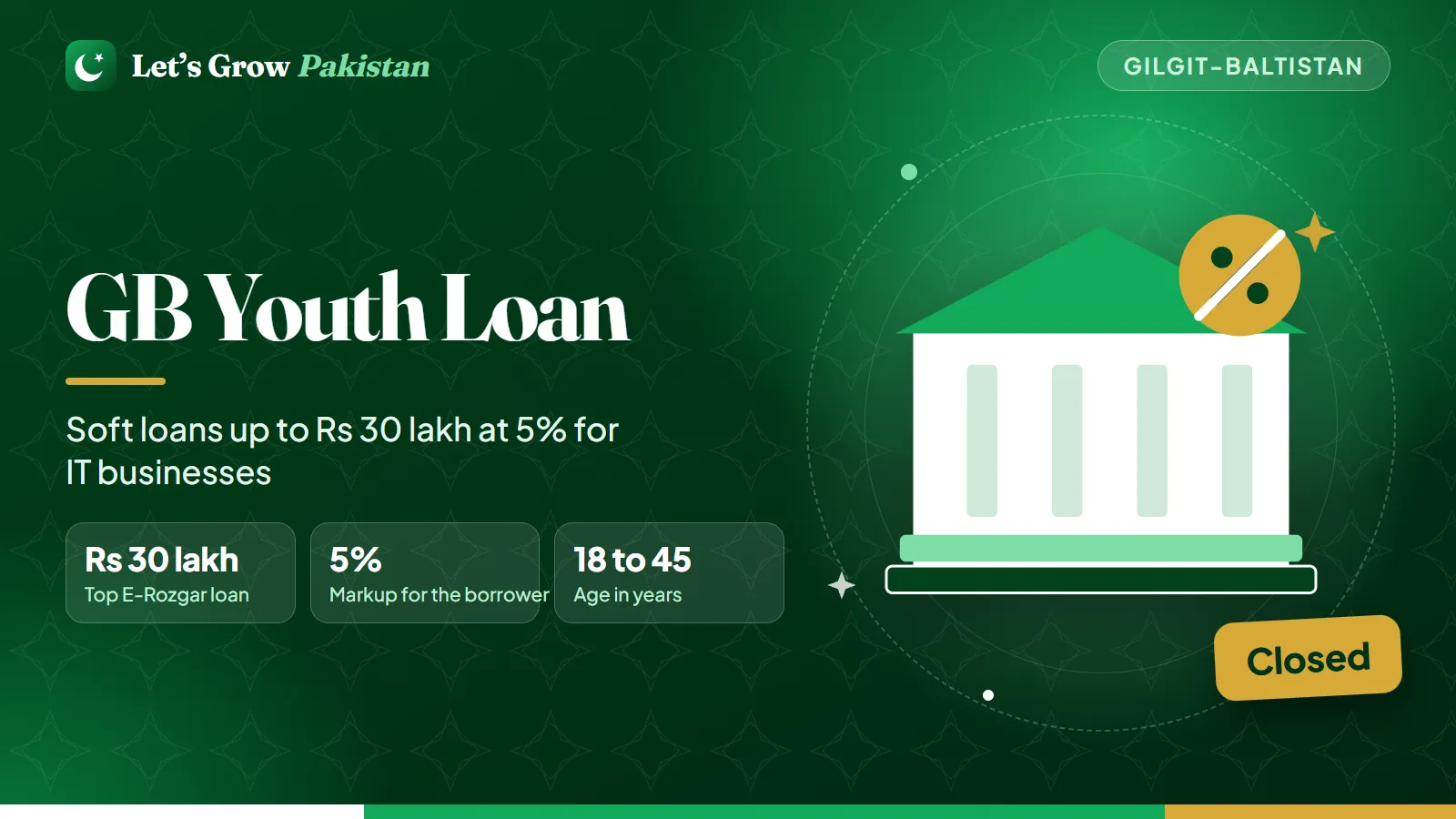
The GB government's youth loan with published terms is E-Rozgar: Rs 1 lakh to Rs 30 lakh at 5% for IT startups and IT firms, through Karakoram Cooperative Bank. Phase III closed in August 2024. The 2026 to 2027 budget holds Rs 50 million for youth loans, with no scheme or date announced.
An older Khyber Pakhtunkhwa employment scheme that is now closed. Its amounts and eligibility are not confirmed. The newer Ehsaas Rozgar is a different programme.
An airlift service for critical patients in far flung parts of Punjab, with bases at Rawalpindi or Mianwali and Multan or Bahawalnagar. Exact eligibility is not stated.
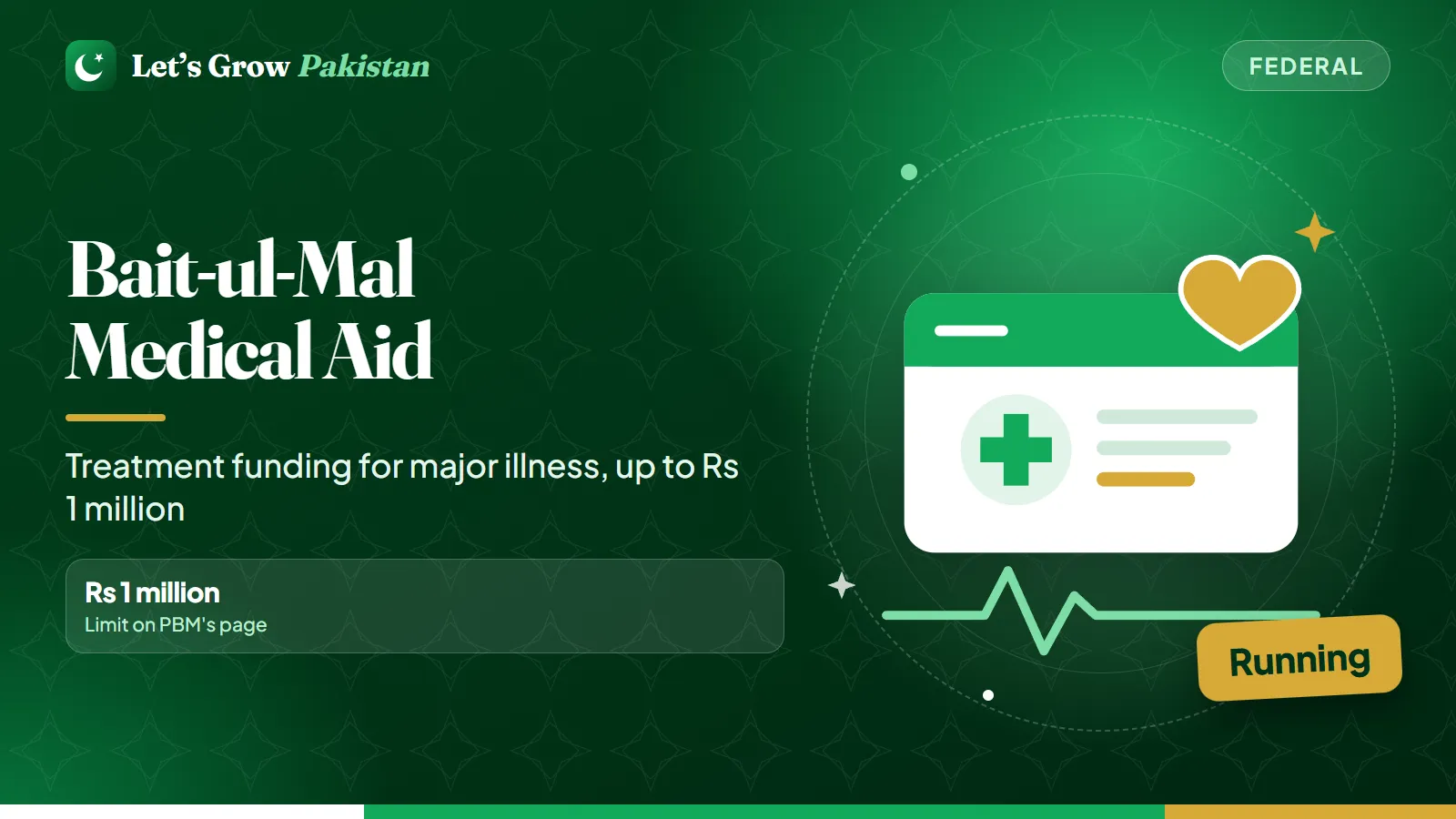
Bait-ul-Mal pays for the treatment of poor people, widows, orphans and disabled people with a major illness. Support runs up to Rs 1 million for those earning under Rs 74,000 a month.
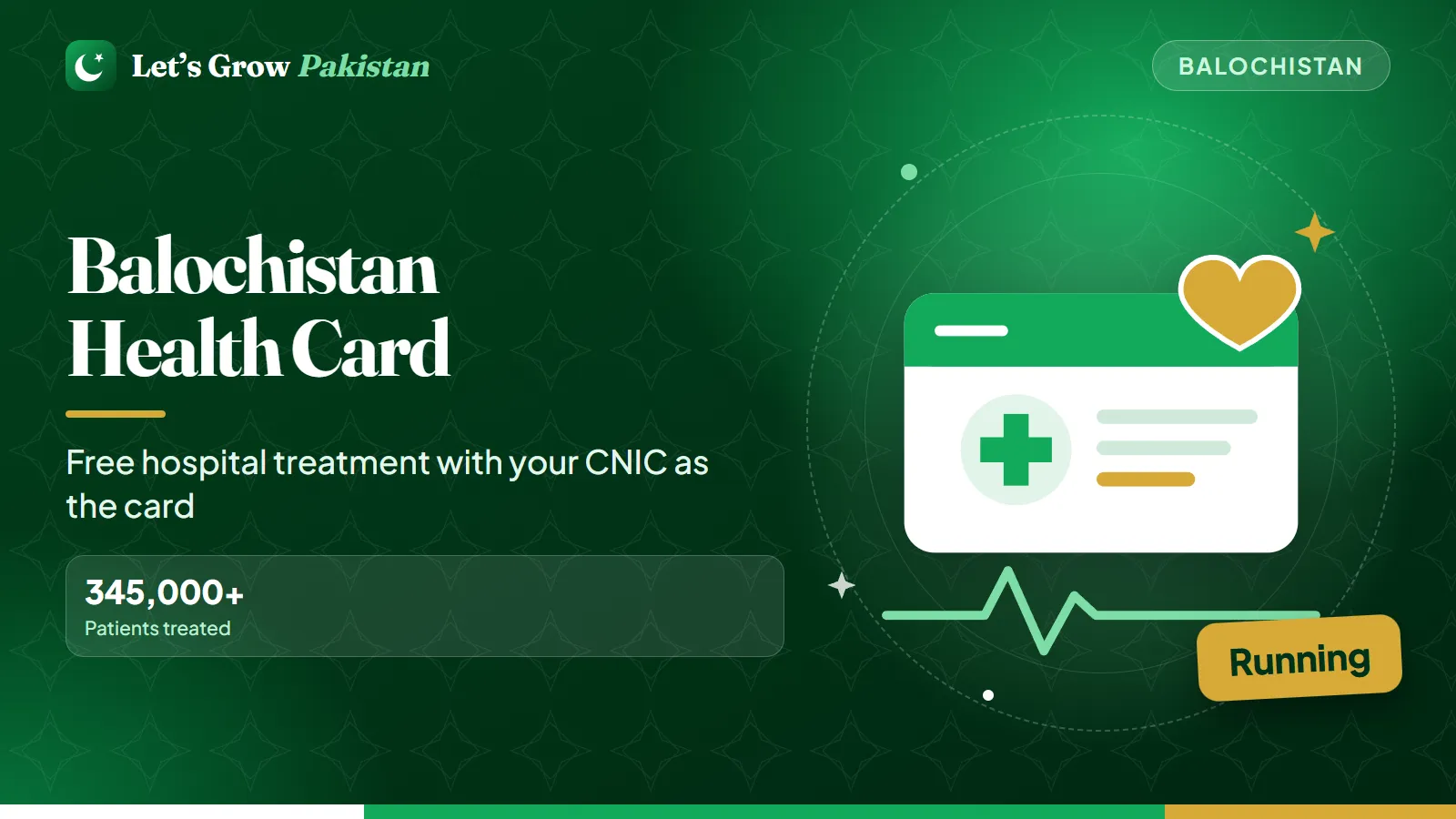
Citizens of Balochistan, identified by their CNIC, get free treatment at public and private hospitals in the province and elsewhere in Pakistan. The treatment limit is not confirmed.
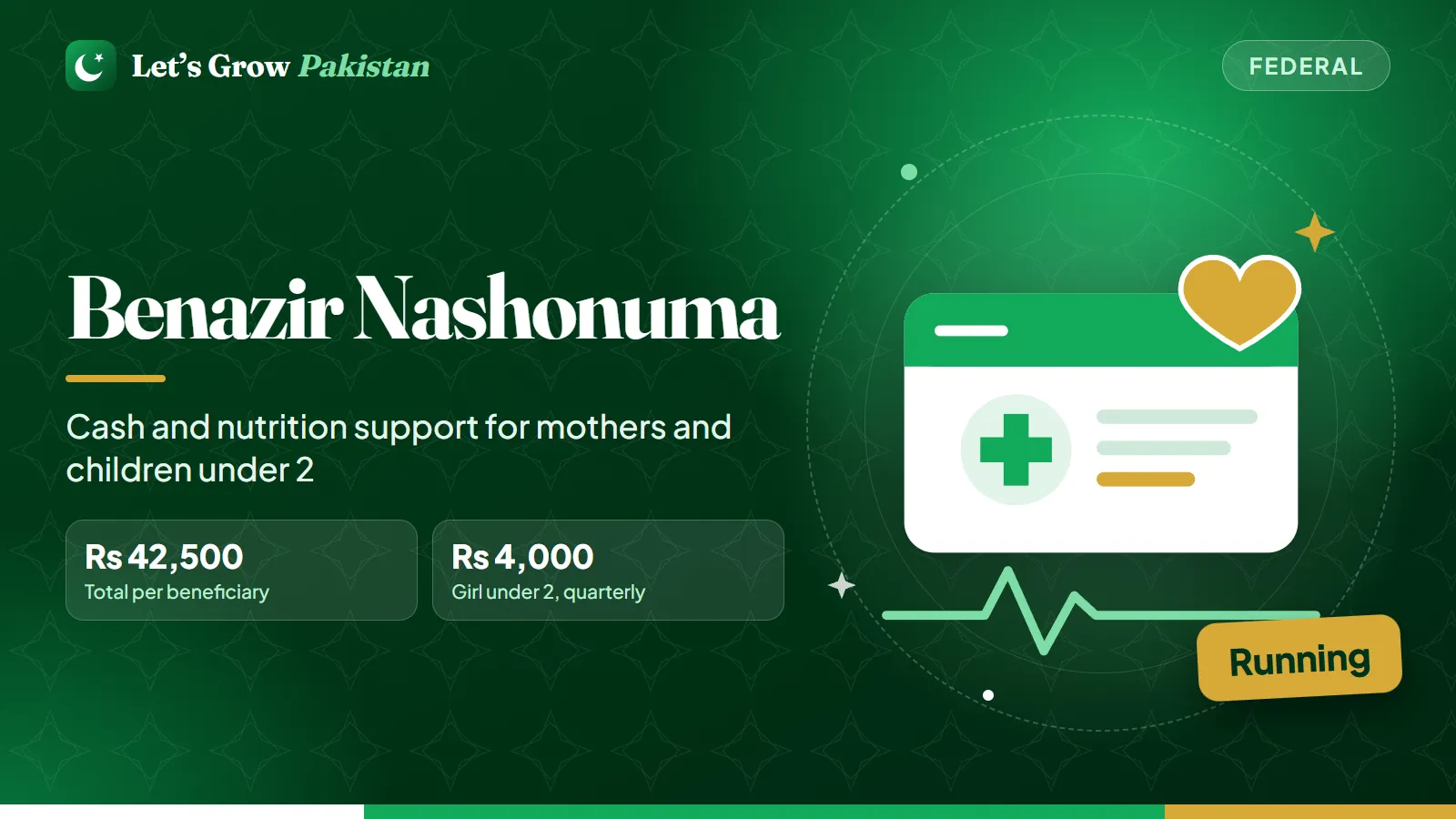
Nashonuma offers cash and nutrition support to Kafaalat mothers who are pregnant or nursing, and their children under 2, in 158 districts. Payments run from Rs 3,500 to Rs 4,000 a quarter.
A Punjab health card giving cancer patients up to Rs 1 million a year of treatment at empanelled facilities. It is run by PHIMC at a reported cost of about Rs 13 billion a year.
Free heart surgery for children on the waiting list in Punjab, done at a private hospital when there is no room. Phase one covers six hospitals in Lahore, Multan and Rawalpindi.
Mobile clinics serving slums and city outskirts in Punjab. They offer free maternal and child care, immunisation and tests for hepatitis, malaria, diabetes and hypertension.
Field hospitals listed by the Punjab government. The undated official page does not confirm what services they offer or who can use them, so details are not confirmed.
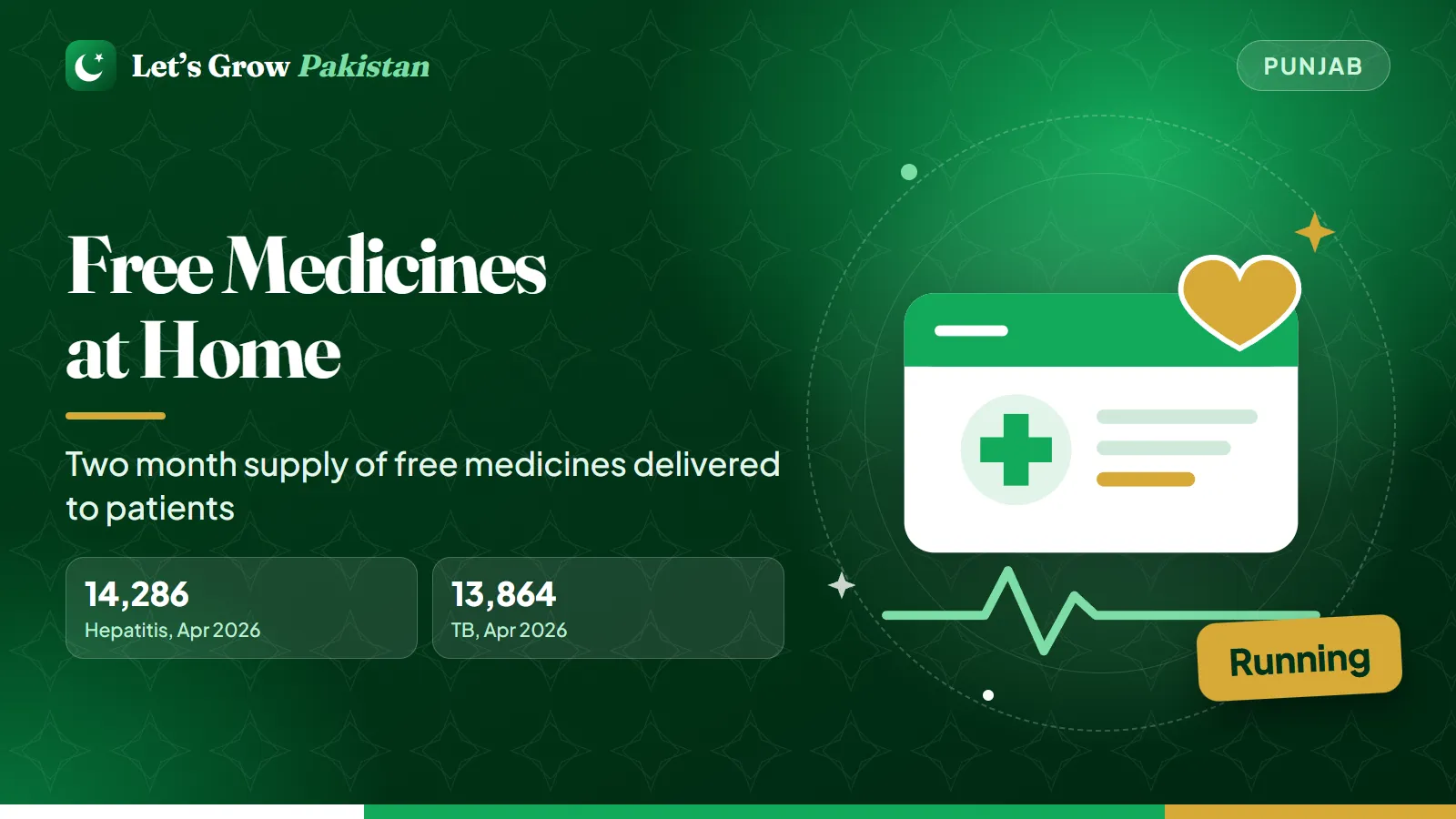
Punjab delivers a two month supply of free medicines to the homes of patients with hepatitis, TB, heart disease, diabetes and cancer. Exact eligibility is not confirmed.
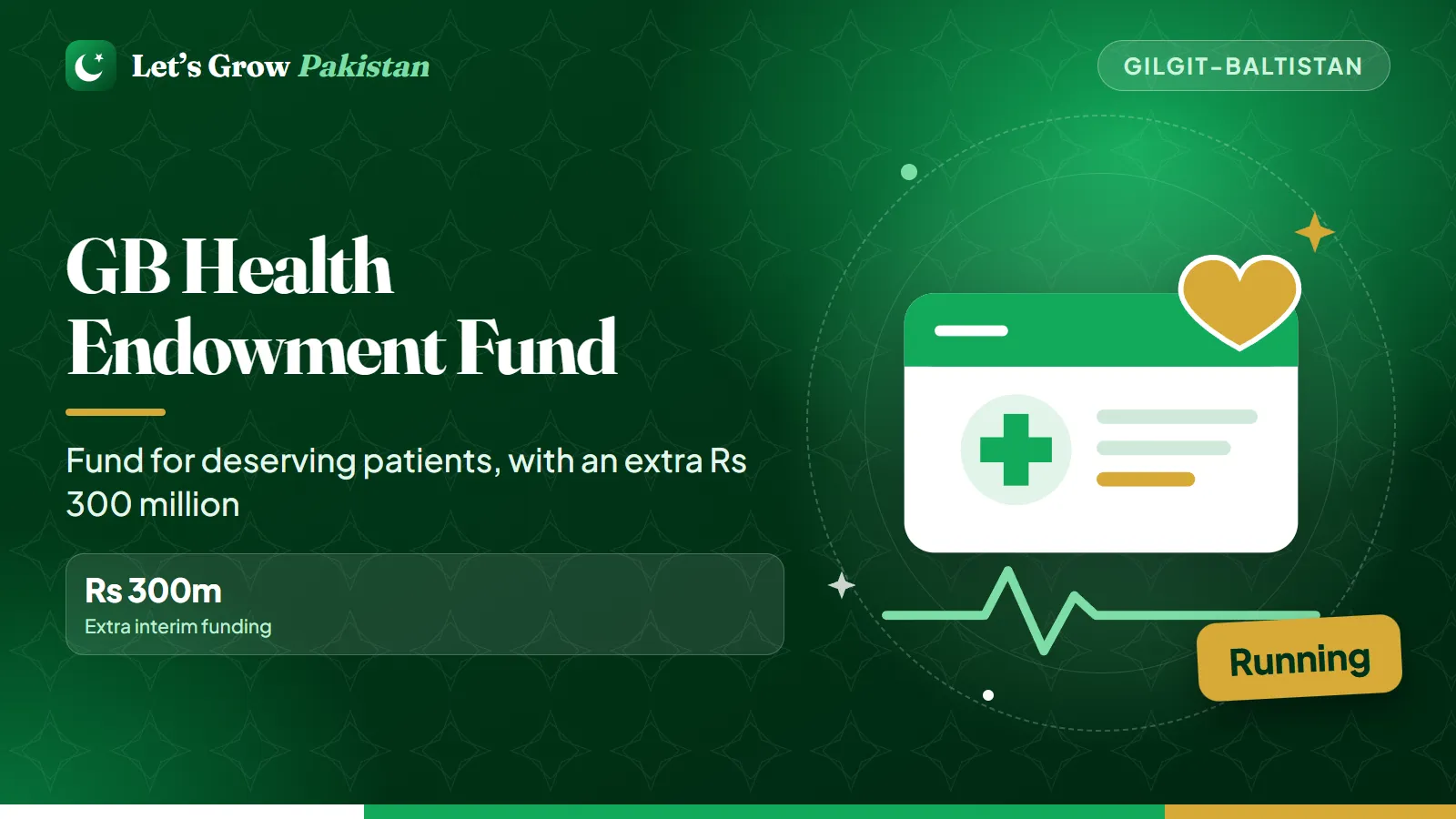
A Gilgit-Baltistan fund that helps deserving patients with their treatment costs, with an extra Rs 300 million in the interim budget. The amount per patient and the criteria are not confirmed.
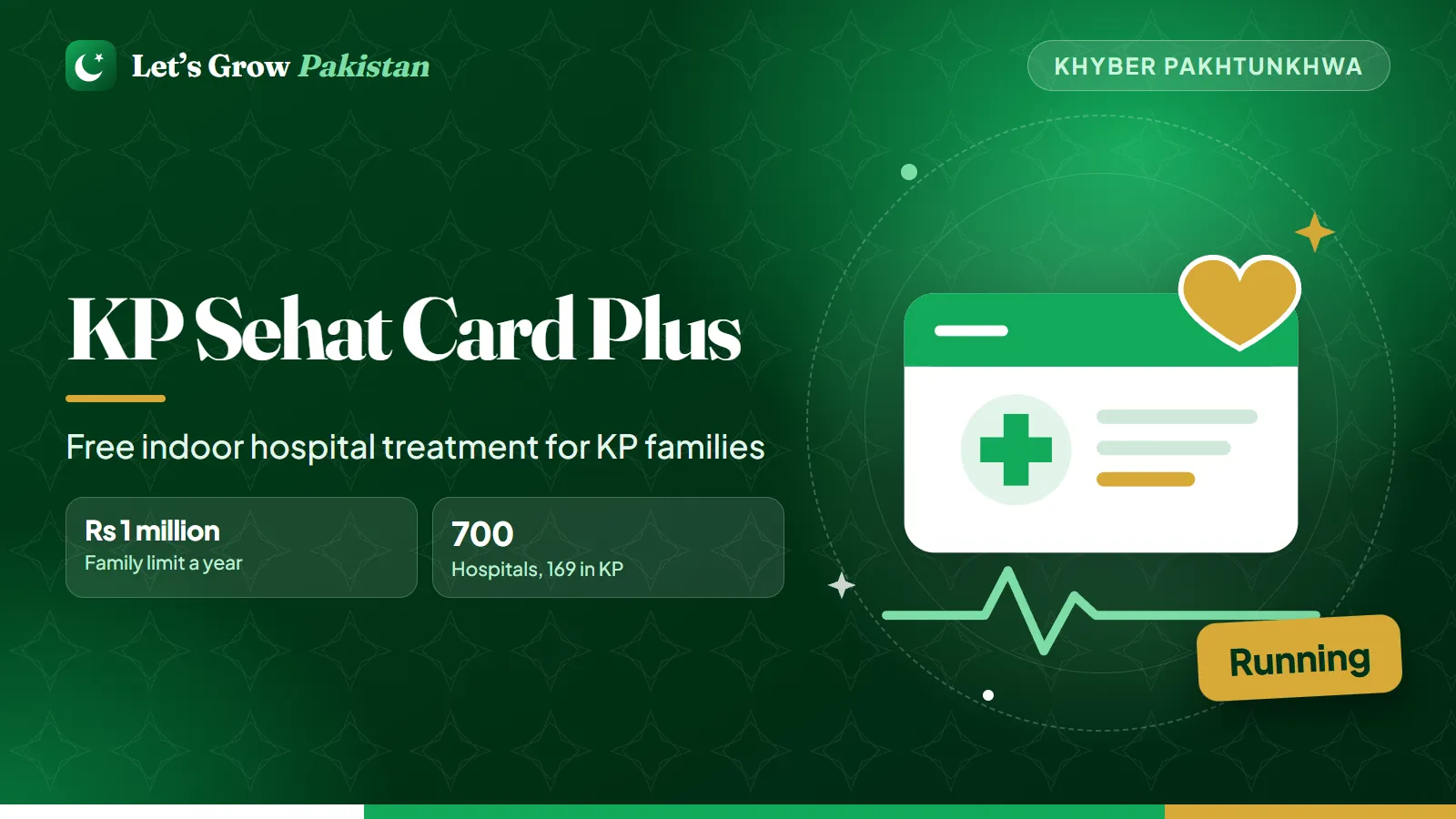
Khyber Pakhtunkhwa families registered with NADRA get free indoor hospital treatment, generally up to Rs 1 million a year, with organ transplants added in May 2025. About 10.7 million families are covered.
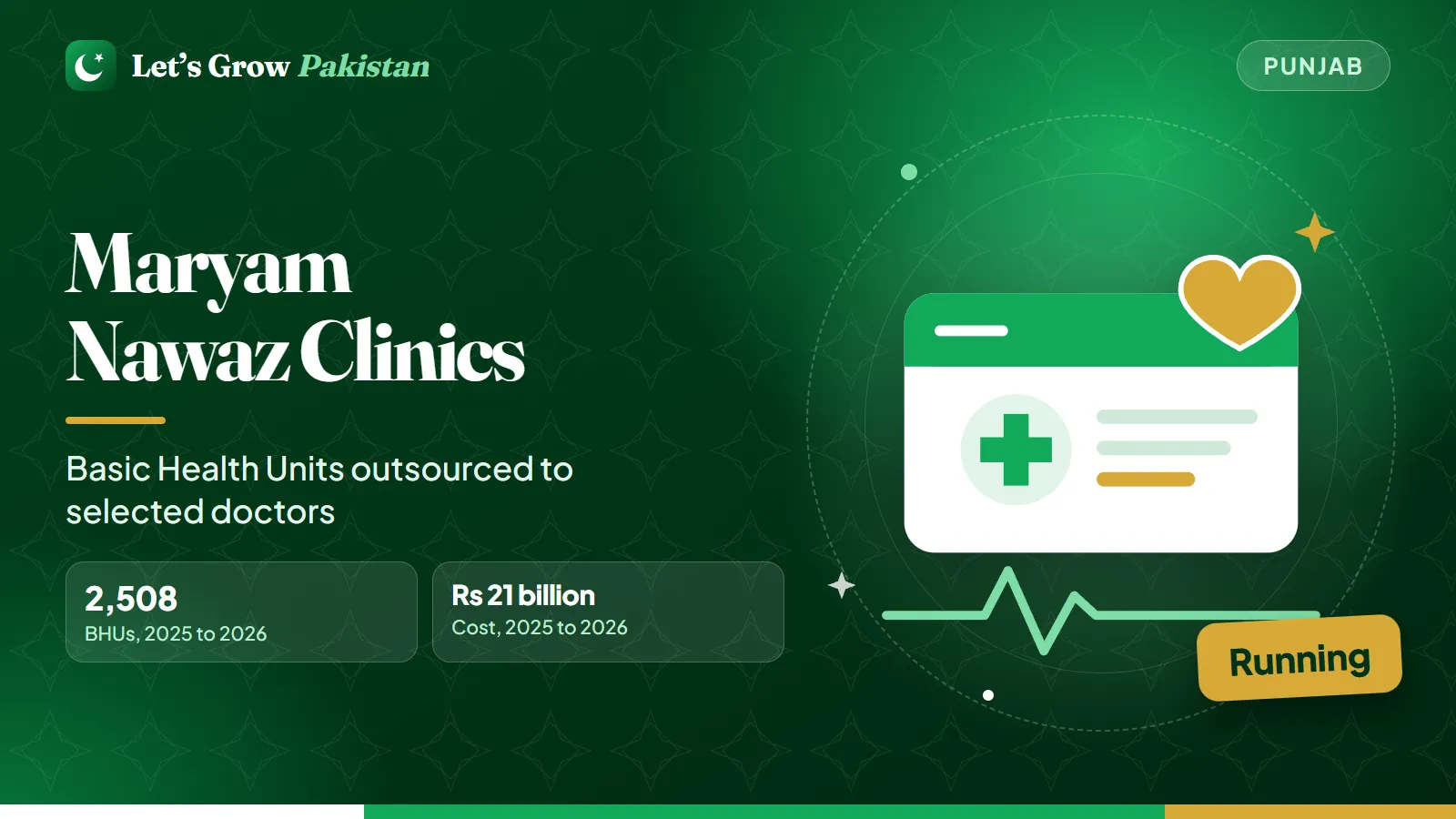
Basic Health Units in Punjab are handed to selected doctors to run, paid for performance, under this programme. What is free at these clinics is not confirmed.
Bait-ul-Mal runs a thalassaemia centre at F-9 Park that treats poor patients free of charge. The service is meant for patients who cannot afford care.
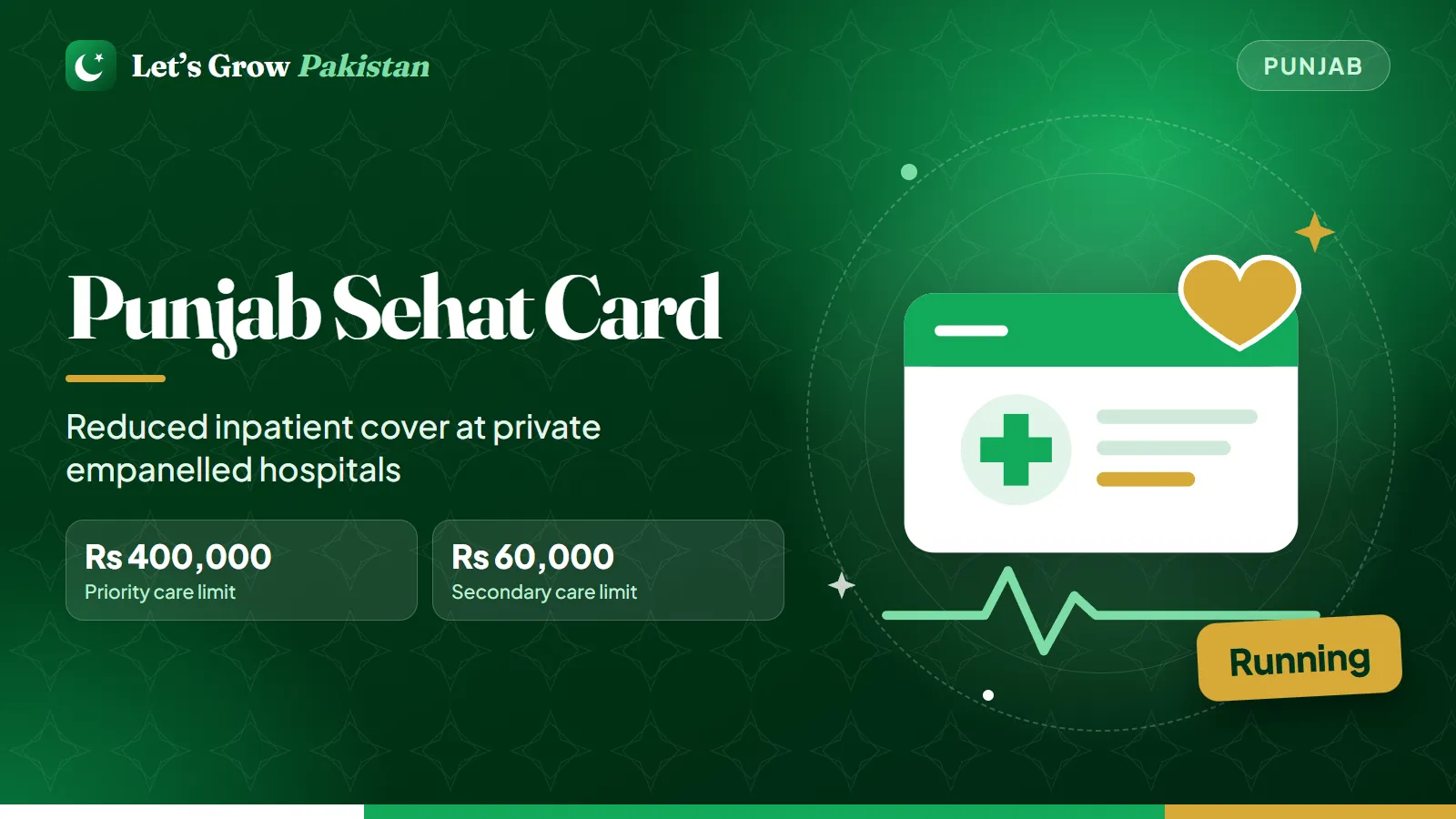
Health cover for Punjab residents for inpatient care at empanelled private hospitals. Cancer, ICU and emergency care are free, other costs are half paid, with family limits of Rs 60,000 to Rs 1,000,000.
The Sehat Card gives families free hospital treatment at empanelled hospitals. It covers all permanent resident families of Islamabad, Azad Kashmir and Gilgit-Baltistan, and provinces run their own.
Free heart transplants announced for deserving patients at the Maryam Nawaz Heart Transplant Centre, Jinnah Institute of Cardiology. It is only announced, and criteria are not stated.
Home dialysis machines for Punjab patients, announced on 22 August 2026. This is only an announcement, with no figures given and eligibility not confirmed.
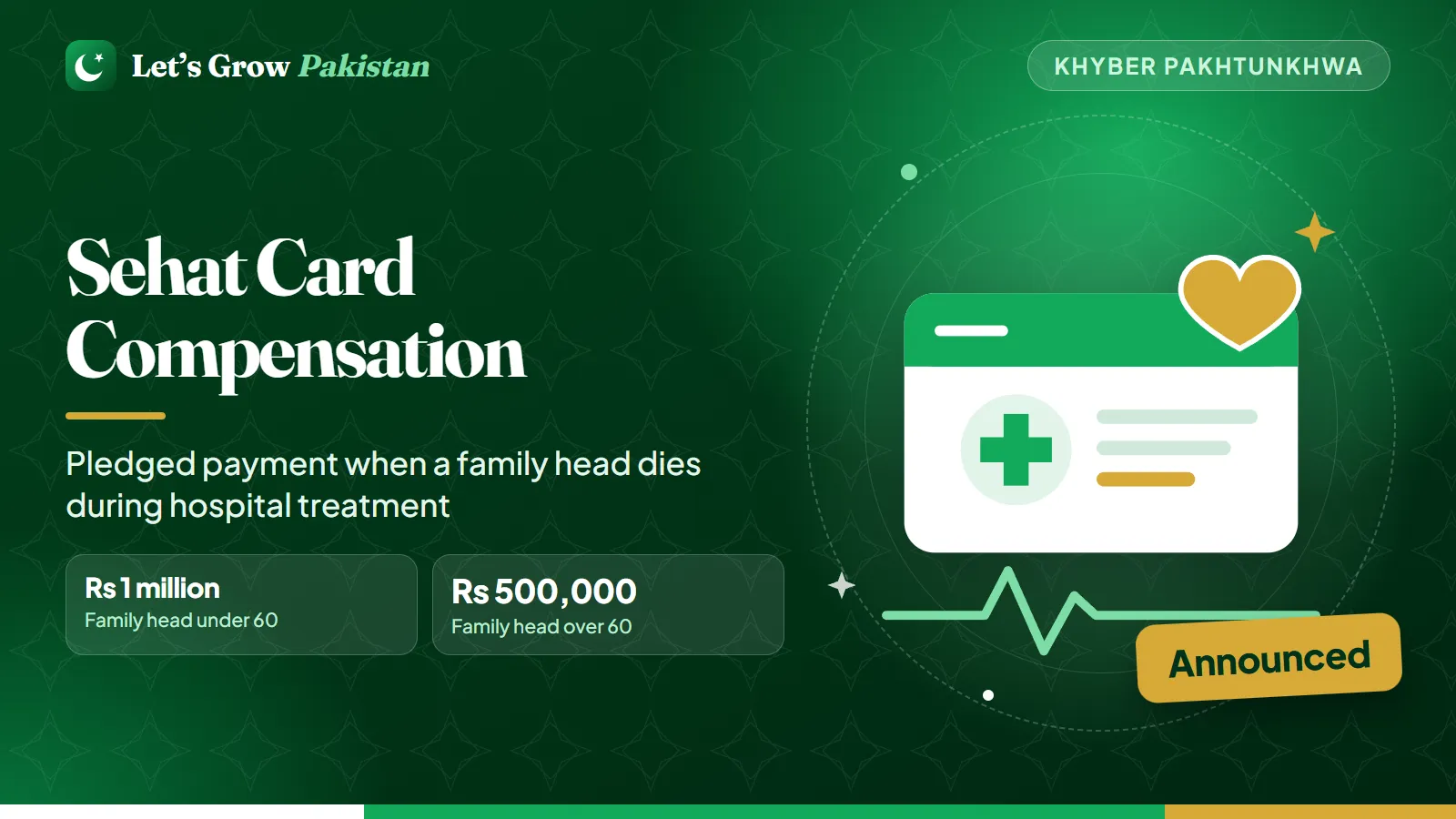
A pledged payment for Khyber Pakhtunkhwa families when the household head dies in hospital during Sehat Card treatment: Rs 1 million if under 60, Rs 500,000 if older. Only announced so far.
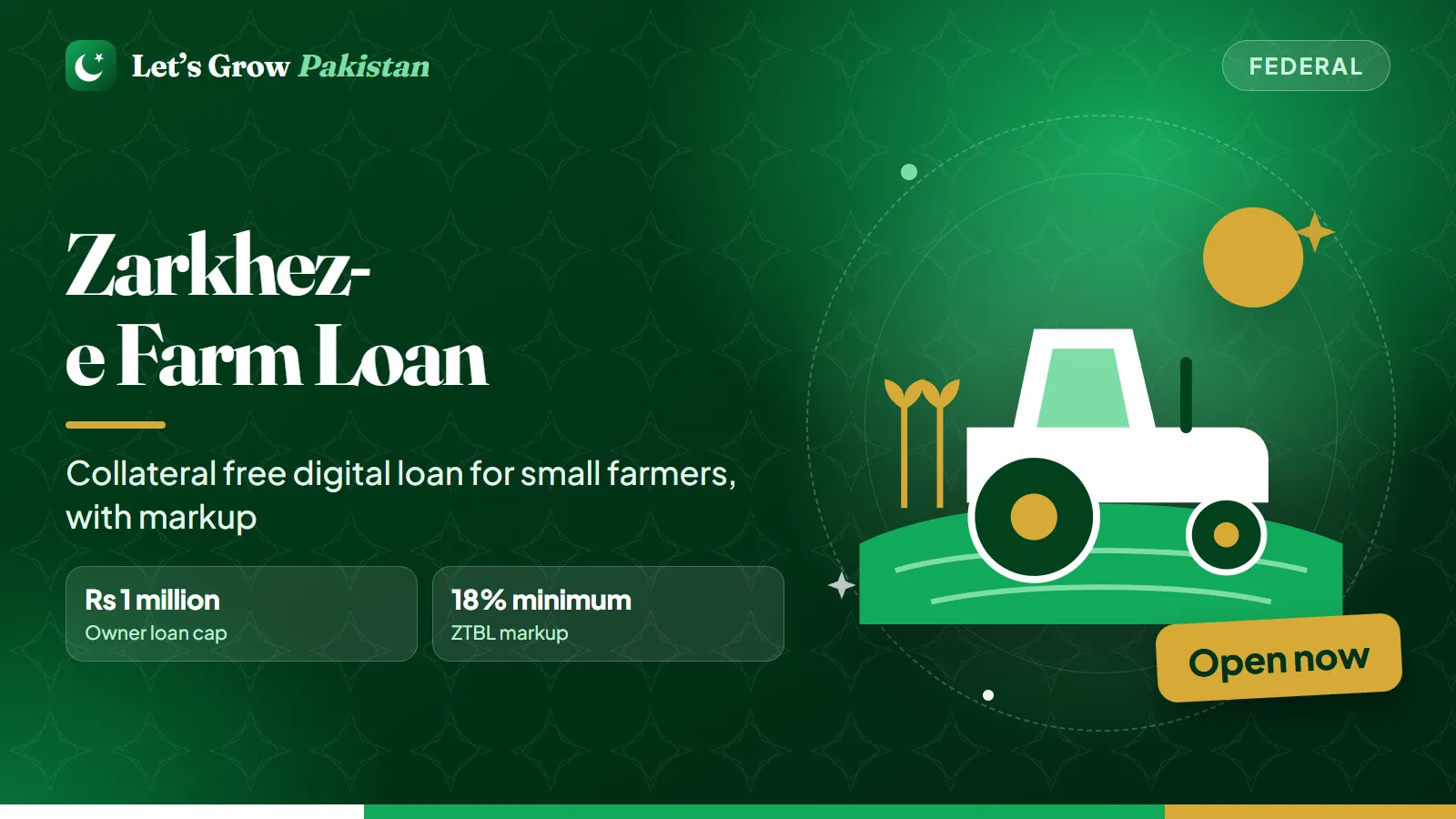
Zarkhez-e is a collateral free digital loan for small farmers, up to Rs 100,000 an acre and capped at Rs 1 million for owners. It is not interest free, and most of it goes to agri merchants.
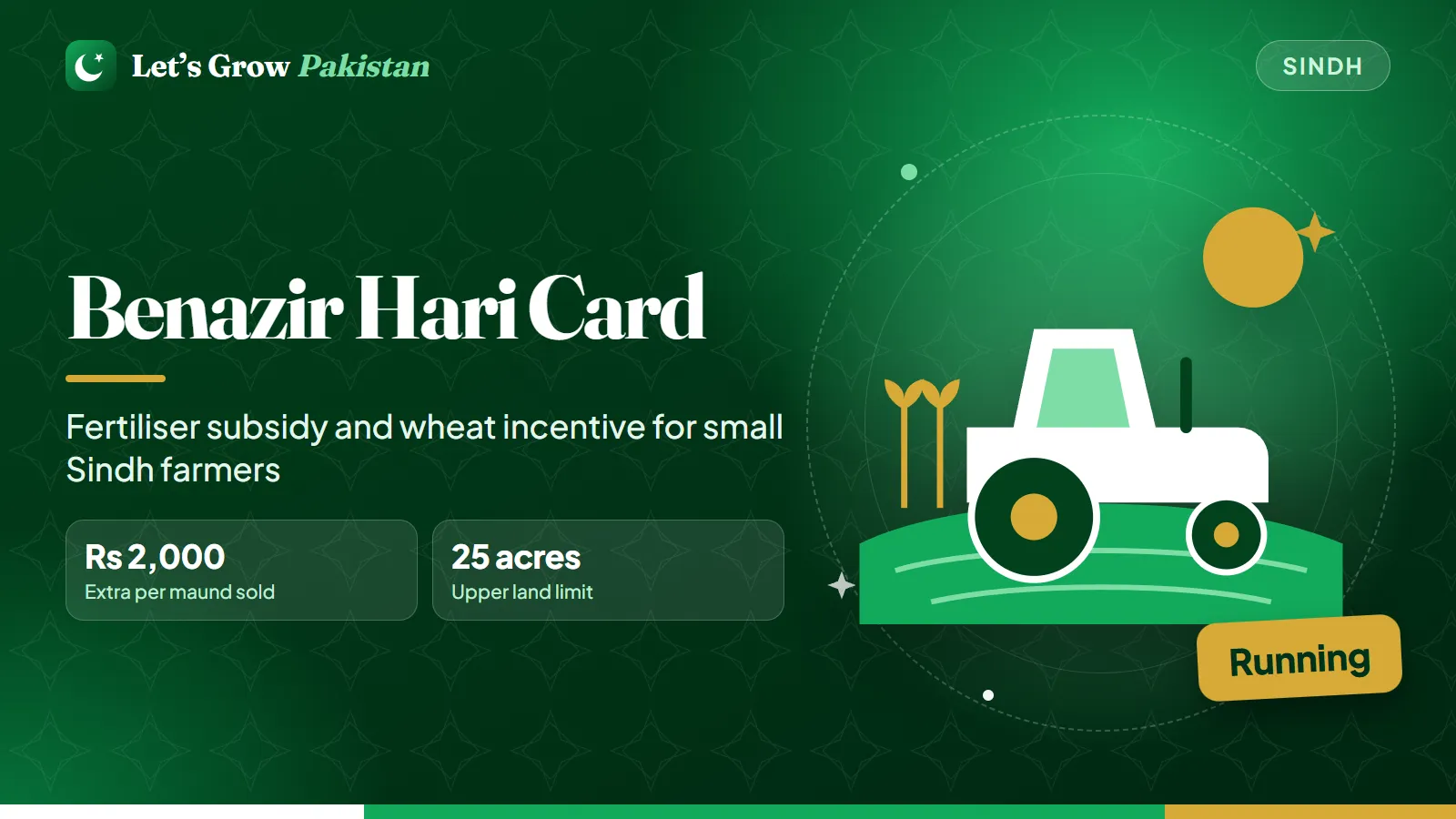
Small Sindh farmers with up to 25 acres get a DAP subsidy and Rs 2,000 extra per maund of wheat sold to the Food Department. Rs 17 billion is paid to Hari Card accounts from 20 November 2026.
Registered Balochistan farmers get periodic subsidies on seed, fertiliser, pesticide and machinery. In April 2026 farmers with up to 12.5 acres received Rs 15,000 for threshing.
This scheme protects banks that lend to small farmers and underserved areas, and farmers get no payment from it. Lenders get 10% first loss cover, Rs 10,000 per borrower.
Interest free finance through Bank of Punjab, up to Rs 30 million, for farmers, service providers and entrepreneurs who want to buy modern farm machinery. Repayment runs over 5 years.
A Bank of Punjab card that finances farm inputs for Punjab farmers. From 29 October 2026 the fertiliser limit is Rs 33,500 per acre, covering about five million acres.
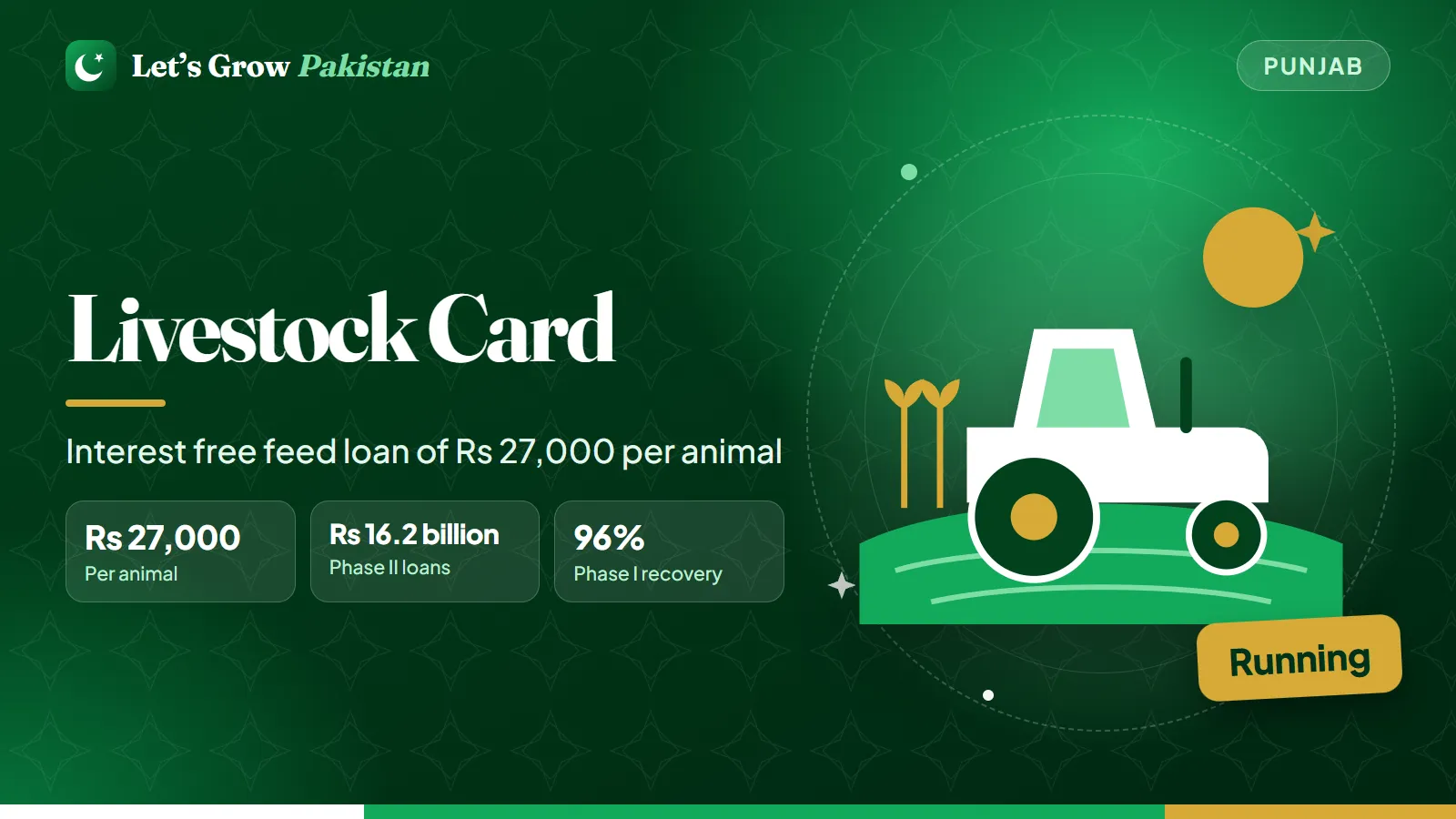
An interest free feed loan for Punjab farmers who keep 5 to 20 male calves. It gives Rs 27,000 per animal for wanda, silage and mineral mix, with a quarter of it as ATM cash. Registration is closed until the next season.
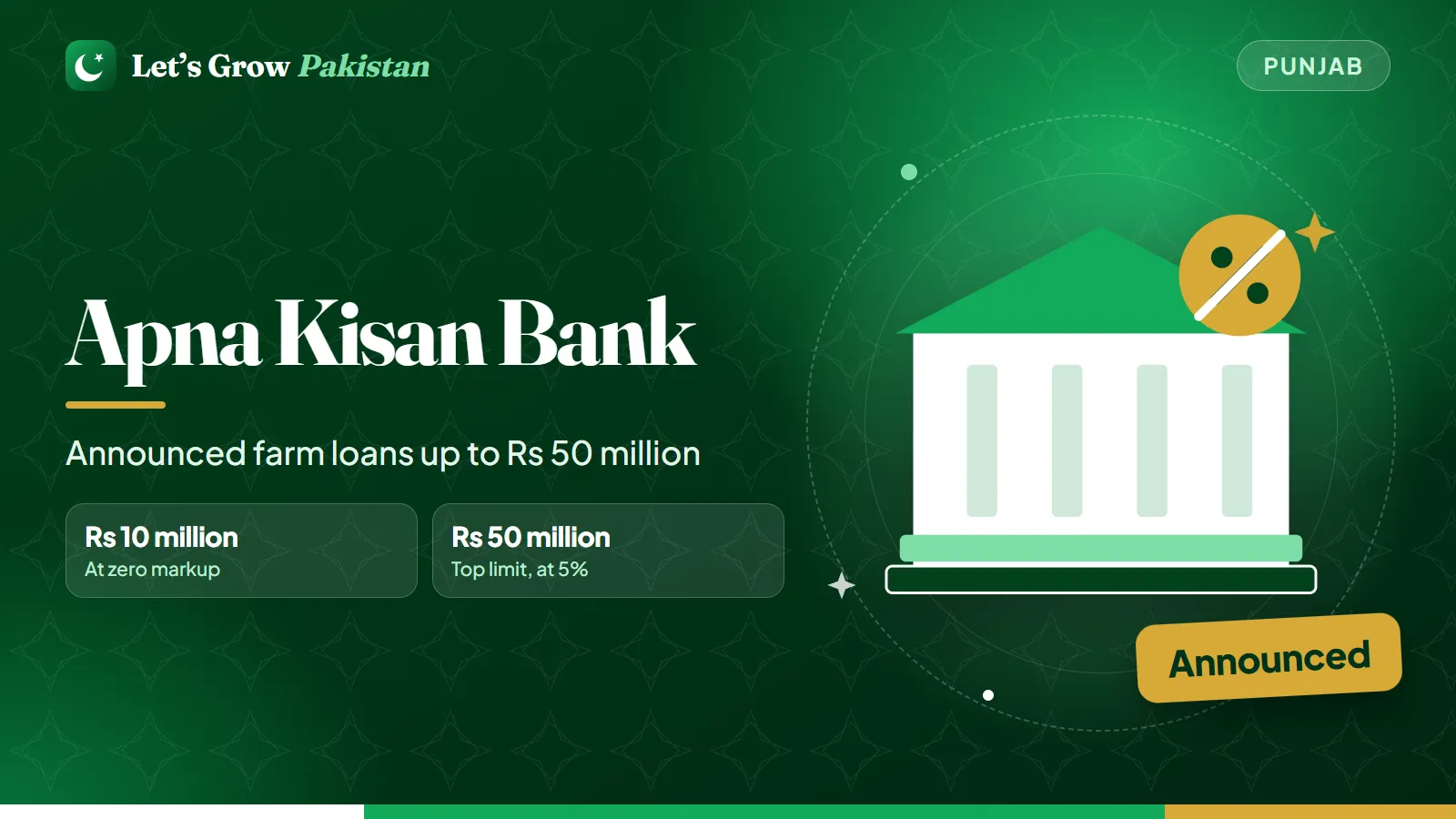
A farm loan package announced for Punjab in October 2026. Loans would run up to Rs 50 million, from zero markup to 5%. It is only announced, and who qualifies is not confirmed.
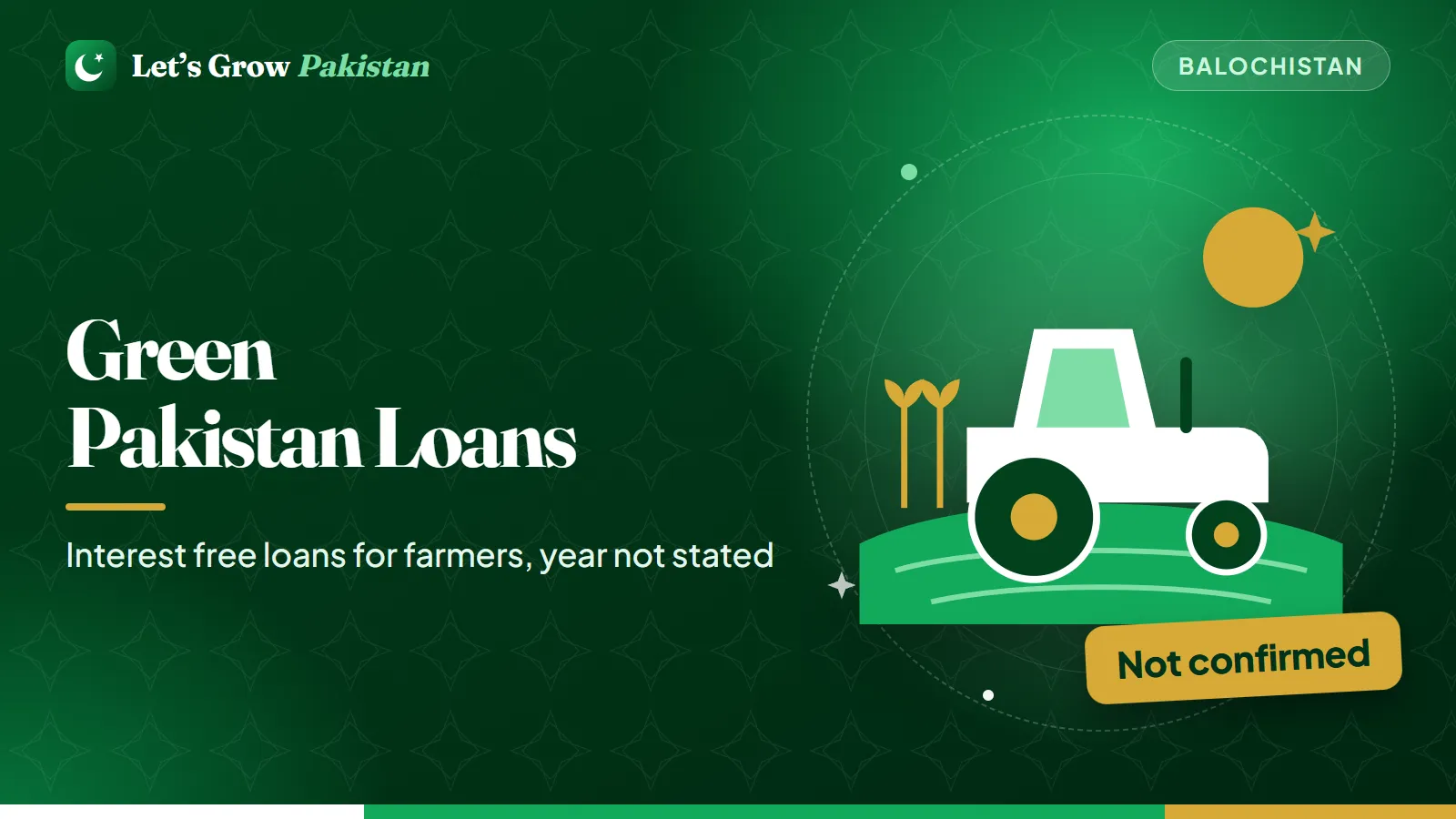
A report of Rs 3.2 billion in interest free loans to 847 farmers in Balochistan. The report does not state the year, and the programme's conditions and status are not confirmed.
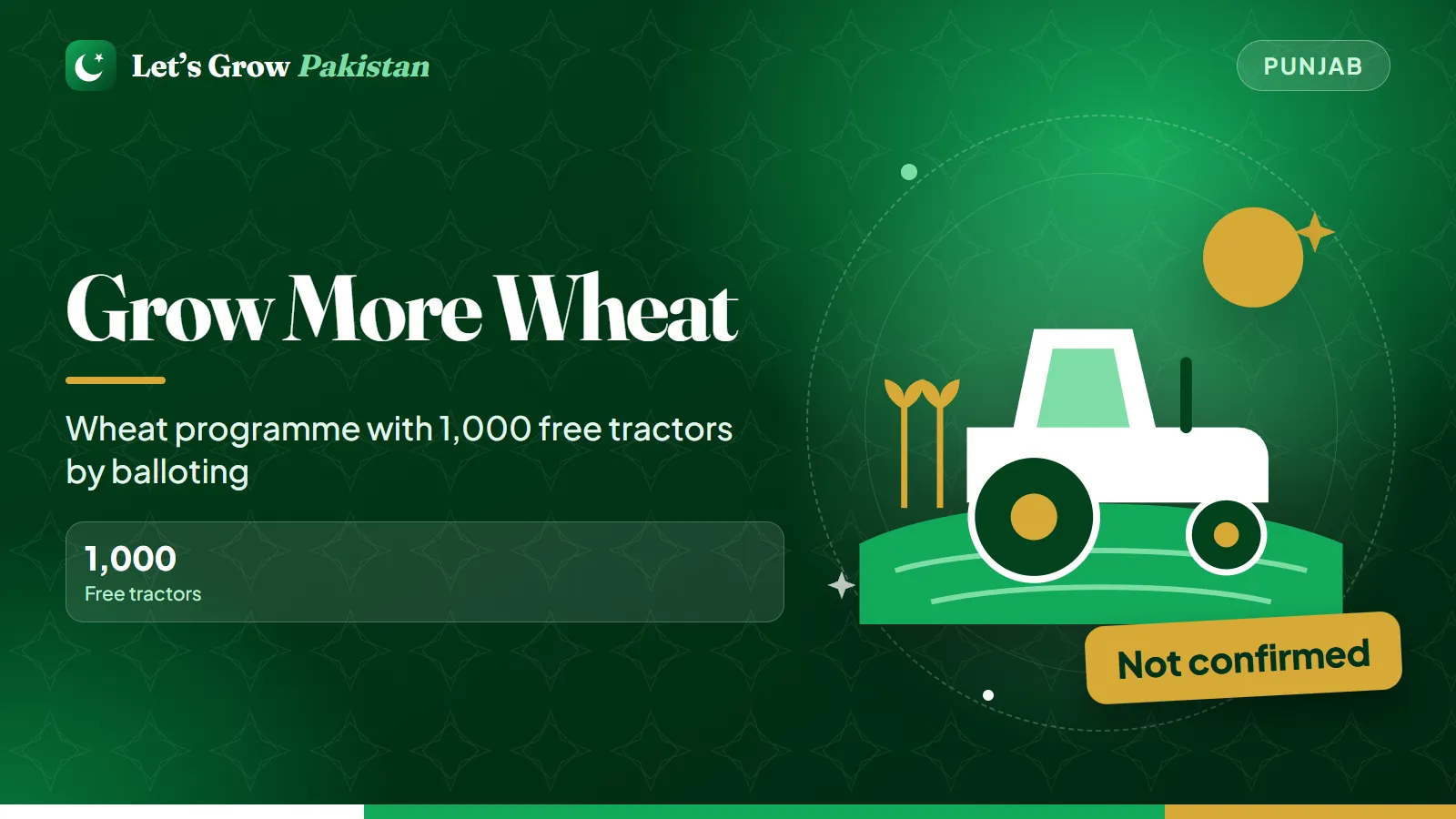
A Punjab wheat programme whose undated official page mentions 1,000 free tractors by balloting and 560,000 acres. The programme is unverified, and who can benefit is not confirmed.
A fertiliser subsidy card for Khyber Pakhtunkhwa farmers, known only from an older undated report of 600,000 cards and a Rs 300 million subsidy. Its current status is not confirmed.
The PM Kissan Package was a 2022 farm relief plan announced on 31 October 2022 at Rs 1.8 trillion. There is no evidence that it is still open, so it is not confirmed for today.
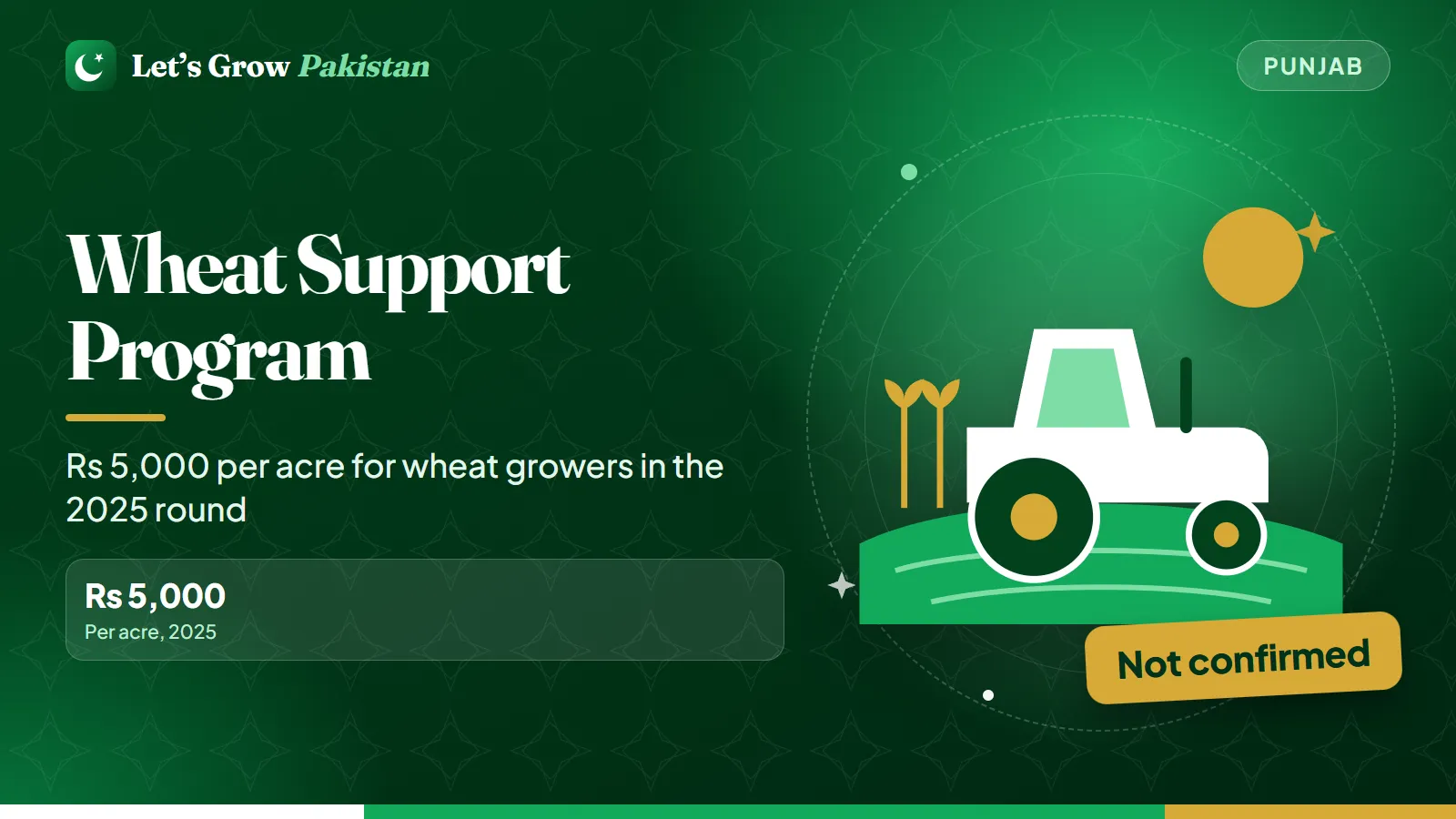
A 2025 Punjab round that paid wheat growers Rs 5,000 per acre, reportedly for 600,000 farmers. Its current status is unverified, as no sowing payment for 2026 to 2027 was found.
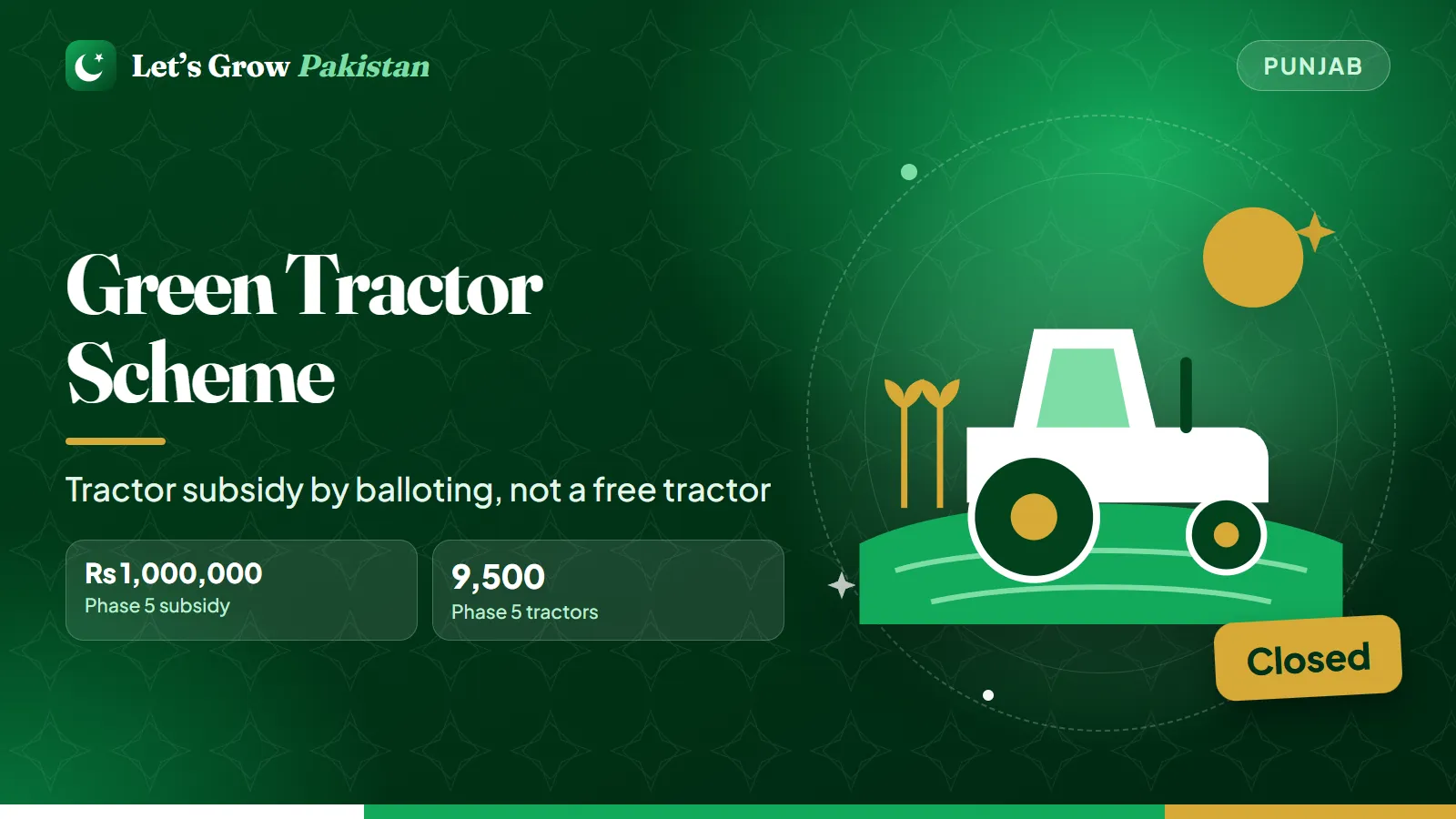
A Punjab subsidy that helps farmers buy a tractor through balloting. It is not a free tractor. News reports give Rs 750,000 in Phase 4 and Rs 1,000,000 in Phase 5. Applications are closed.
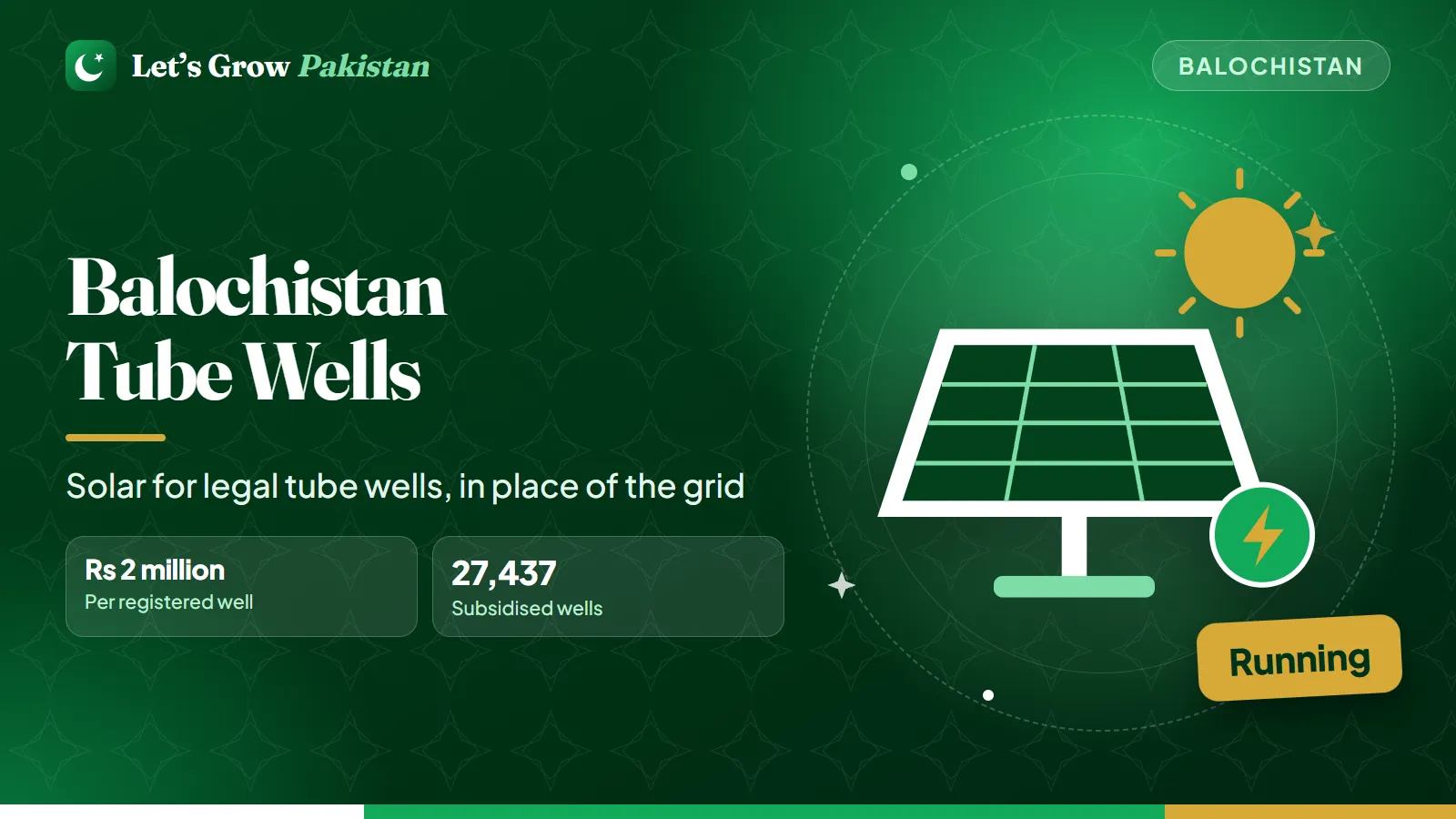
Balochistan farmers with a legal tube well connection can move it to solar and come off the grid. The federal government pays 70% and the province 30%, up to Rs 2 million per connection.
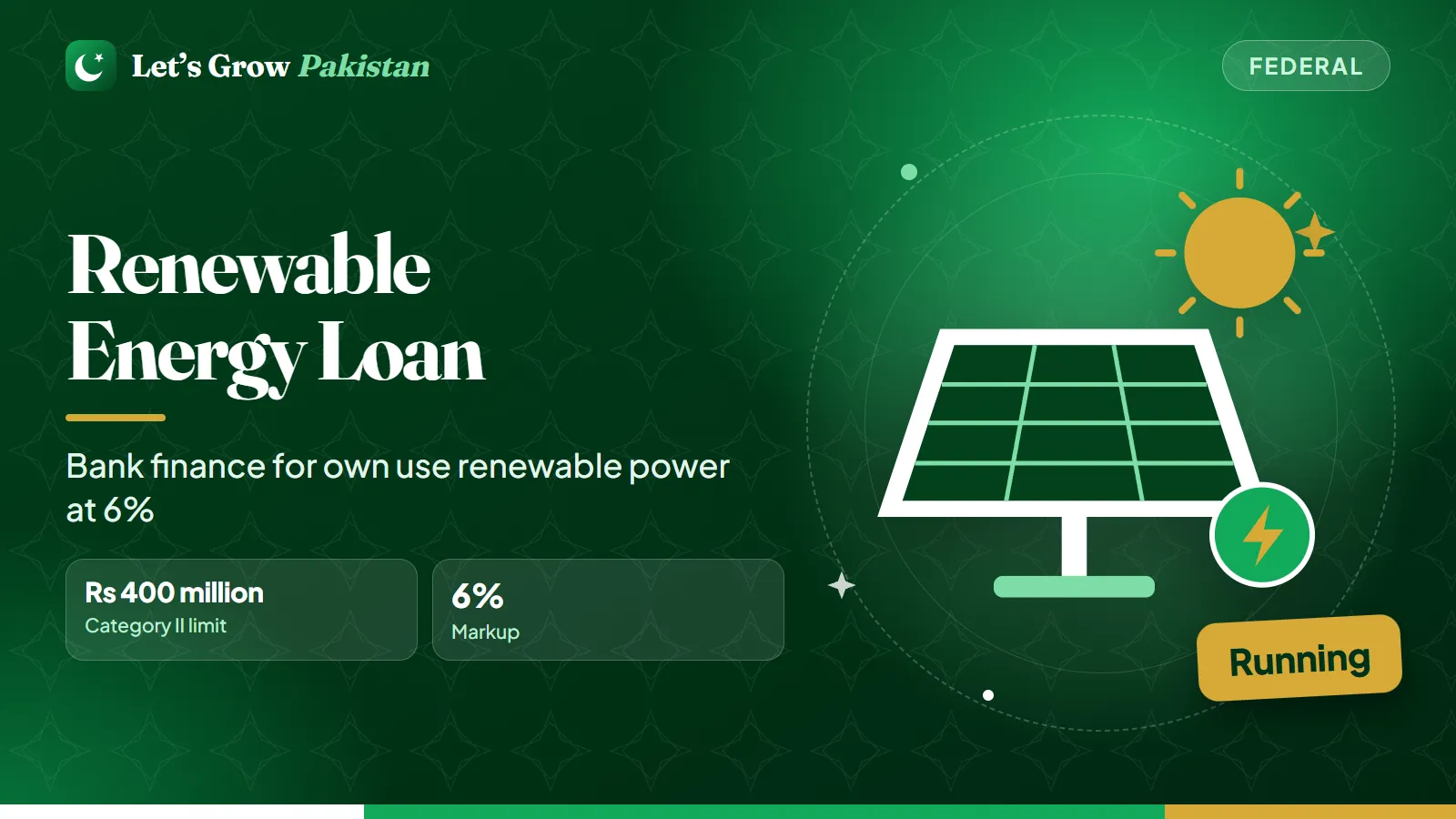
This State Bank line finances renewable power projects built for the owner's own use, up to 1 MW. Category II borrowers can get up to Rs 400 million at 6% for up to 10 years.
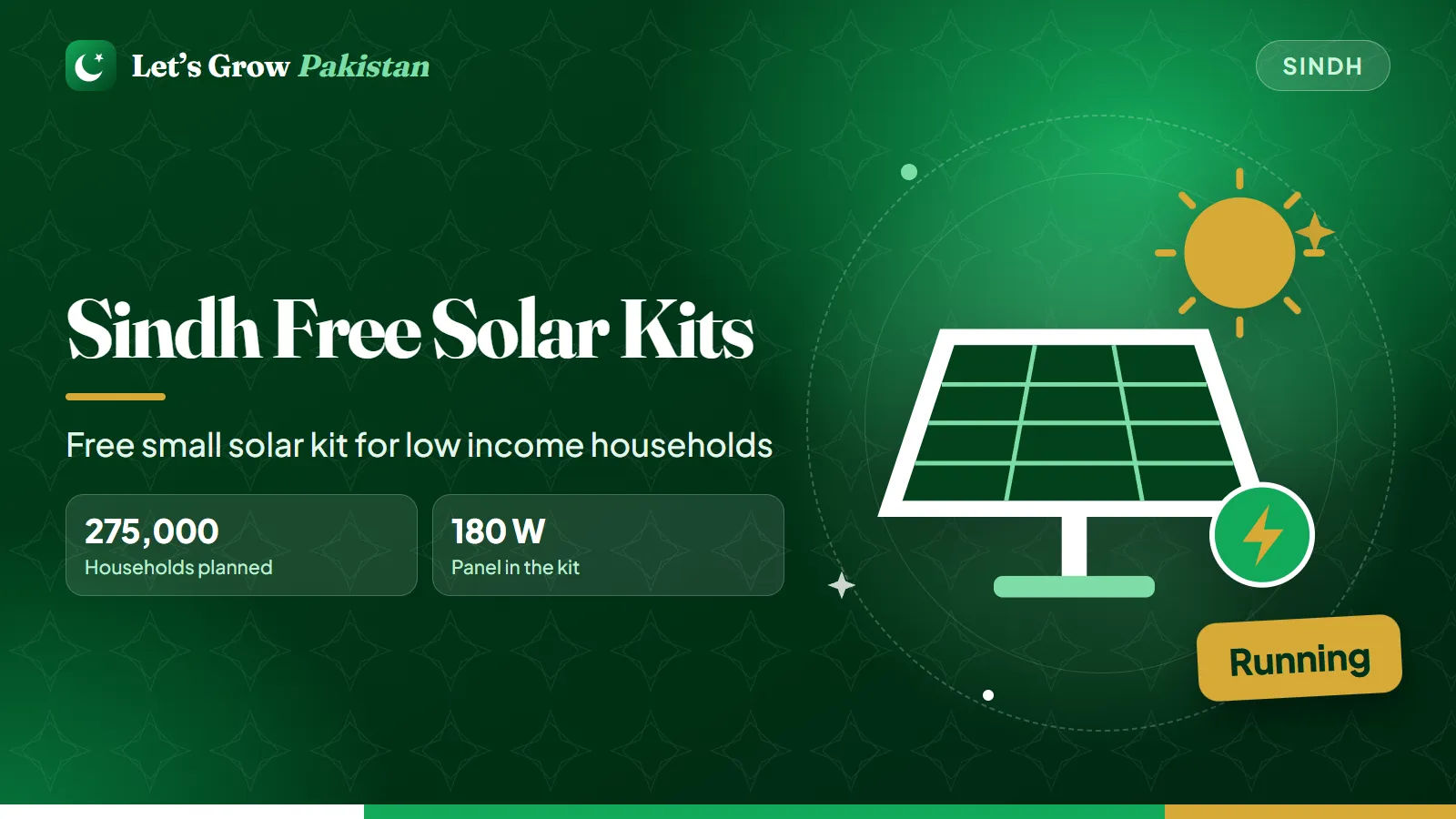
Low income Sindh households are to receive a free small solar kit with a 180 W panel, a fan, 3 LED lights and a lithium battery. About 275,000 households are planned at a cost of Rs 18.2 billion.
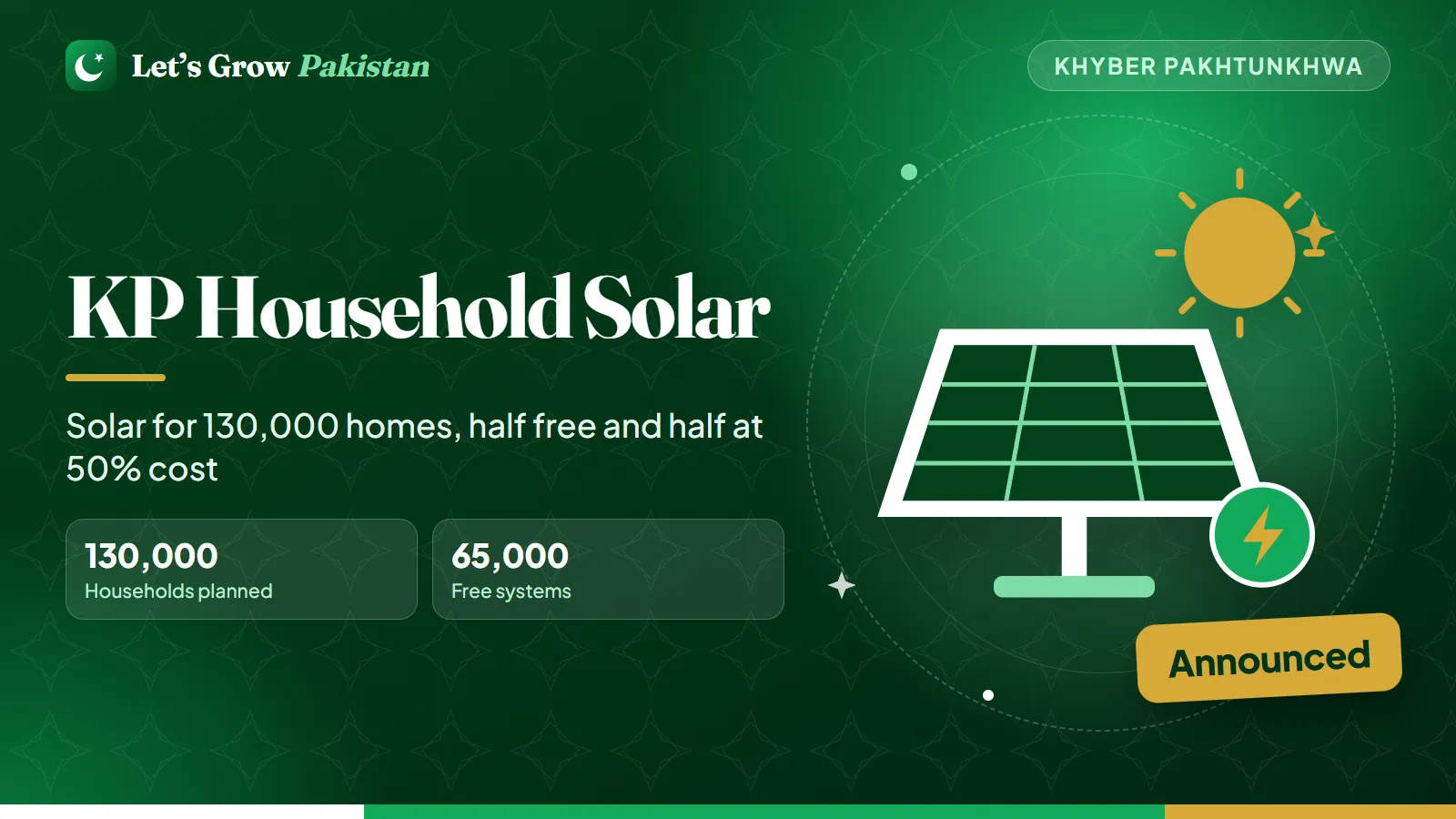
Khyber Pakhtunkhwa plans solar for 130,000 homes, 65,000 of them free and 65,000 at half cost in instalments. It is only announced, and no delivery to homes is confirmed.
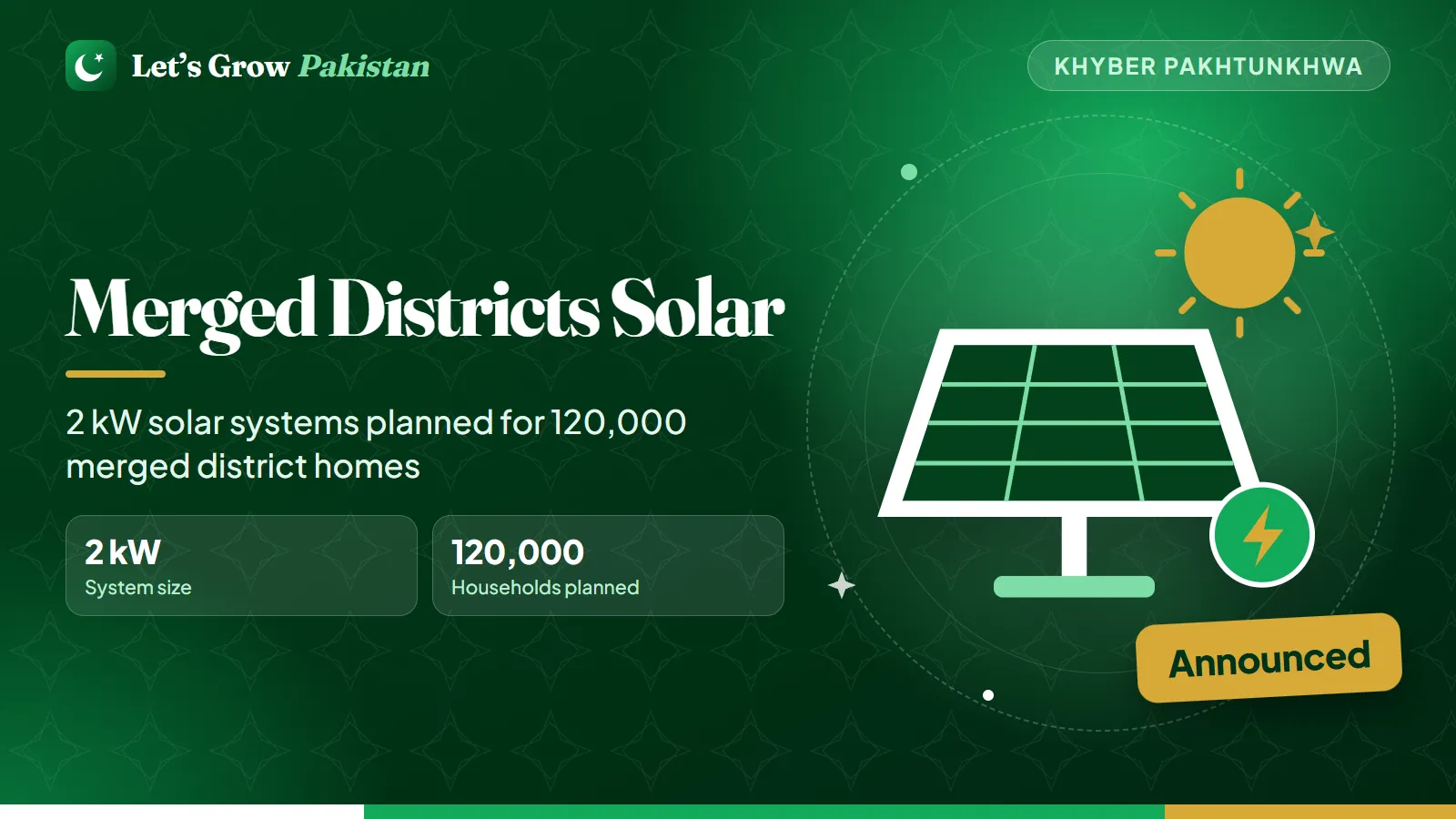
A planned 2 kW solar system for each of 120,000 homes in the merged districts of Khyber Pakhtunkhwa, costing Rs 13.3 billion. None had been delivered by 9 March 2026.
Sindh announced subsidised solar financing for middle class households in its budget speech of 17 June 2026. It is only an announcement so far, and no terms have been found.
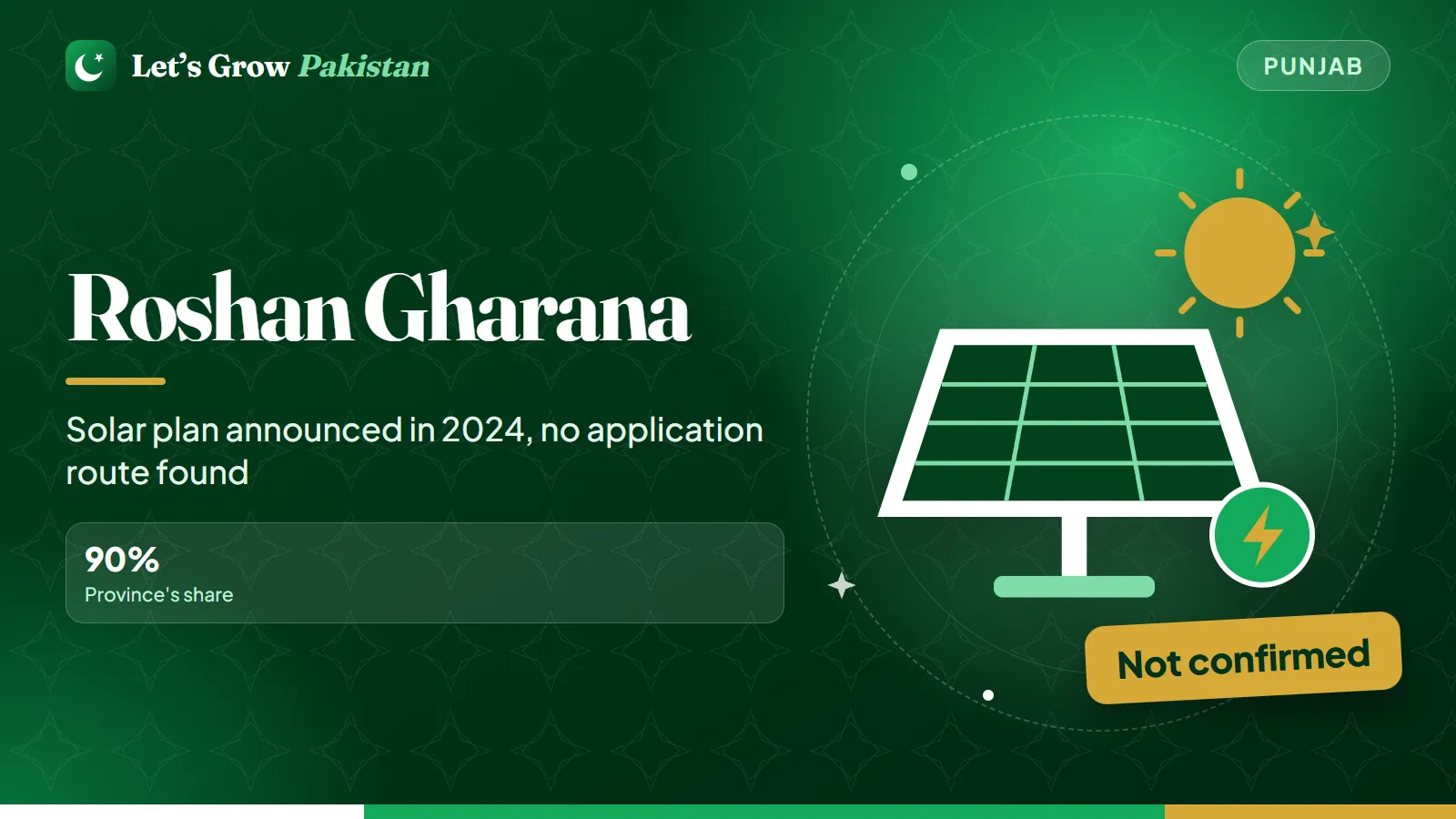
A solar plan announced in 2024 under which the province would pay 90% and the consumer 10% over five years. No sign was found that it opened to the public, so it is unverified.
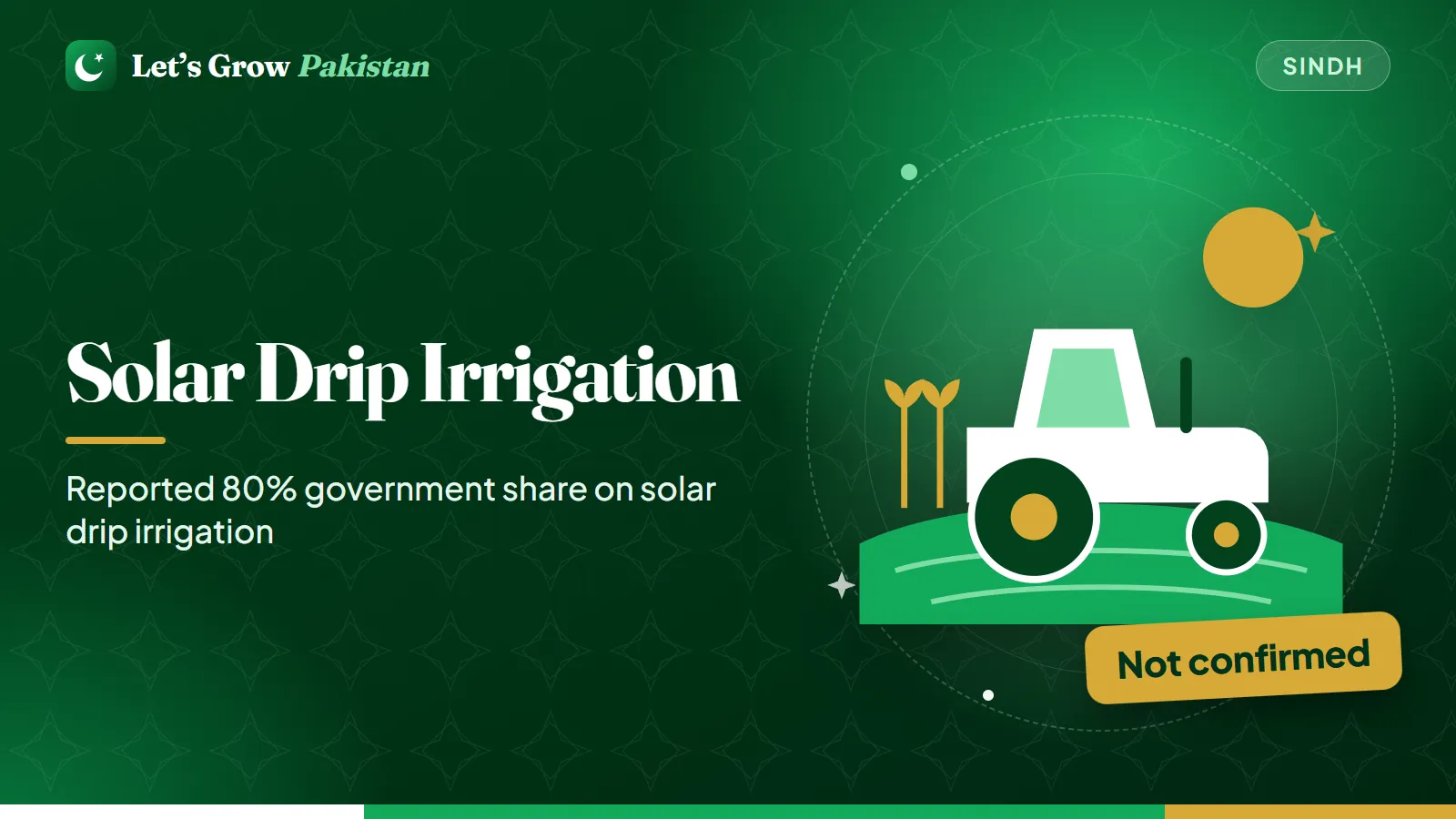
A reported Sindh plan where the government would pay 80% of the cost of solar drip irrigation and the farmer 20%. It rests on a single unclear report and is not confirmed.
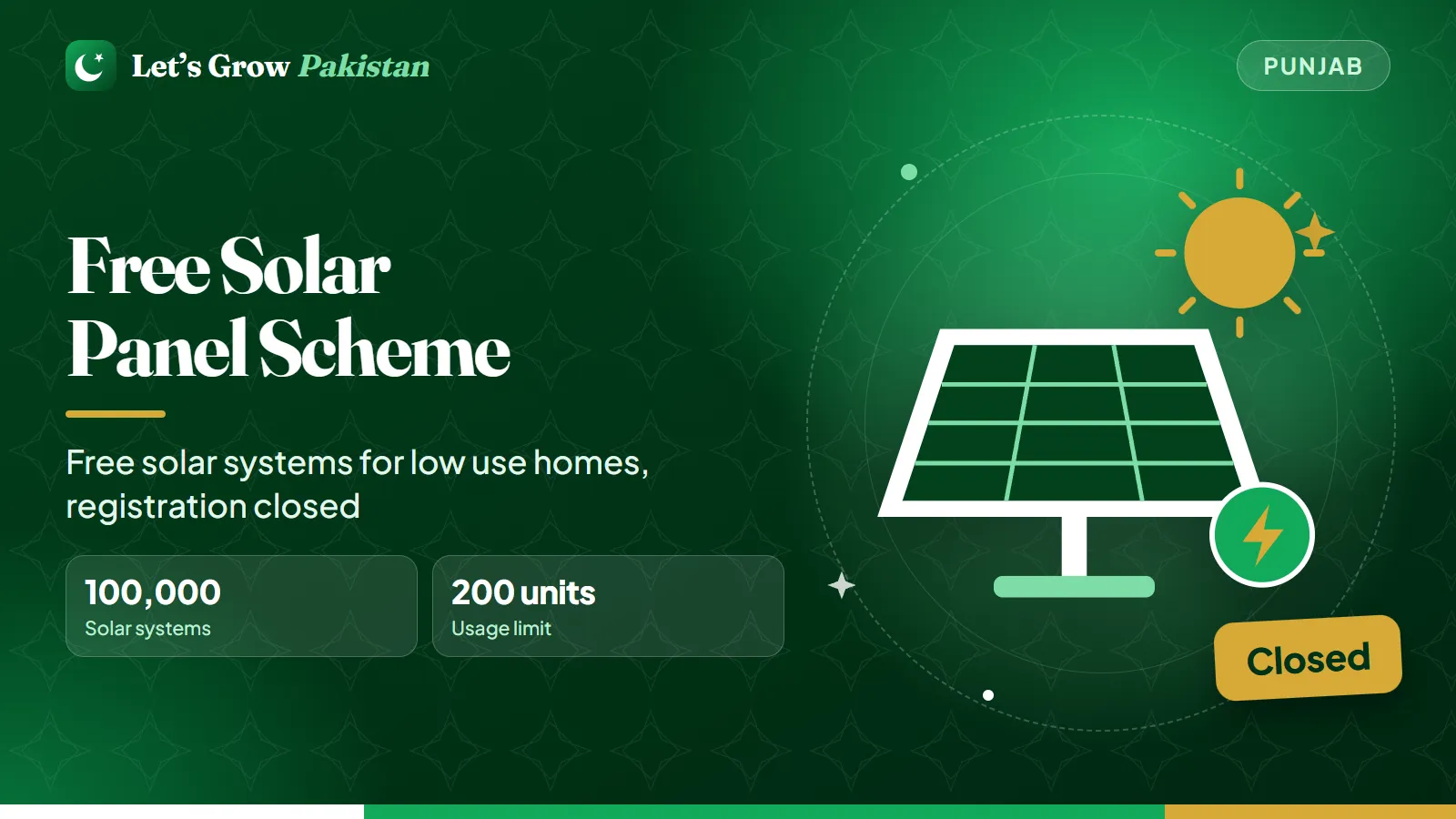
A Punjab plan that offered up to 100,000 free standalone solar systems to low use households. Registration is closed, and the system size is not on the official page.
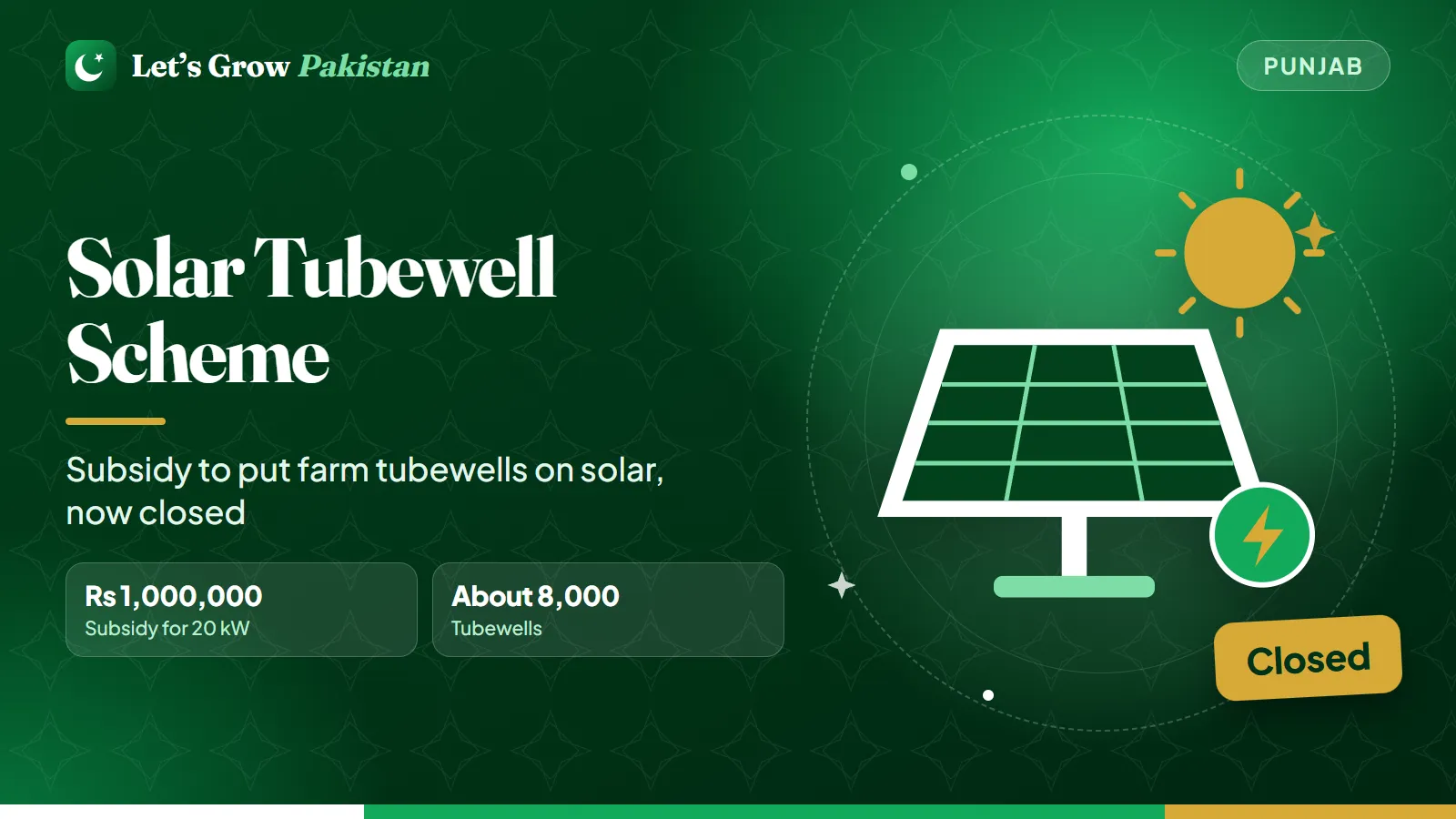
A Punjab subsidy to move farm tubewells onto solar power, from Rs 500,000 for a 10 kW system up to Rs 1,000,000 for 20 kW, covering about 8,000 tubewells. It is now closed.
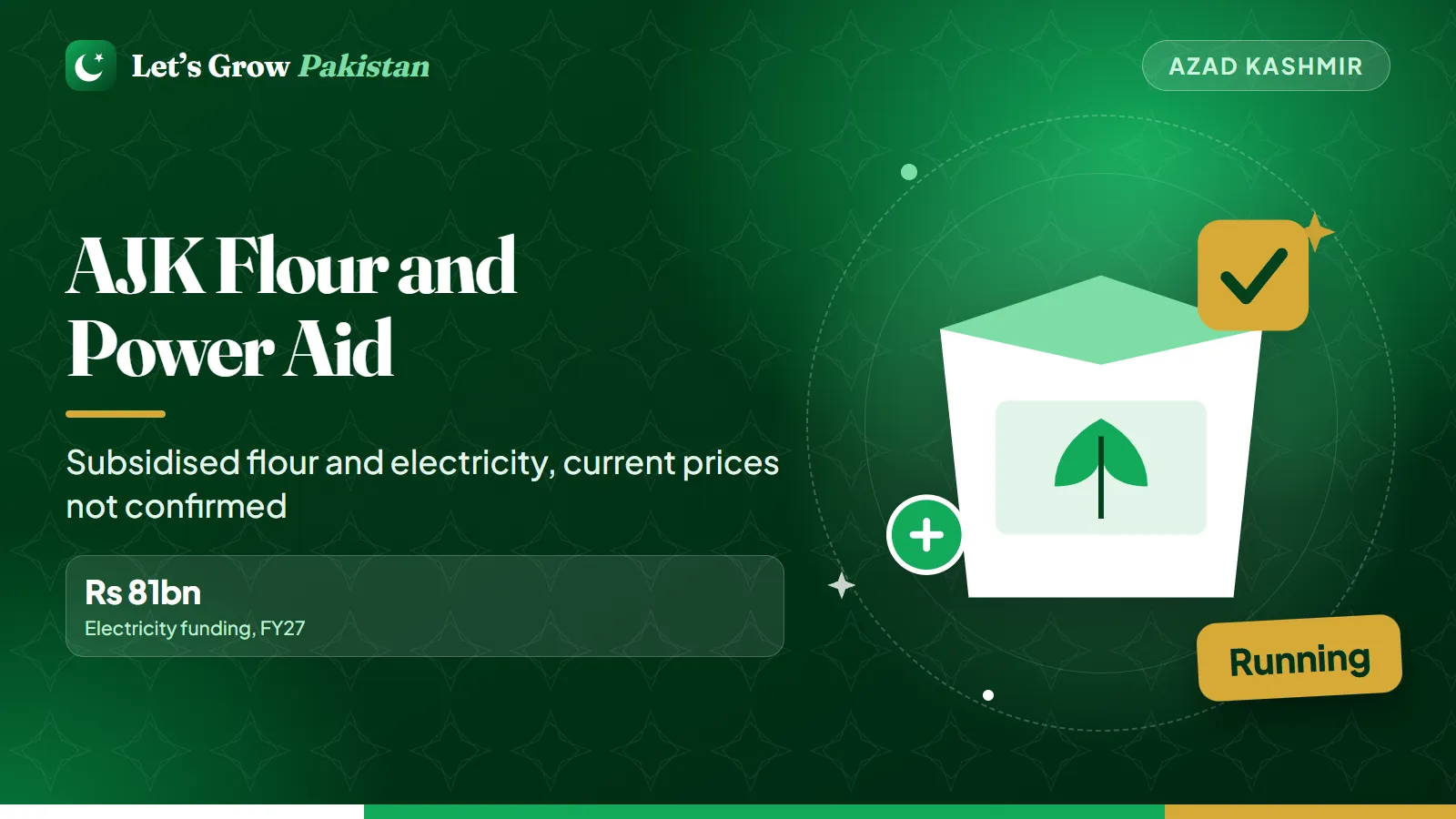
Azad Kashmir subsidises flour and electricity for residents. The last confirmed rates, from May 2024, were Rs 3, 5 and 6 a unit by slab and Rs 2,000 for a 40 kg flour bag. Current prices are not confirmed.
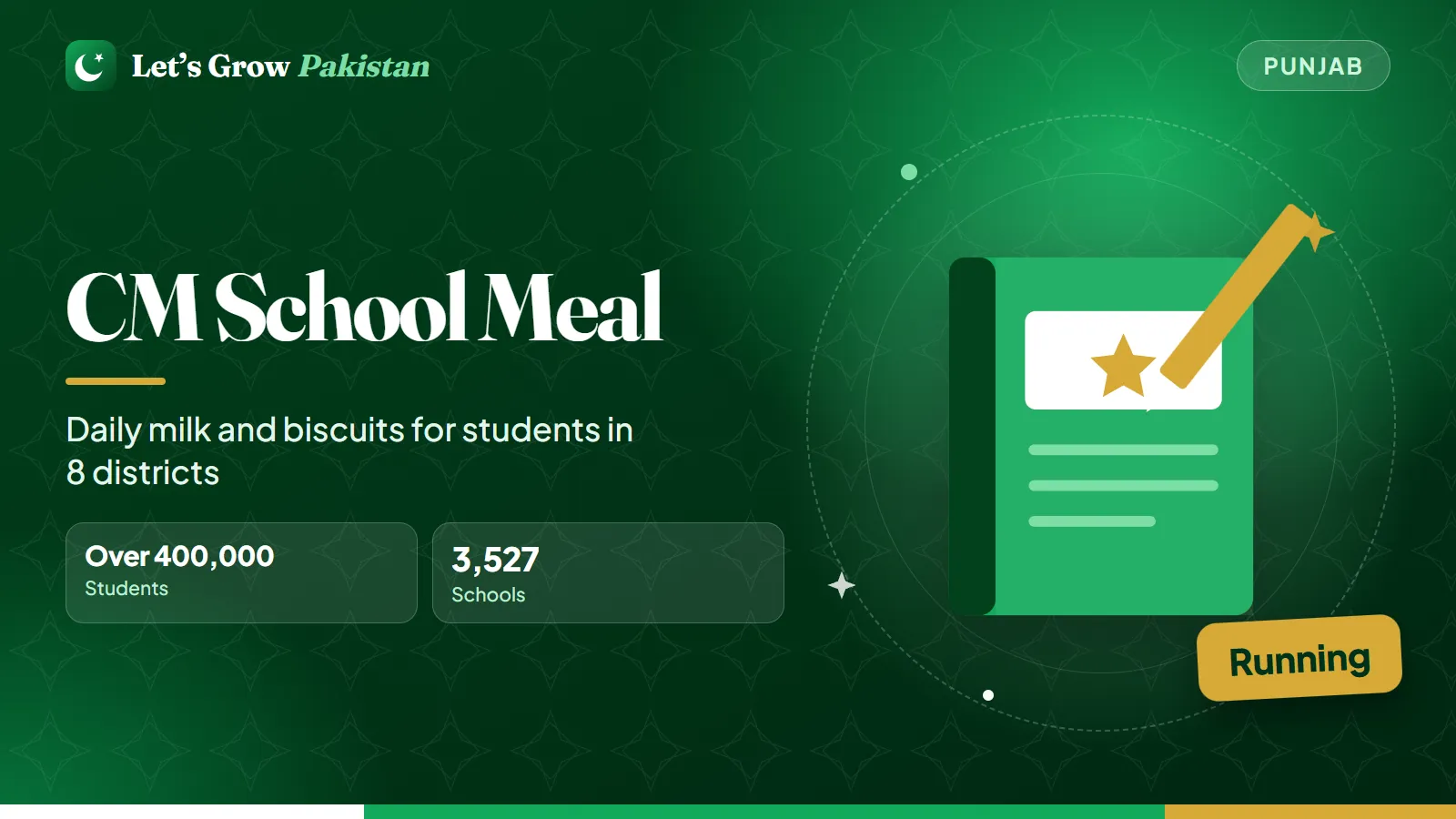
A pilot giving daily milk and biscuits to over 400,000 students at 3,527 schools across 8 Punjab districts, including Bhakkar, Layyah, Rajanpur and Mianwali.
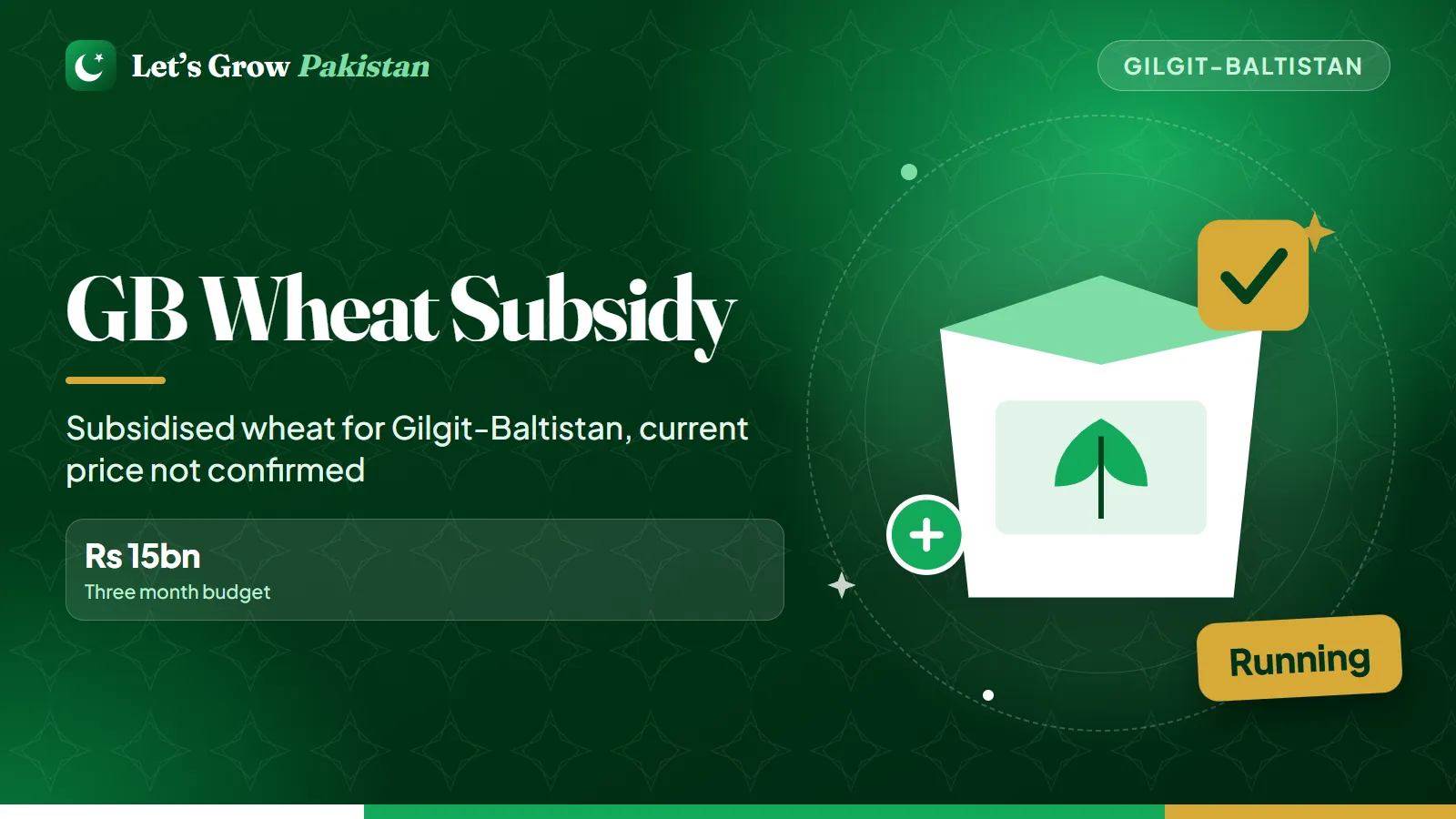
Subsidised wheat for Gilgit-Baltistan residents, backed by Rs 15 billion in the three month interim budget of July 2026. The last price found was Rs 3,600 per 100 kg, not confirmed as current.
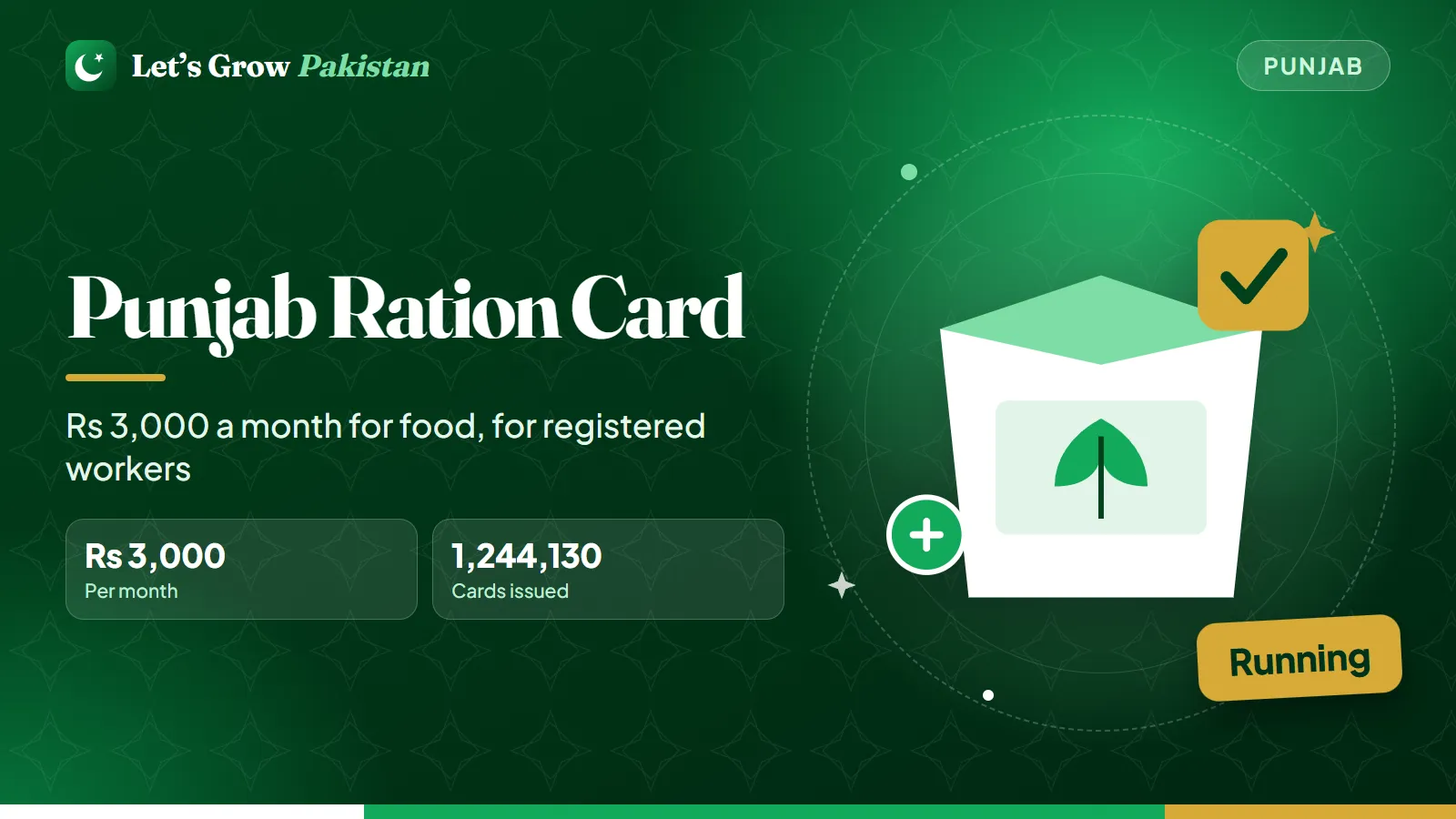
Rs 3,000 a month for food items, spent at over 62,000 registered shops. Dated reports say it reaches registered workers and miners, and it was approved to continue into 2026 to 2027.
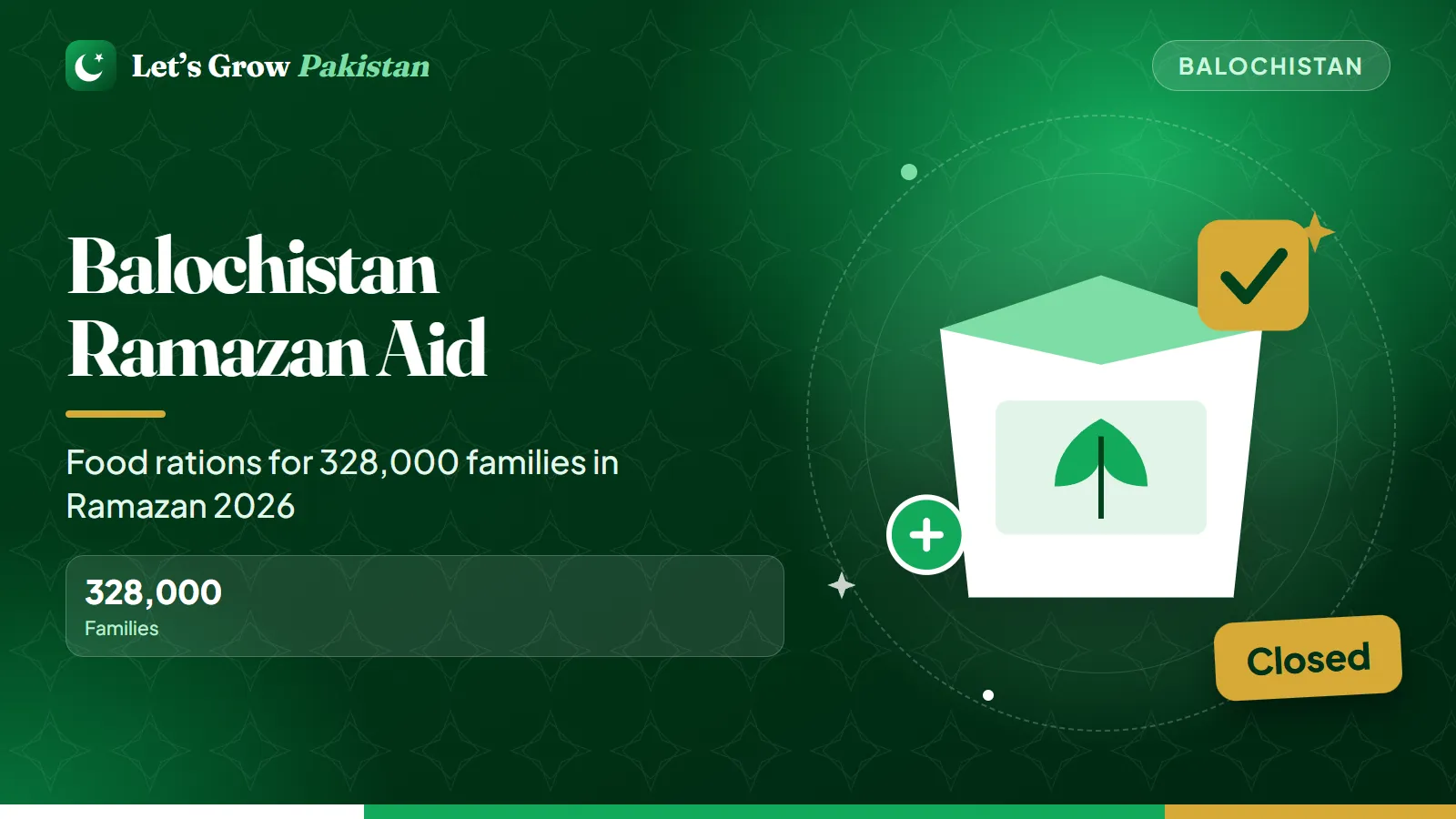
Balochistan's Ramazan 2026 relief gave food rations of flour, rice, oil, sugar, daal, tea and dates to 328,000 selected families. It was not cash, and it has closed.
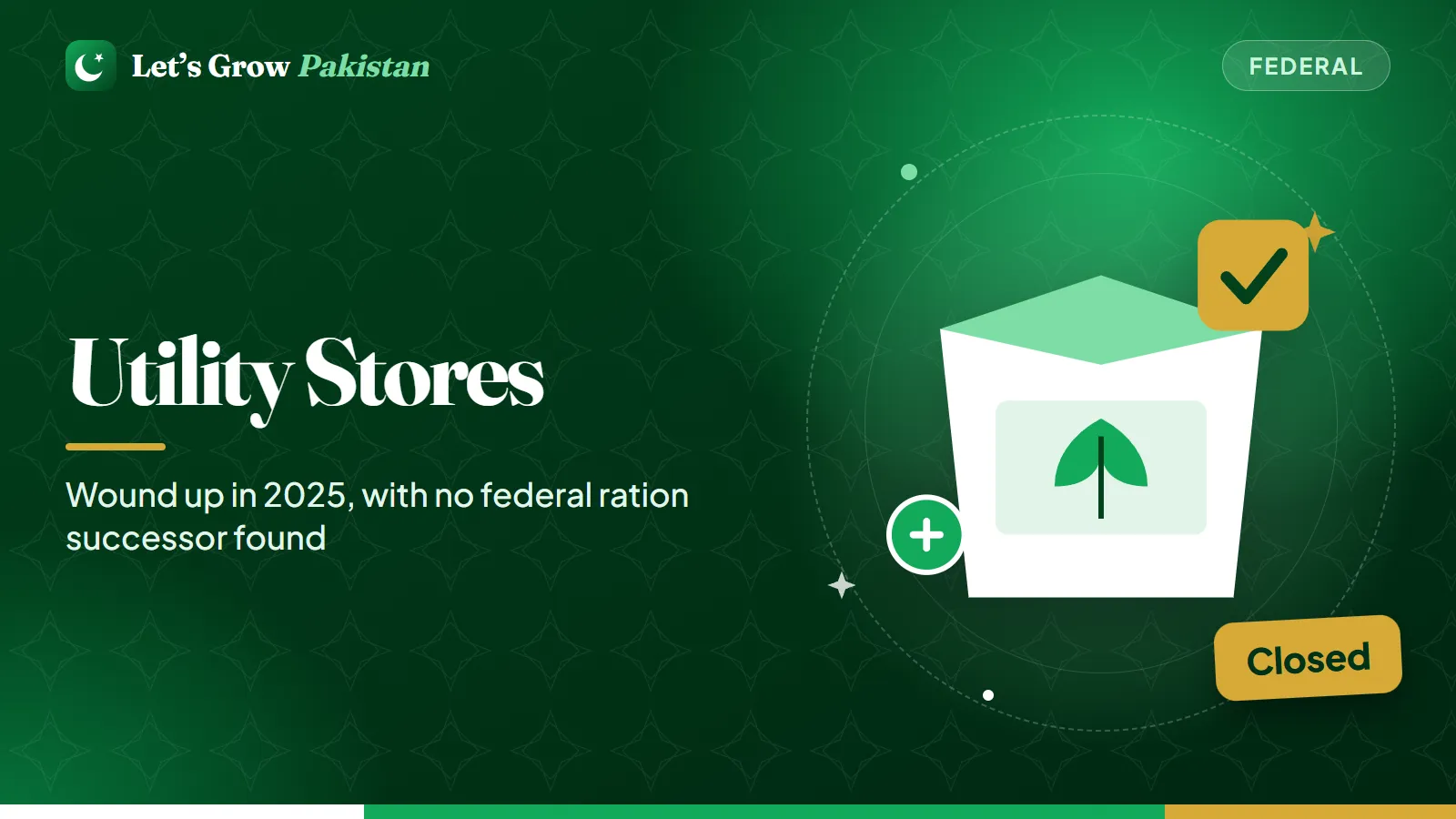
Utility Stores Corporation, the state run ration chain, was wound up in 2025 and is closed. No federal ration successor was found, and cash through wallets has taken its place.
Cash support for mothers in 13 districts of Punjab, up to Rs 38,000 in stages. Payments cover registration, antenatal visits and safe delivery at a government facility, plus child care.
Punjab's collective weddings for brides who are orphans, destitute or disabled, or daughters of a disabled parent. The 4th phase began on 12 November 2026, with 5,350 weddings planned to March 2027. The last rounds gave Rs 200,000 salami on an ATM card.
Pregnant and nursing women in 22 Sindh districts can receive Rs 41,000 over three years, raised from Rs 30,000, for antenatal visits, hospital delivery and postnatal care.
Bait-ul-Mal runs centres that teach skills free to widows, orphans and low income women. Trainees also receive Rs 50 a day while they learn.
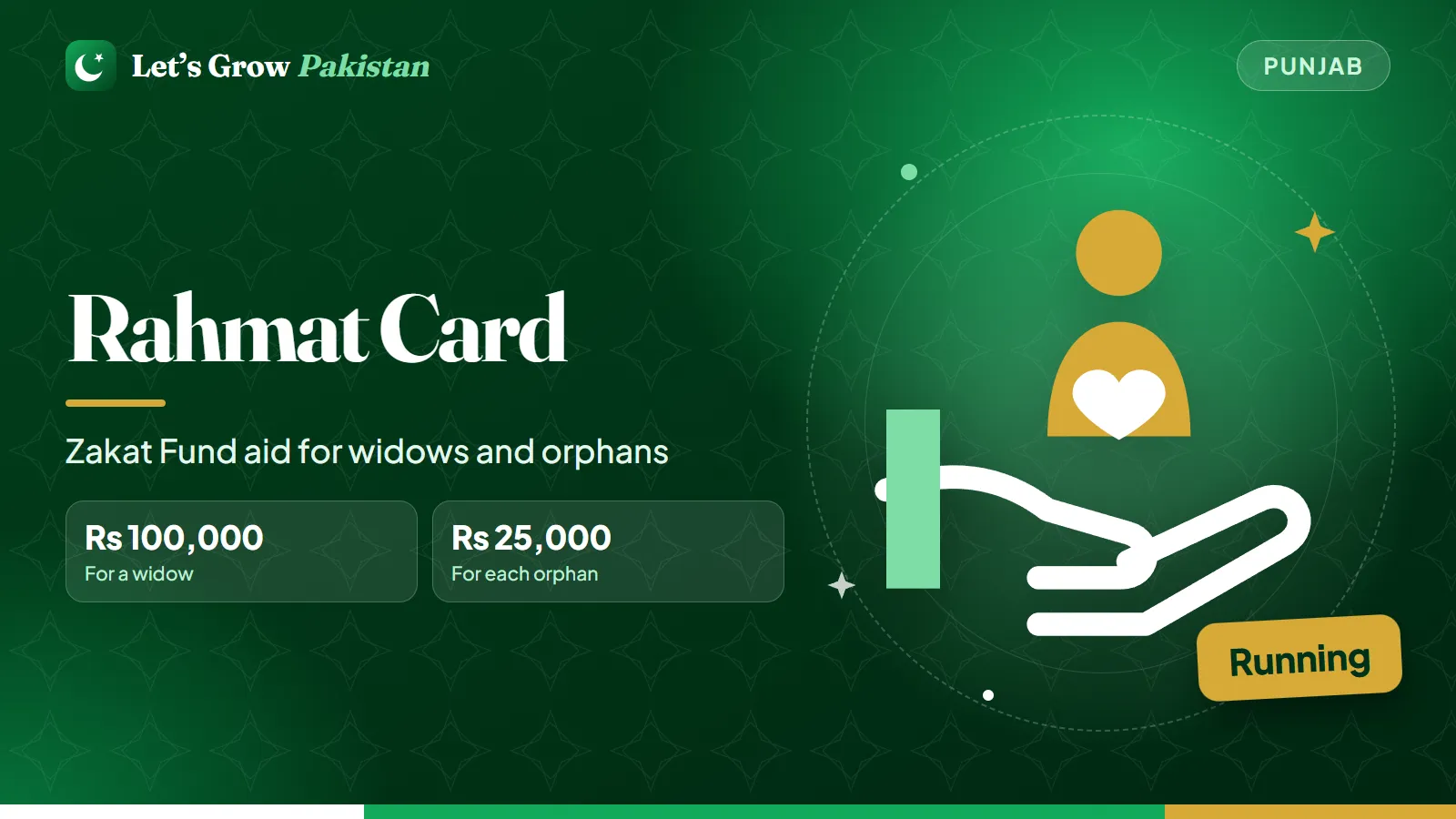
Zakat Fund aid for widows and orphans in Punjab. A widow gets Rs 100,000 and each orphan Rs 25,000, up to Rs 150,000 a family. Phase 1 sets aside Rs 5 billion for 50,000 families.
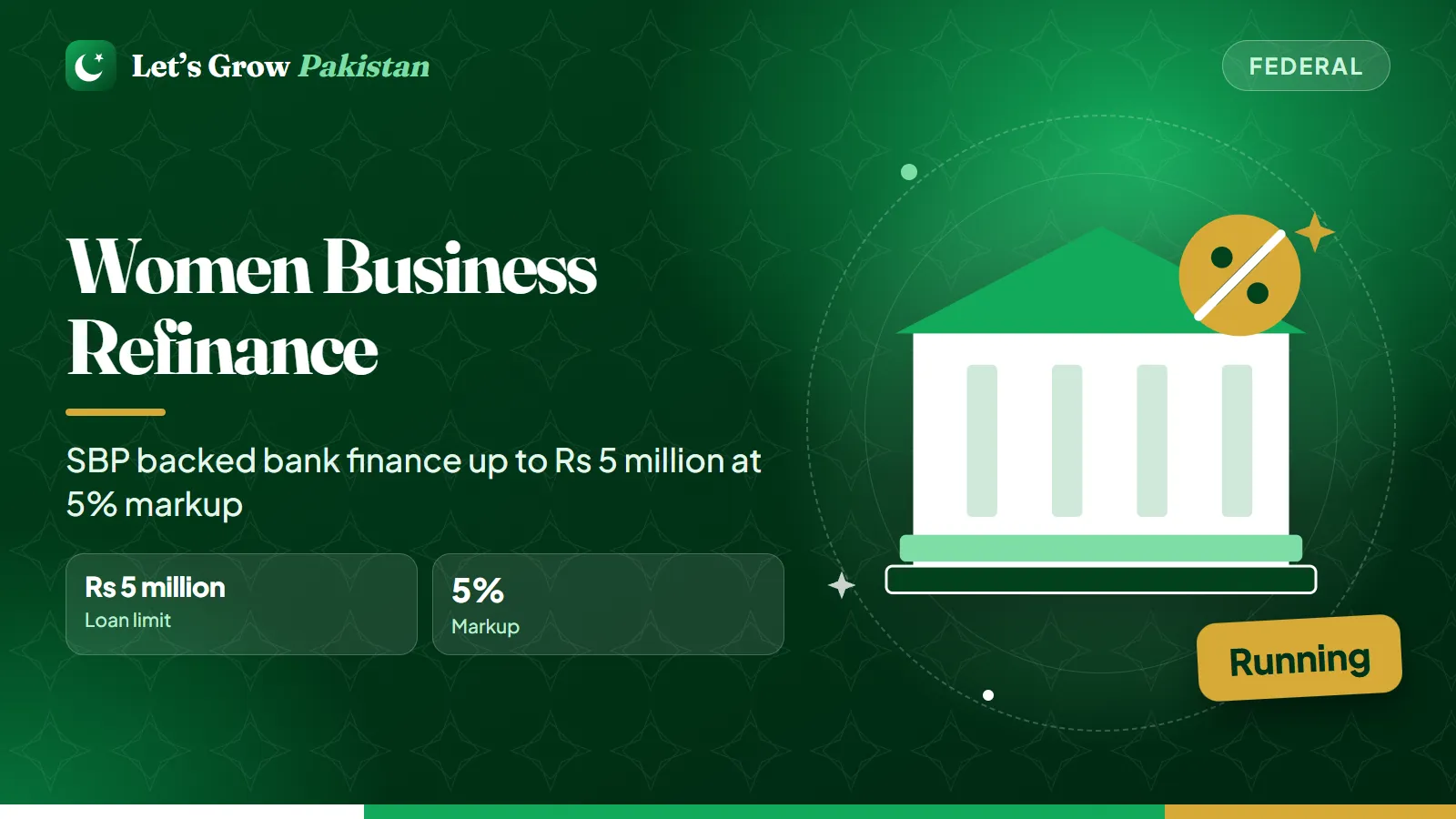
A State Bank backed scheme that lets women entrepreneurs borrow from banks up to Rs 5 million at 5% markup. Repayment runs up to 5 years, with 6 months of grace at the start.
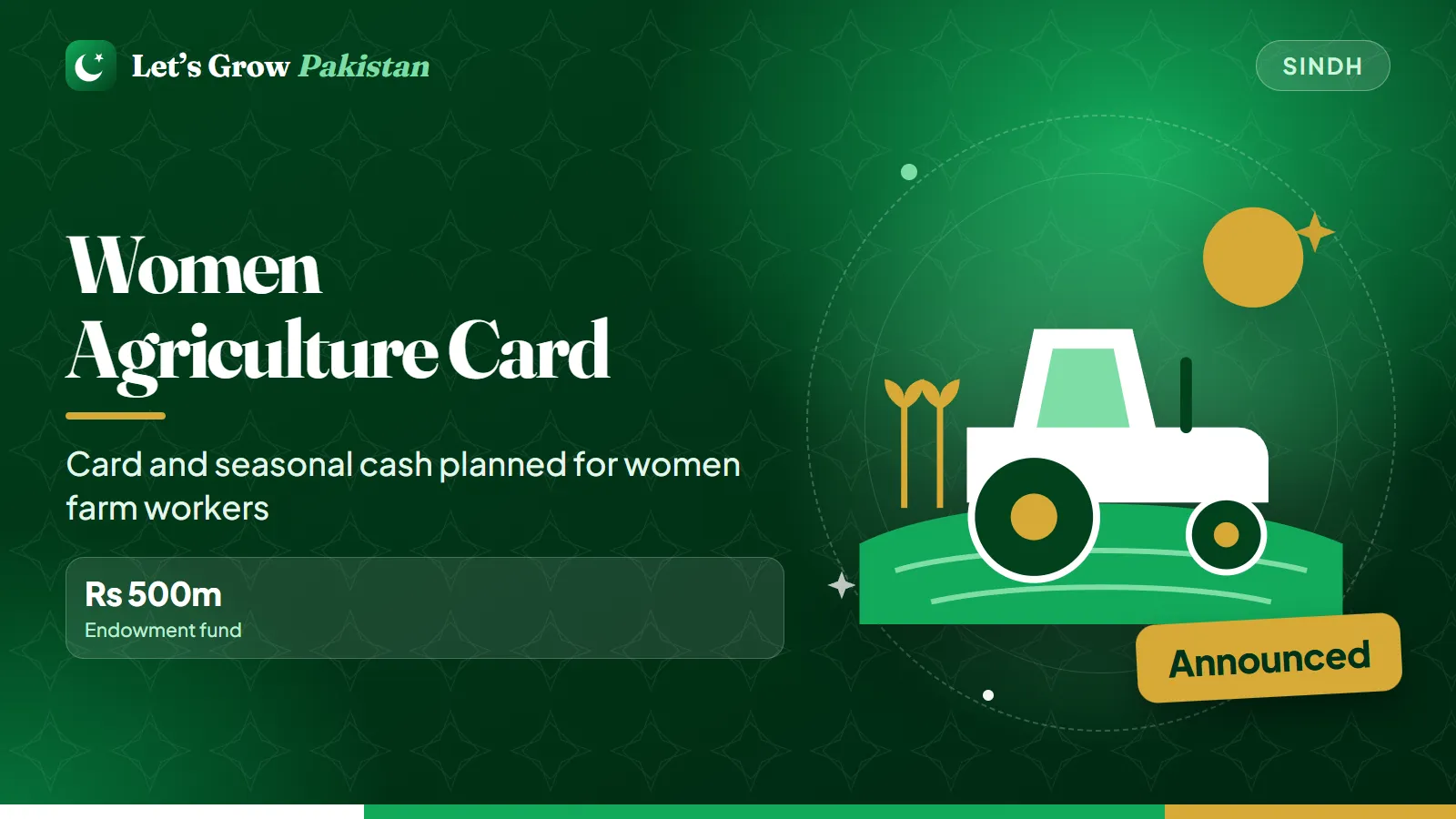
Sindh plans a card and seasonal cash support for women farm workers. The cabinet approved the card and a Rs 500 million fund in March 2026. No payment amount has been announced.
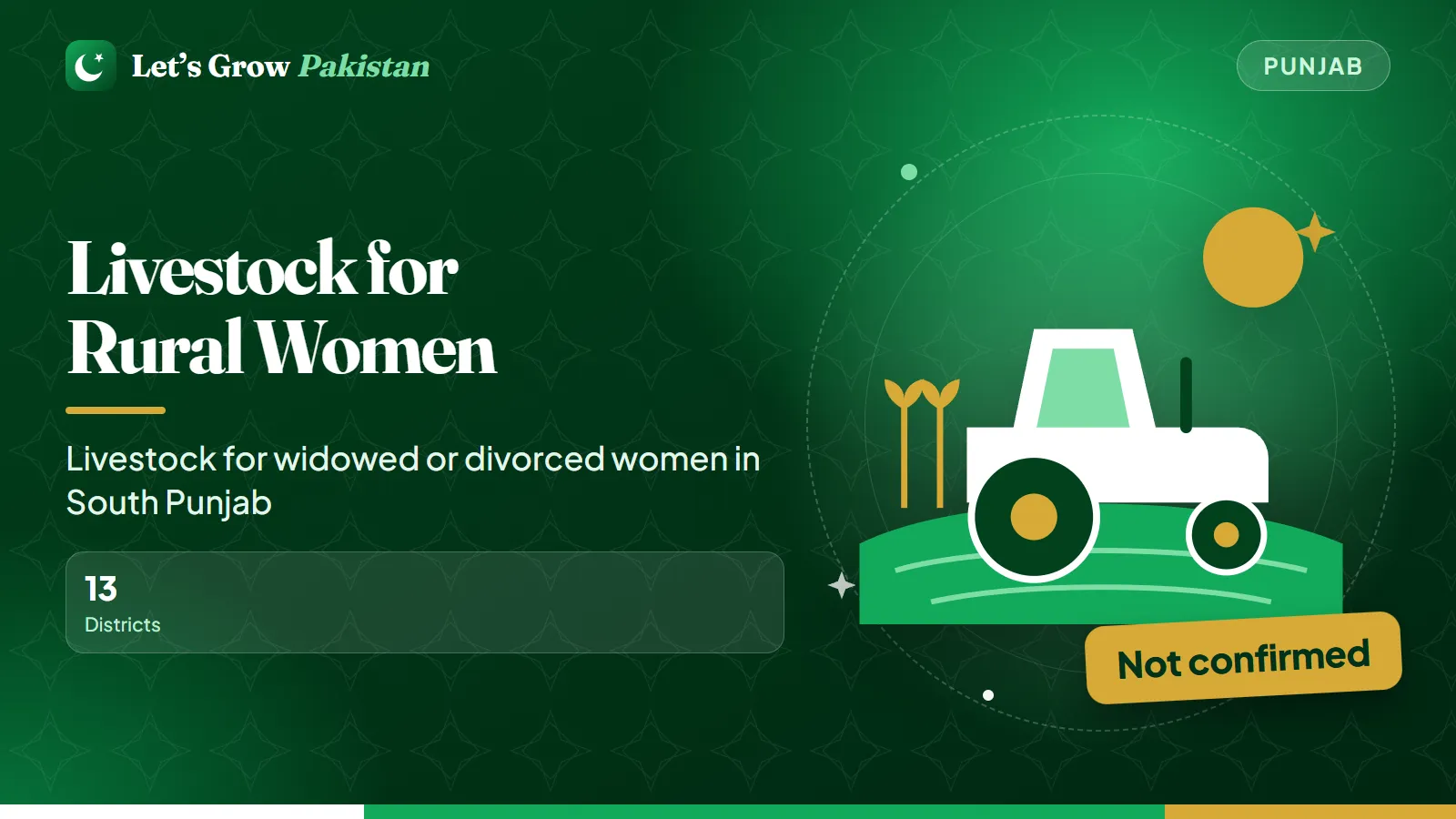
A scheme to give livestock, such as heifers, to widowed or divorced rural women up to age 55 in 13 South Punjab districts. It is unverified, as the page shows no dates.
The Digital Youth Hub is a free app and portal listing jobs and internships for young people, with over 114,000 jobs listed in July 2026. It also leads to the laptop scheme.
Hunarmand is a BISP programme of free skills training for beneficiary families and their members. Whether trainees get a stipend has not been confirmed by any official figure.
Beyond skills and loans, the PM Youth Programme has budget lines for 2026 to 2027, including Daanish Schools at Rs 24.48 billion and IT startups at Rs 3 billion. Rules are unconfirmed.
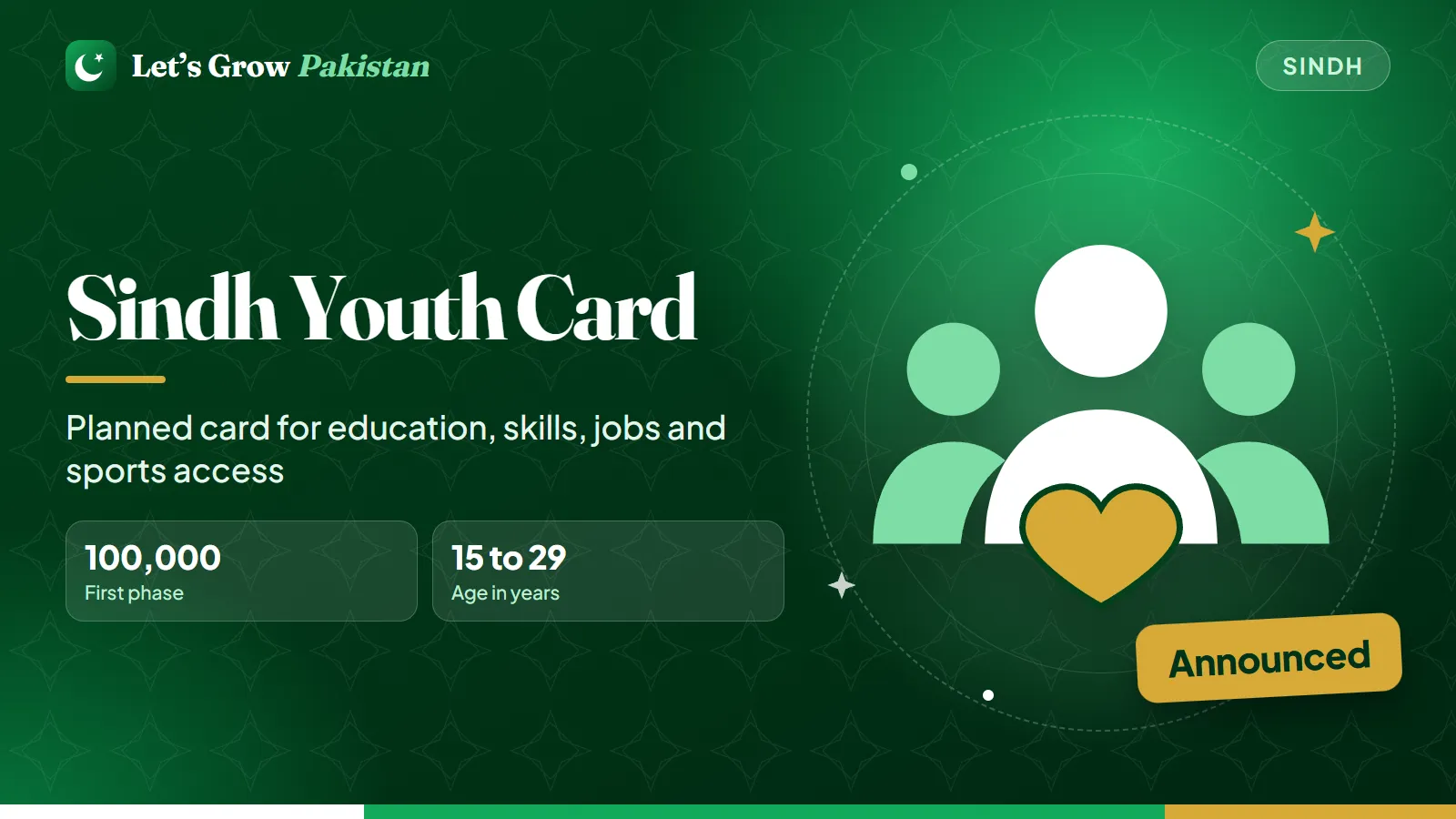
A planned card for Sindh youth aged 15 to 29 to reach education, skills, jobs, scholarships and sports. The first phase would cover 100,000 people. It is only announced, and the package is not final.
Free courses offered by a Sindh human resource board. The last reported deadline was 28 February 2026, and the course list and who can join are not confirmed.
A Sindh youth training programme. No 2026 admission notice has been found, and its current courses, support and eligibility are not confirmed.
NAVTTC runs free 3 to 6 month courses for young people at its partner institutes across Pakistan. No batch is open on 11 November 2026, and the next intake will be announced by NAVTTC.
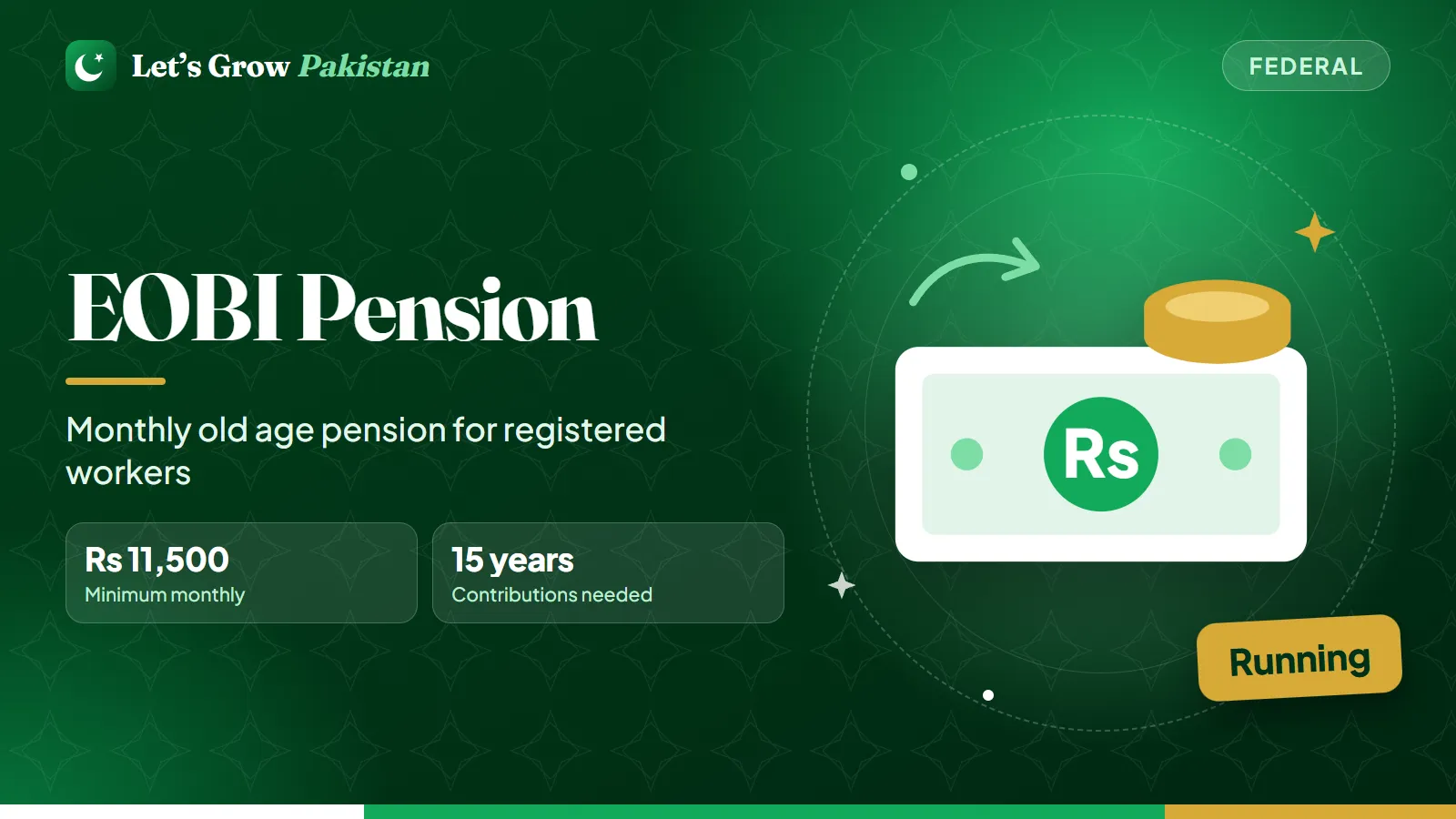
EOBI pays a monthly old age pension to registered workers, with a minimum of Rs 11,500 since 1 January 2025. It also gives invalidity and survivors' pensions and an old age grant.
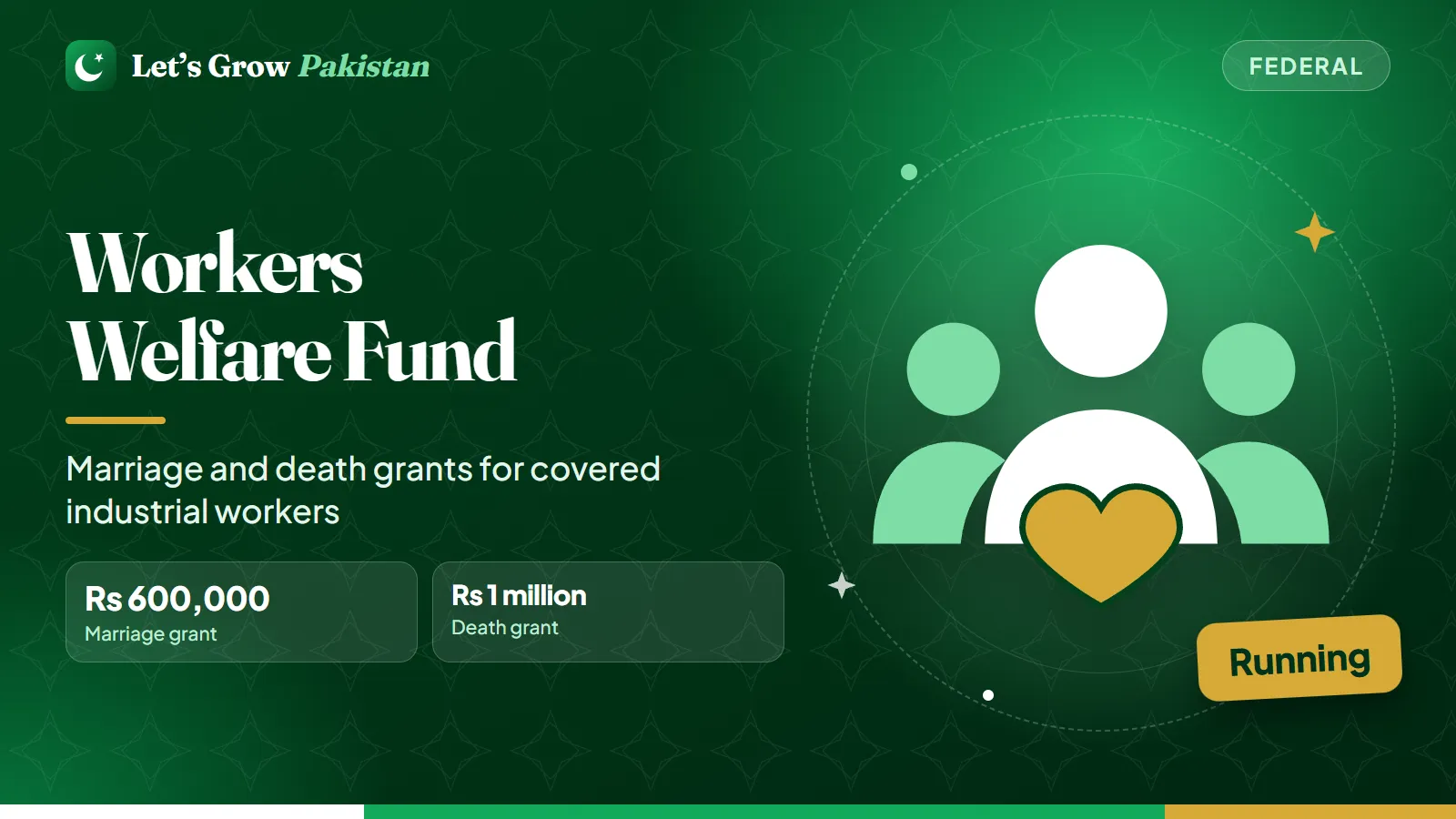
The federal Workers Welfare Fund helps covered industrial workers with a marriage grant and a death grant. The minister put them at Rs 600,000 and Rs 1 million in August 2025.
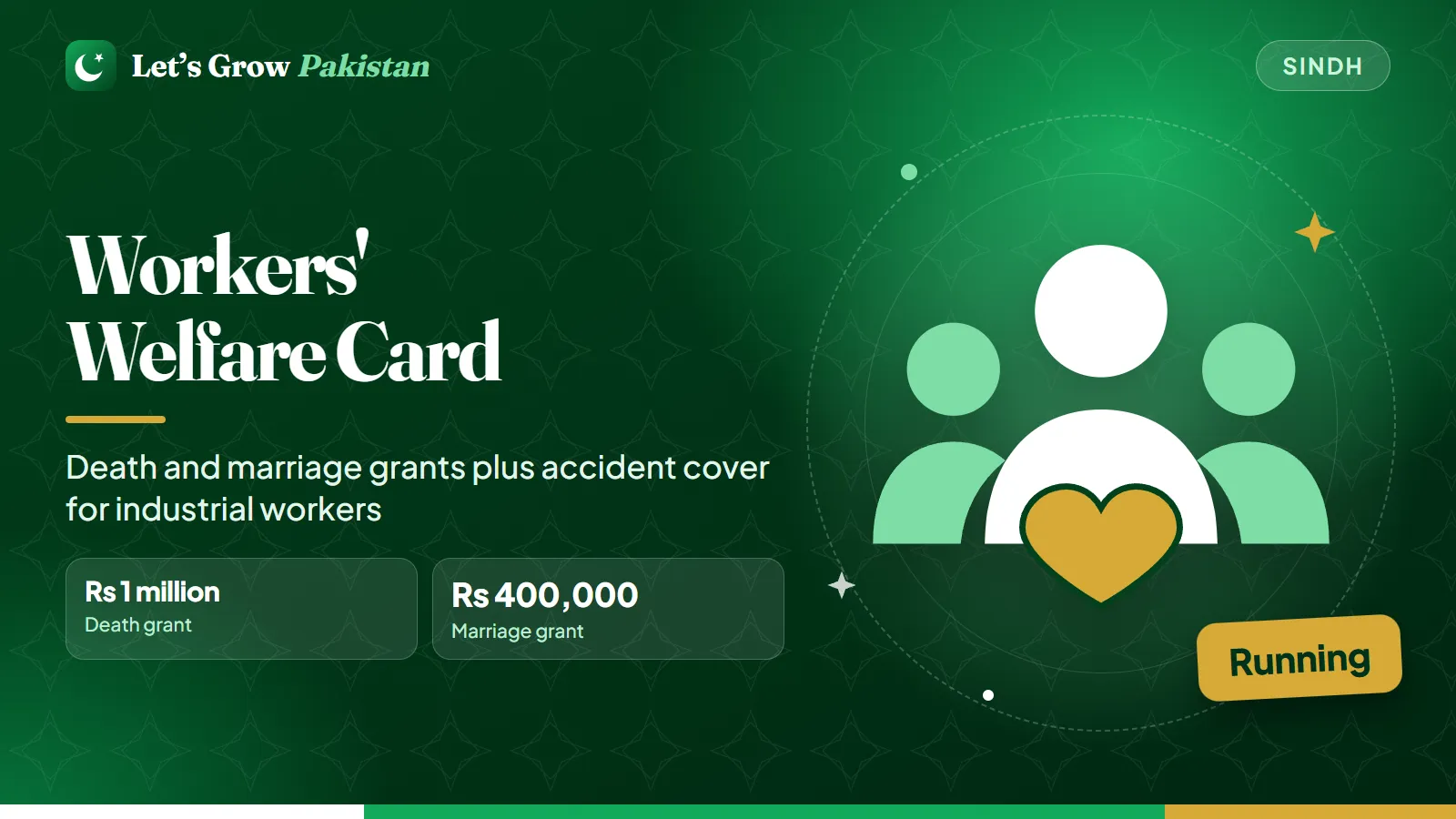
Registered industrial workers in Sindh can receive a Rs 1 million death grant, a Rs 400,000 marriage grant and accident health cover up to Rs 700,000 at over 270 hospitals.
A smart card launched in 2021 to help registered SESSI workers, mainly industrial ones, reach education, health and marriage grants. Current amounts and its present status are not confirmed.
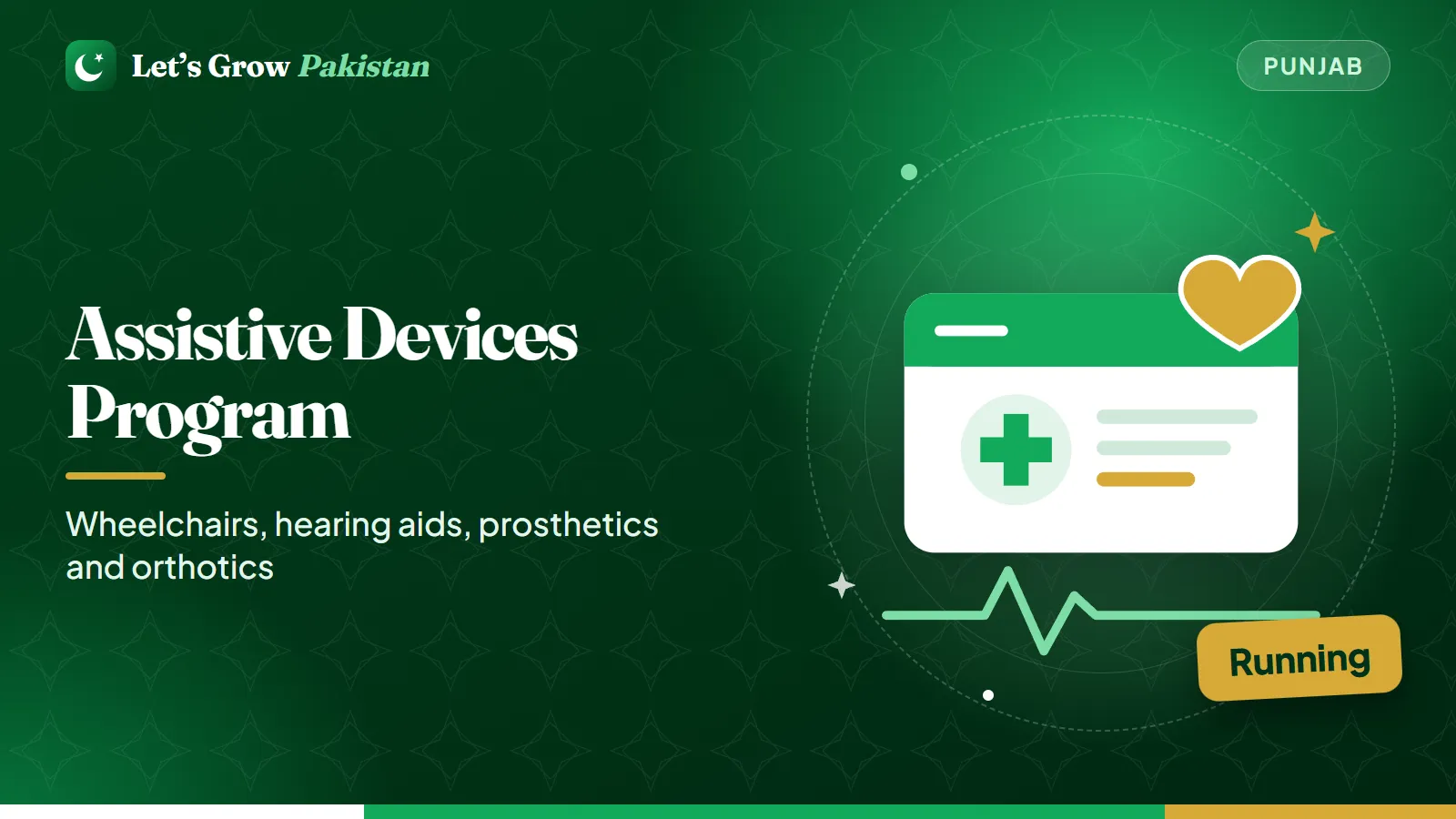
Punjab's social welfare programme that gives people with disabilities wheelchairs, digital hearing aids, prosthetics and orthotics, on a doctor's recommendation from a government hospital.
People with severe disability in Khyber Pakhtunkhwa receive Rs 5,000 a month in their bank accounts. The programme covers 10,000 people and also funds interest free loans and assistive devices.
Rs 10,500 every quarter by ATM card for Punjab residents with disabilities who cannot work and get no other aid. Women have a 30% quota, and three batches cover 85,000 people.
Interest free loans for persons with disabilities in Punjab, averaging between Rs 25,000 and Rs 100,000, to help them start or run a small source of income.
Bait-ul-Mal helps poor applicants who need a cochlear implant to hear. The amount of help is not stated on the programme's own page, so it is not confirmed.
Special Friends supports disabled people with a yearly grant of Rs 20,000 for one person and Rs 30,000 for two or more in a family. It also gives wheelchairs and hearing aids.
Said to pay Rs 2,000 a month to people holding a special CNIC or B-Form in poor households. Its status is unverified, as the official page is undated.
Sindh announced in June 2025 a rise in a disability related stipend from Rs 2,000 to Rs 3,000 a month, and gave Rs 800 million in grants to 105 NGOs in April 2026. Payment is not confirmed.
Free transport for the bodies of the deceased from government hospitals in Punjab, so families do not pay. In the first phase it covers Lahore, Multan and Rawalpindi.
Electric taxis for Punjab: 1,100 are offered on interest free finance over 5 years, with 30% equity and free registration, for drivers and fleets joined to a ride hailing company.
Sindh runs subsidised public bus services, including a 50% fare subsidy on the Shikarpur to Sukkur route from April 2026. Pink Bus has served the Green Line corridor since late 2025.
A Sindh scheme that gives women who are students or workers a free electric scooter, a licence, a helmet and training. 300 were handed out on 8 March 2026.
This scheme cuts petrol costs for motorcycle, rickshaw and small car owners through SMS tokens. Bikes get Rs 500 off a week, and cars up to 800cc get Rs 100 off a litre.
A Punjab card for cashless fares on the Metro, Orange Line, Speedo and Electro buses. It also works as a debit card. The official page does not say who is eligible.
A Khyber Pakhtunkhwa relief of Rs 2,000 a month for owners of bikes, scooters and rickshaws, paid through JazzCash. It was running in May 2026, but nothing newer is confirmed.
A Sindh petrol relief of Rs 2,000 a month for motorcycle owners, paid to a bank account. More than 548,000 people were paid by May 2026. Its continuation is not confirmed.
PAVE aims to put more electric bikes and rickshaws on the road with a subsidy, reported at Rs 80,000 per e-bike in Phase 2. It is unverified whether new applications are open.
Sindh and the federal government share about Rs 2.15 billion a month to pay operators who keep fares down on 224 routes. Passengers gain through the held fares. Its status is not confirmed.
A one month relief in April 2026 that made Green and Pink buses free in Balochistan, waived vehicle transfer fees for 15 days and subsidised goods transporters. It is now closed.
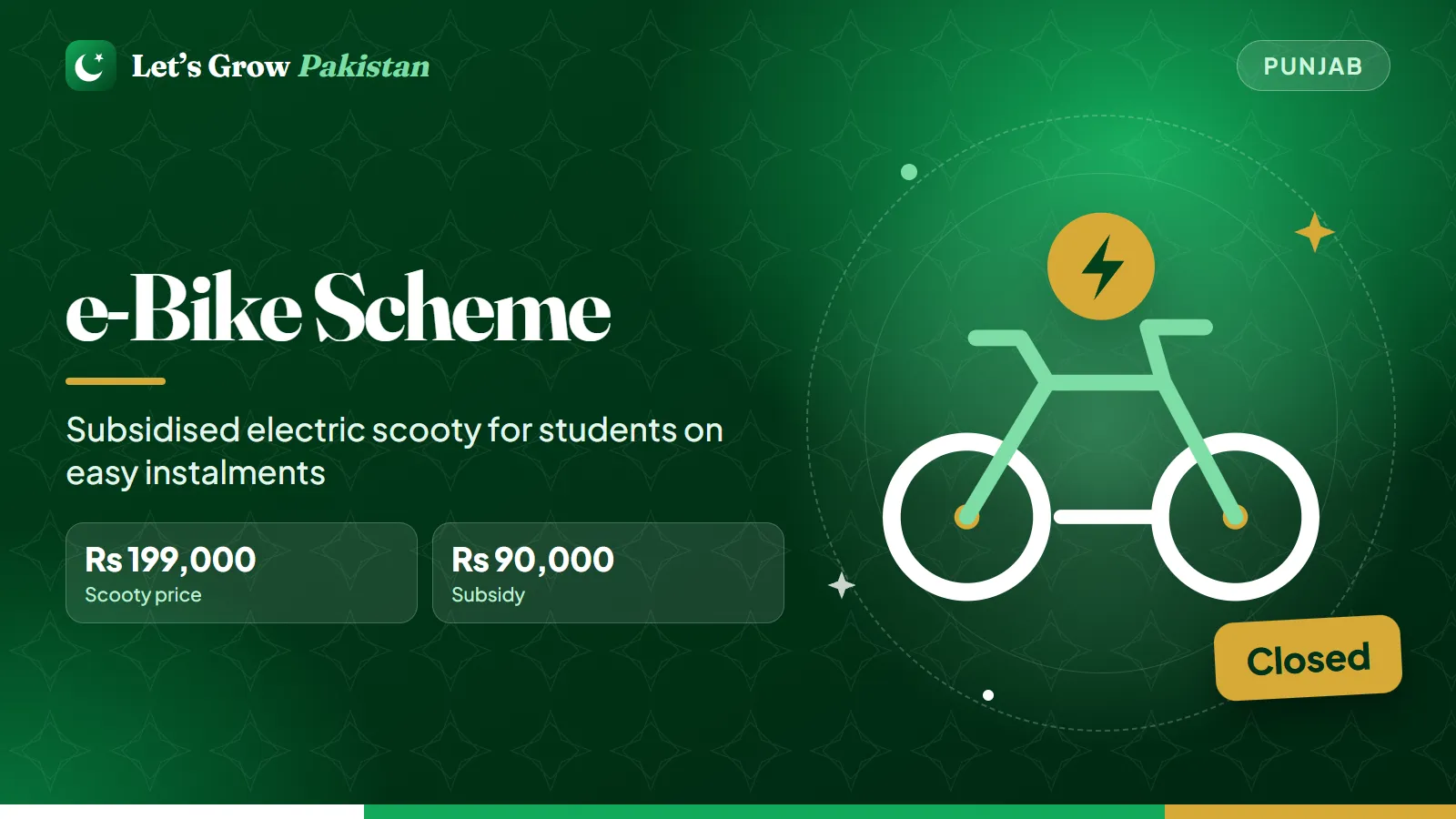
A Punjab scheme that helped students buy an electric scooty priced at Rs 199,000, with a Rs 90,000 subsidy and no down payment, on about Rs 3,000 a month for 3 years. It is closed.

The KP Auqaf and Minority Affairs Department is giving 320 laptops to minority students of BS, MBBS, engineering, MPhil and PhD with a KP domicile and 60% marks or a 2.50 CGPA. Apply online by 5 December 2026.
The Prime Minister's Youth Chromebook Scheme gives top Grade 9 pupils at government schools a Chromebook with MiFi internet. 500,000 are planned over two years, and reports say the units are refurbished.
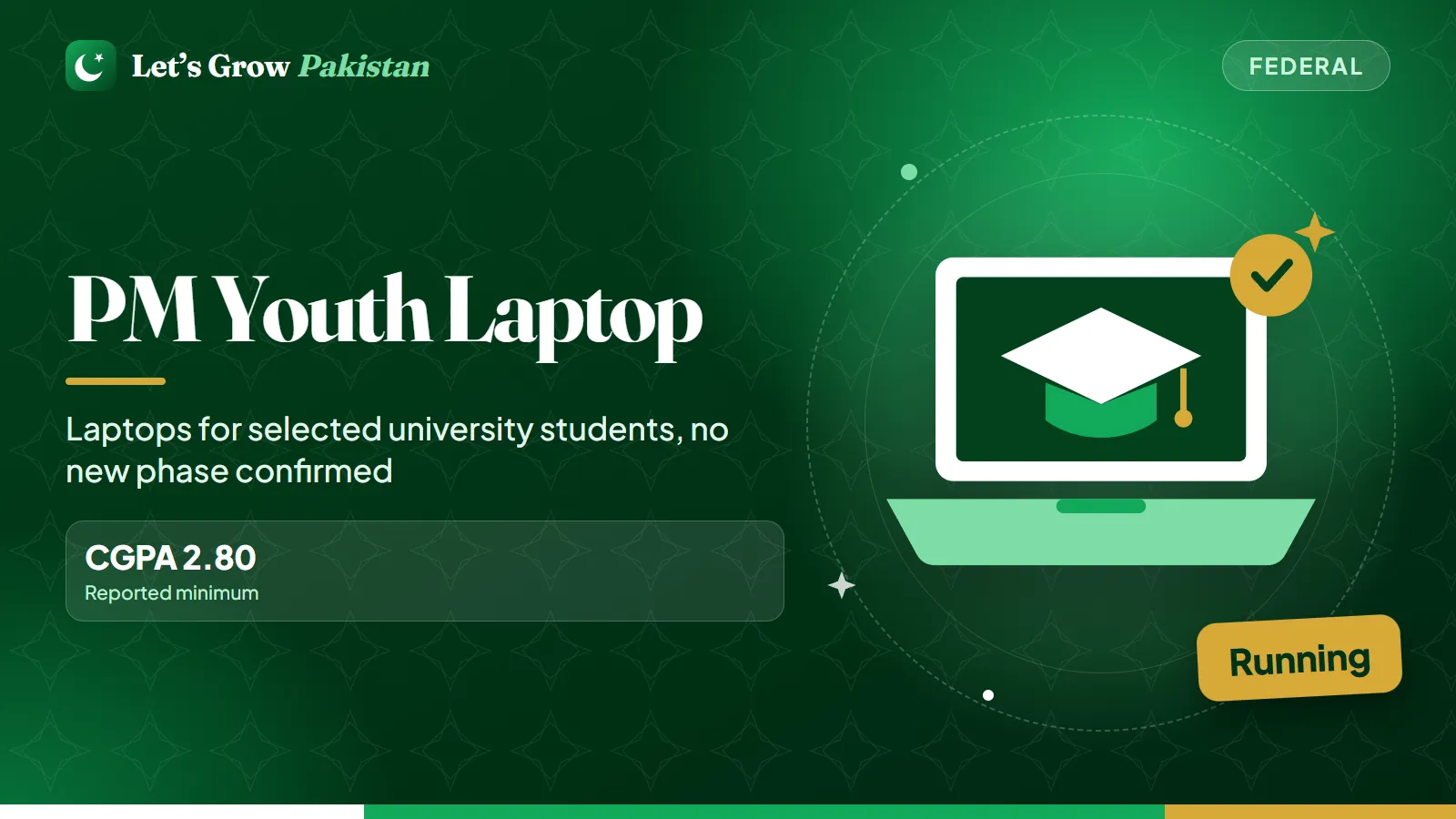
Under the Prime Minister's Youth Laptop Scheme, students already selected, mainly in the public sector, receive a laptop through their universities. No new phase is confirmed.
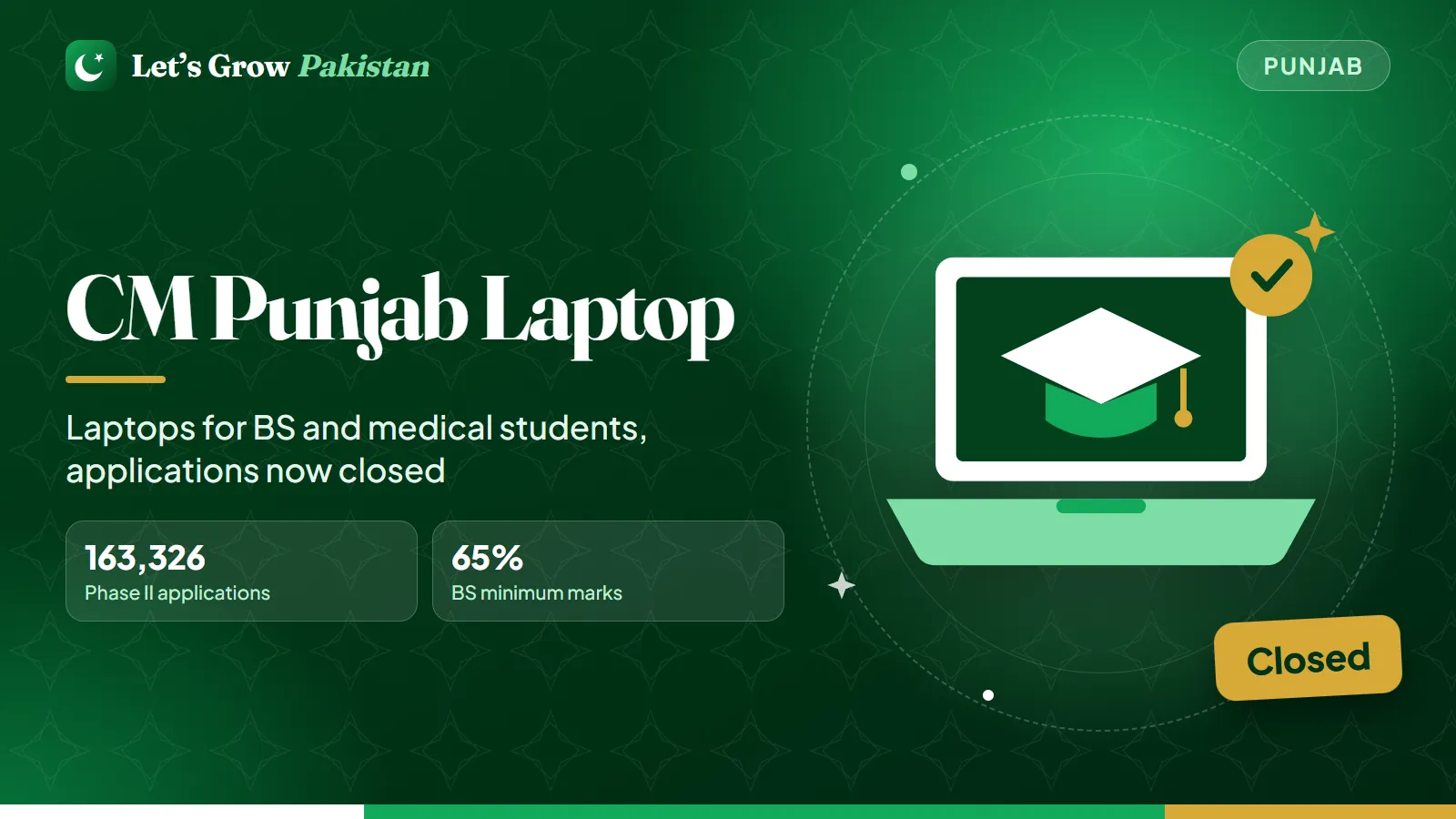
Laptops for BS and medical students with Punjab domicile were handed out under Phase II of the CM Punjab Laptop Programme. Applications are now closed, after 163,326 were received.
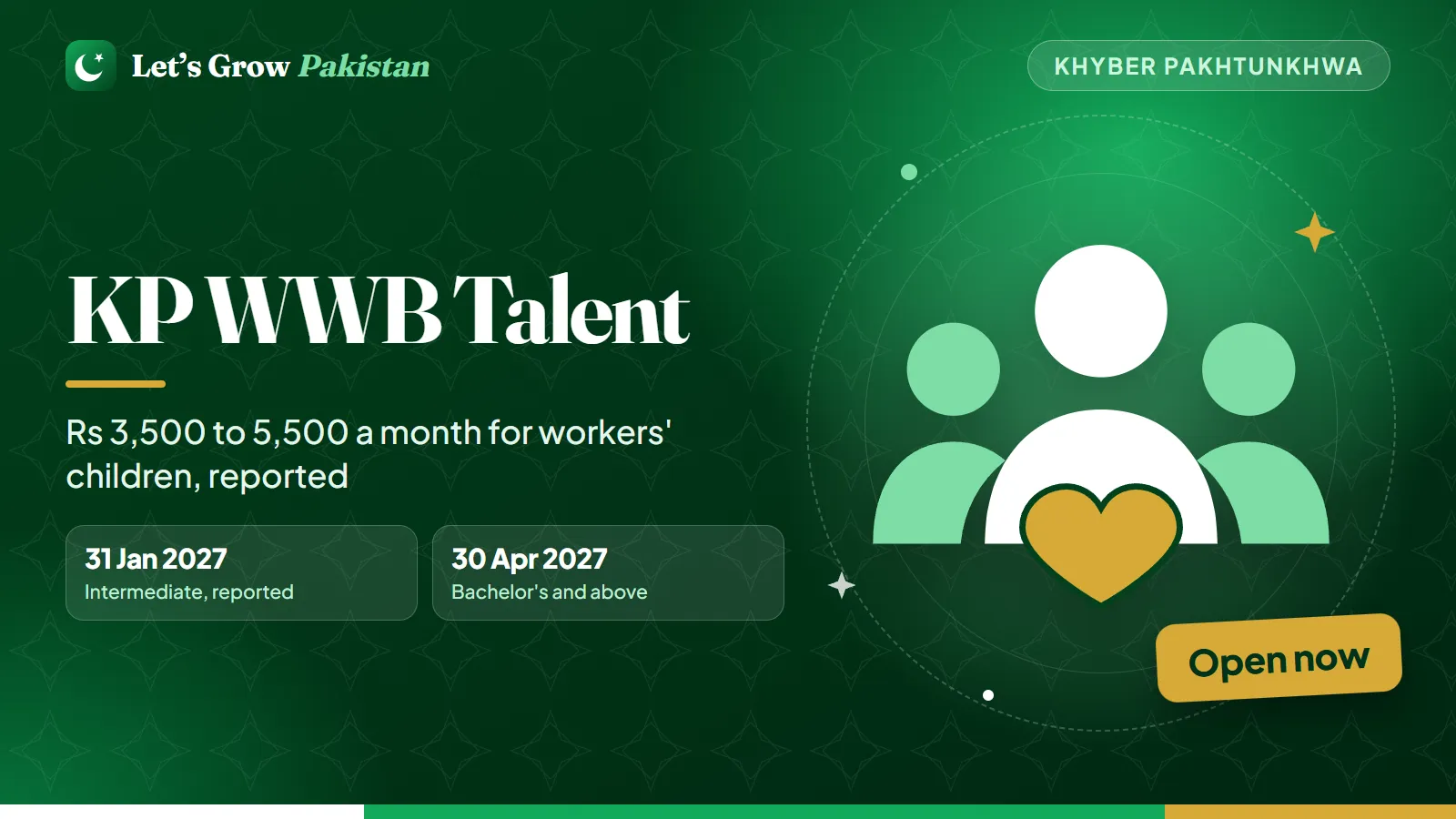
KP's Workers Welfare Board Talent Scholarship 2026-27 is reported to pay workers' children Rs 3,500 to 5,500 a month. It rests on third party listings, with no official notice seen.
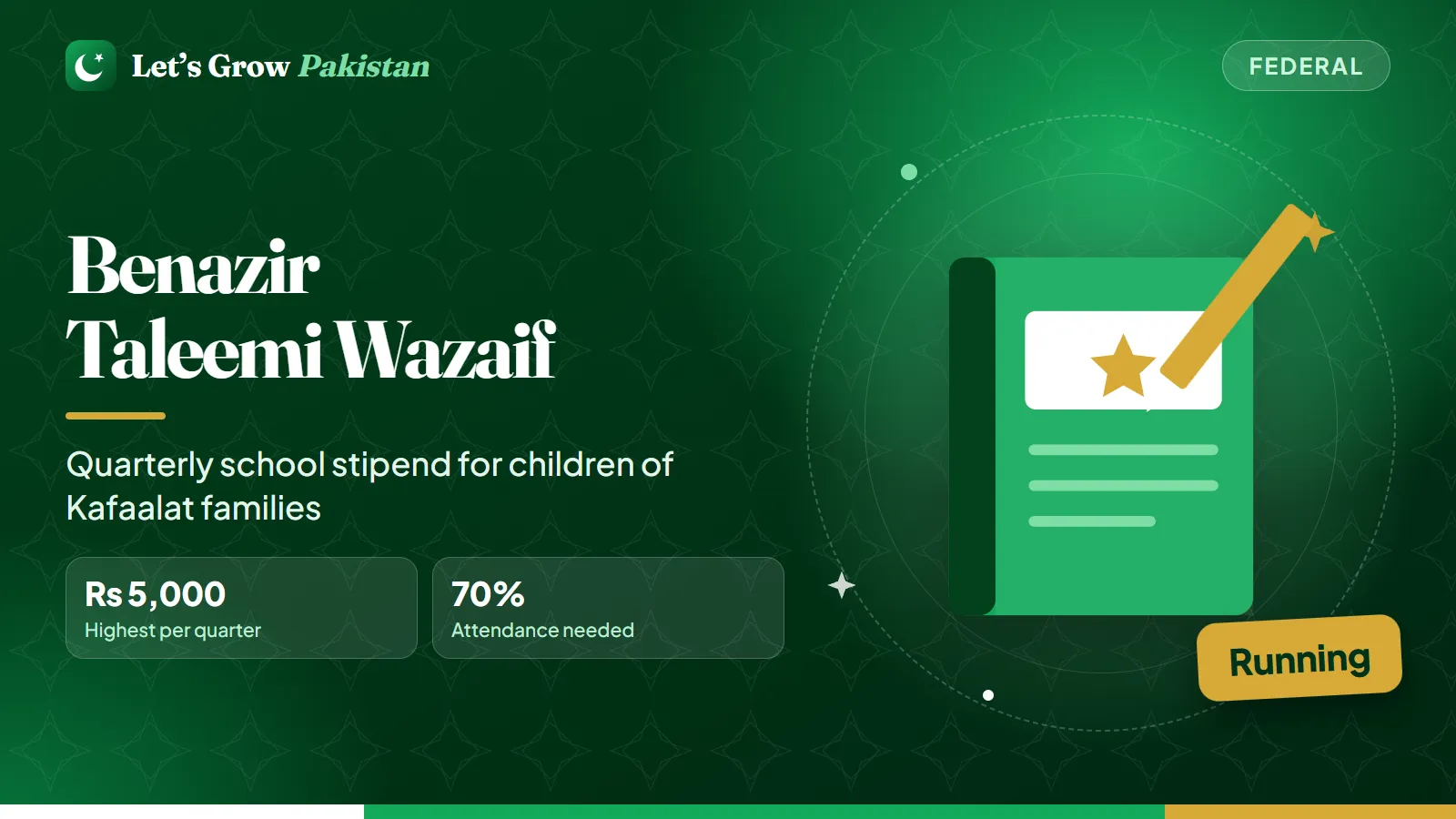
Benazir Taleemi Wazaif is a BISP stipend for children of active Kafaalat mothers. Schoolchildren get up to Rs 5,000 a quarter, with girls receiving more, if they attend at least 70% of classes.
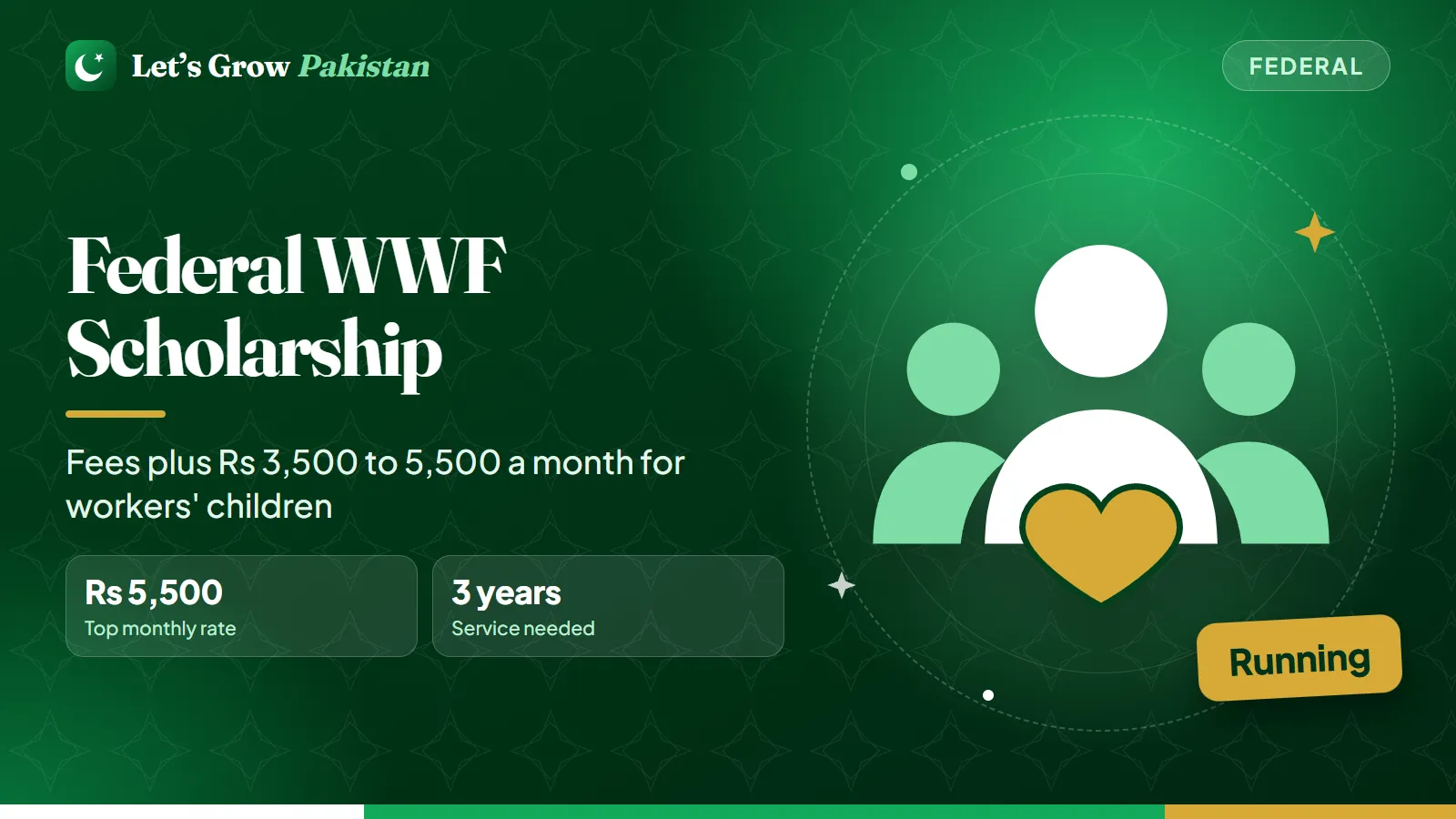
The federal Workers Welfare Fund Scholarship helps children of workers in Islamabad industries. Post matric students get Rs 3,500 to 5,500 a month plus fees, and under matric pupils get free education.
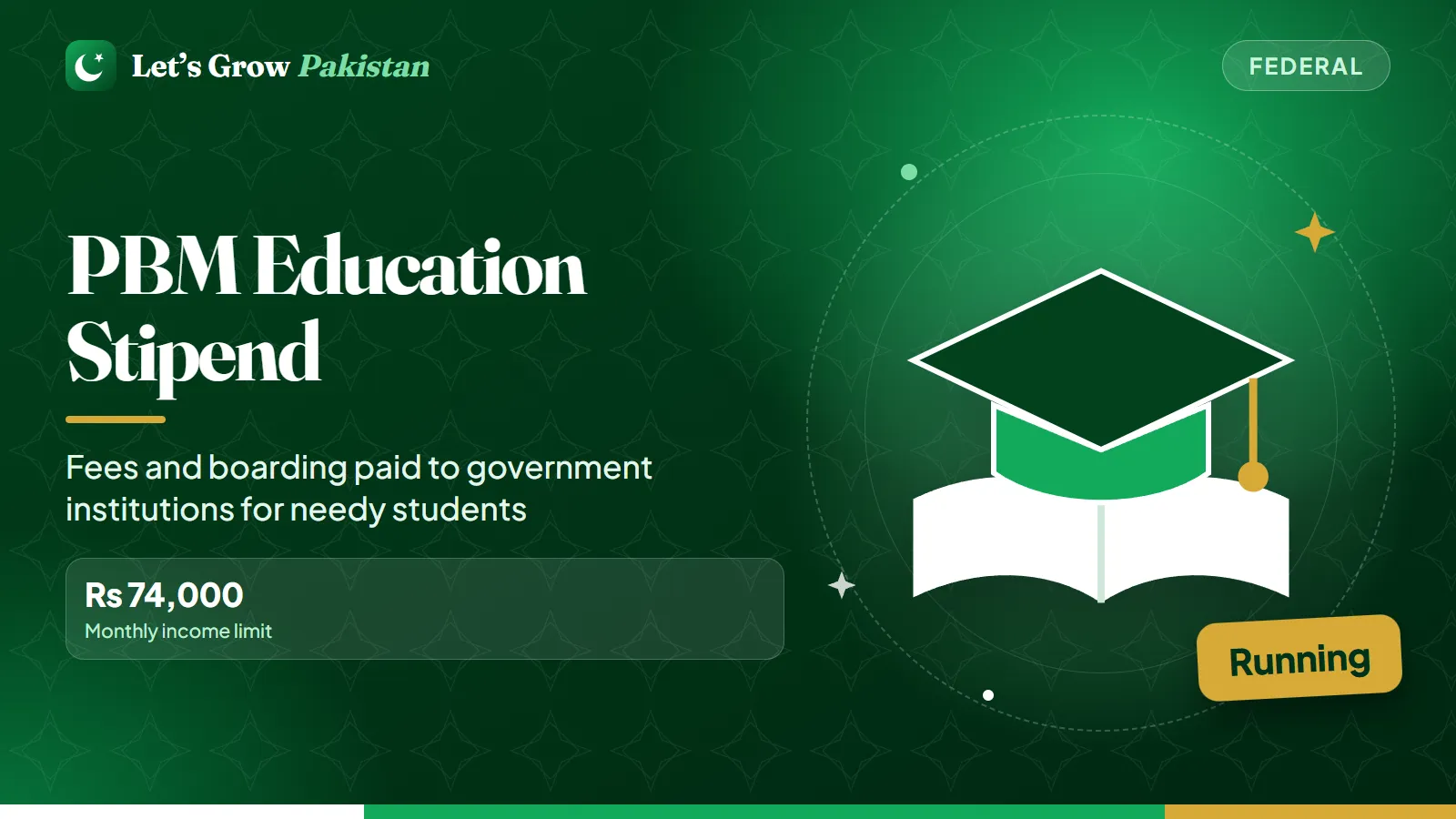
The PBM Education Stipend pays fees and boarding directly to government institutions for needy students. Regular or merit students with family income under Rs 74,000 a month qualify.
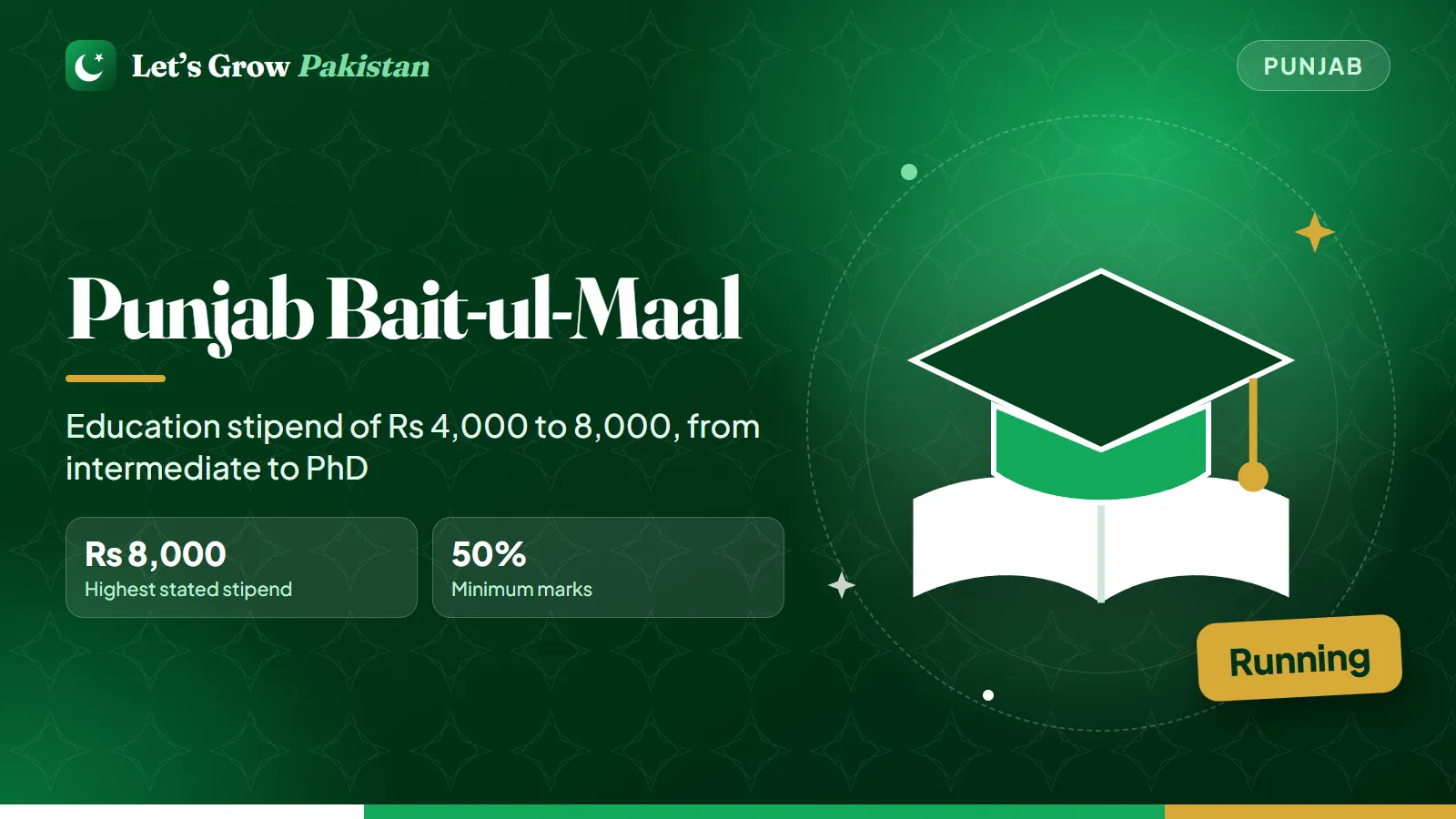
Punjab Bait-ul-Maal's education stipend pays Rs 4,000 for intermediate students, rising to Rs 8,000 for MBBS, engineering, MPhil and PhD. Students need at least 50% marks.
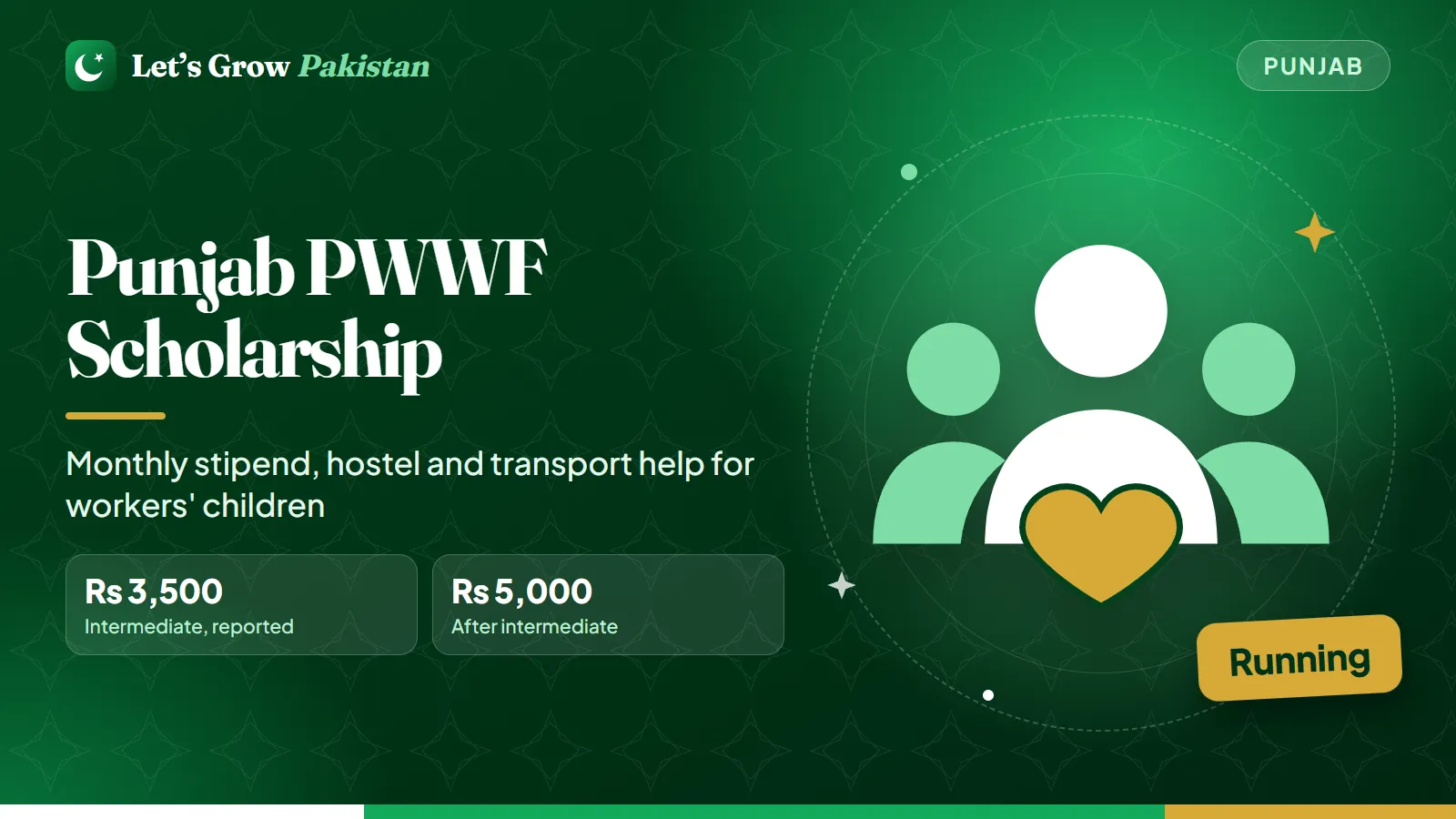
Punjab's Workers Welfare Fund helps workers' children with a reported Rs 3,500 monthly stipend for intermediate and Rs 5,000 after, plus Rs 10,000 for hostel and Rs 5,000 for transport.
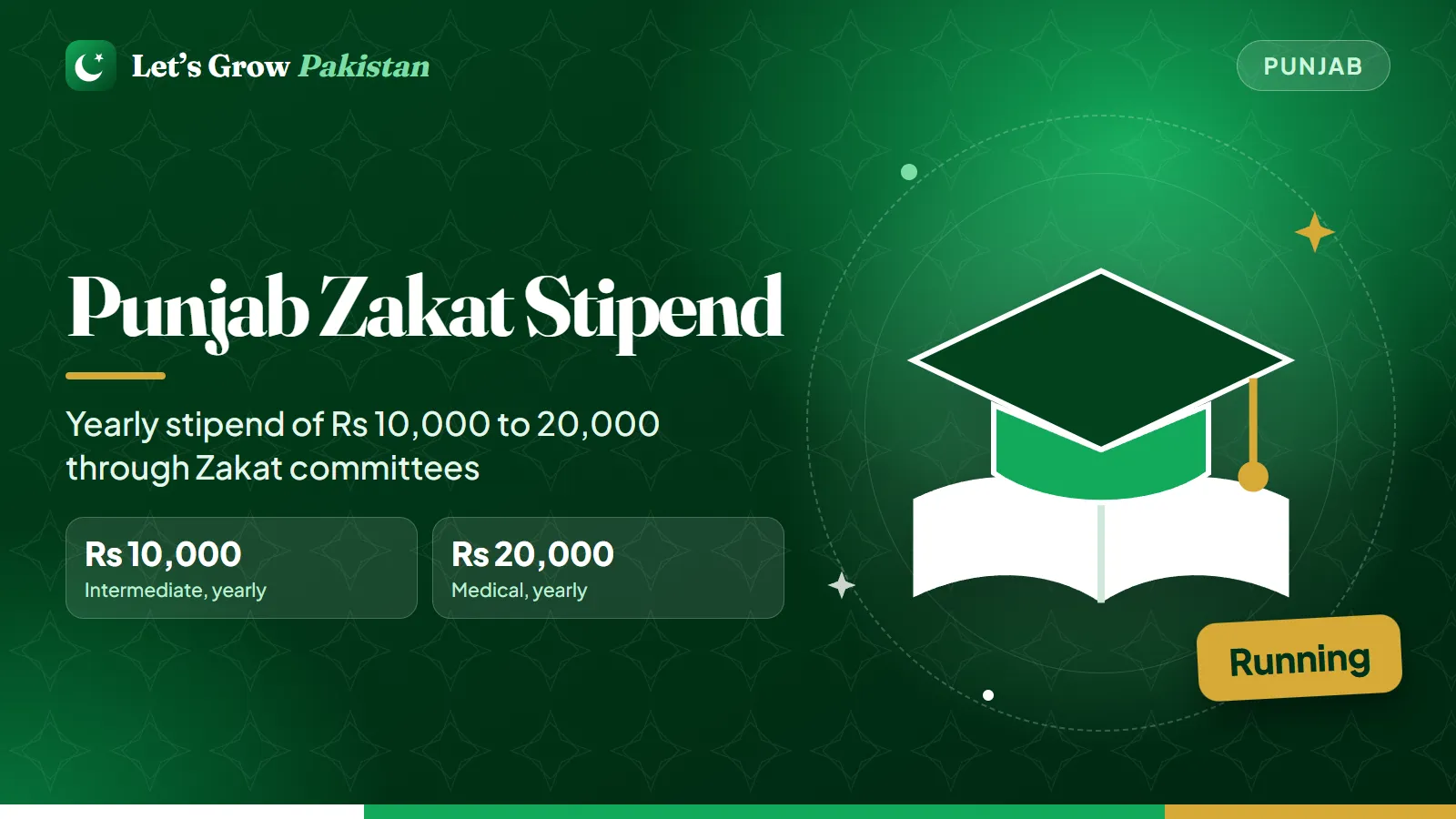
Through Zakat committees in Punjab, this stipend pays students from intermediate upward Rs 10,000 to 20,000 a year, with the highest amount for engineering, medical and CS.
The Punjab Zakat Technical Stipend supports technical students in Punjab. It is closed for the current year, and the amount and criteria are not confirmed.
Behbood is a National Savings scheme for widows, seniors and people with disabilities. Its rate is reported at 12.96% in one source and 11.72% in another, and it changes often.
The NSER is the free BISP survey that decides which families can join Benazir programmes. It pays nothing itself, but it is the gateway to Kafaalat and the child programmes.
A Punjab government service that brings public services to people's doors through facilitators. The official page does not list the services or say who is eligible.
A free Punjab helpline, app and portal where people can ask for relief or file a complaint, including on ration support, medical help, assistive devices and marriage grants.
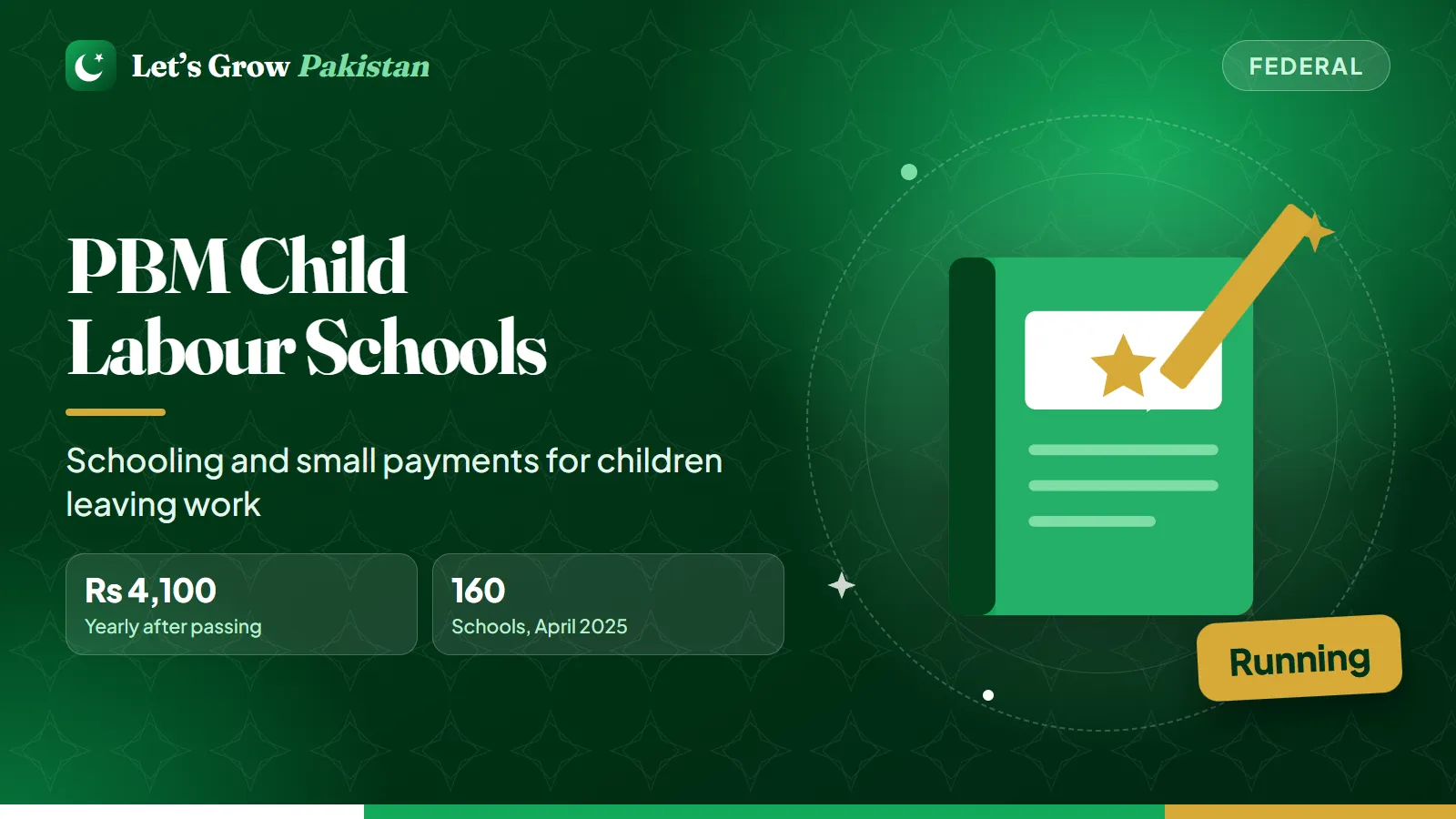
These Bait-ul-Mal schools take children aged 8 to 14 out of work and into class, with 160 schools as of April 2025. Children get Rs 50 a day and parents Rs 300 a month.

Old Homes shelter seniors who have nowhere to live, giving them free board in 5 cities. Each Bait-ul-Mal home has room for 50 residents.
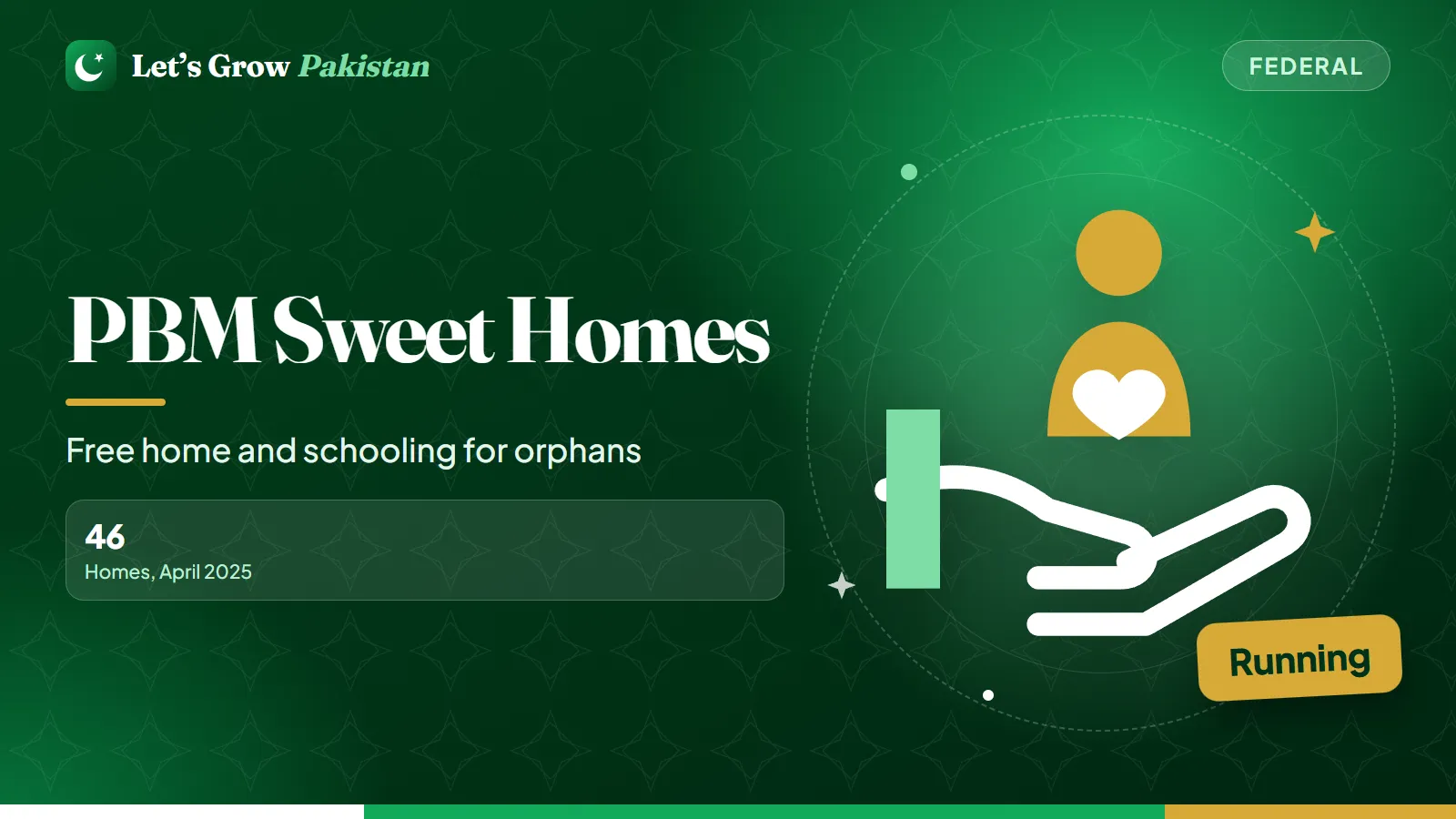
Sweet Homes are Bait-ul-Mal homes where fatherless children from the poorest families live free, with food, schooling and medical care. Each unit takes 100 children aged 4 to 6 at entry.
Punjab's household database. It pays nothing itself, but it produces the poverty score that other provincial programmes, such as the Ration Card and Rahmat Card, use to pick families.
Roshan Digital Account lets overseas Pakistanis, and now foreign investors, open accounts and buy certificates from abroad. It had over 900,000 accounts and $12 billion by February 2026.
Shuhada Family Welfare is a National Savings scheme for the families of shuhada. It paid 12.00% from 23 January 2026, and rates change often.
Khyber Pakhtunkhwa's budget sets aside money for new programmes, including Rs 15 billion for Ehsaas Mustahiq and Rs 2 billion each for farmers and student loans. None is open for applications yet.
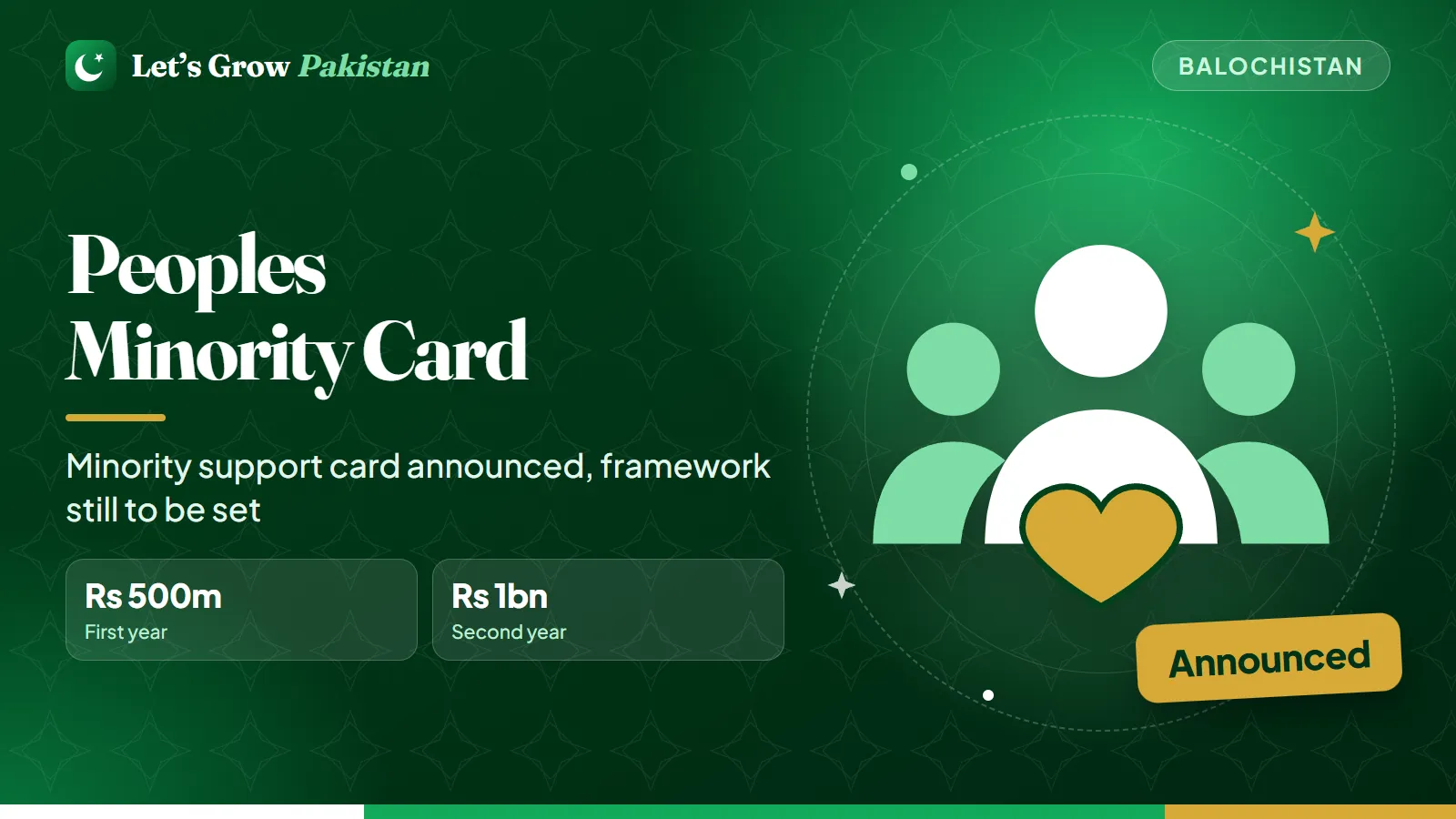
A card announced for minorities in Balochistan, with Rs 500 million set for the first year and Rs 1 billion for the next. The framework is still to be decided.
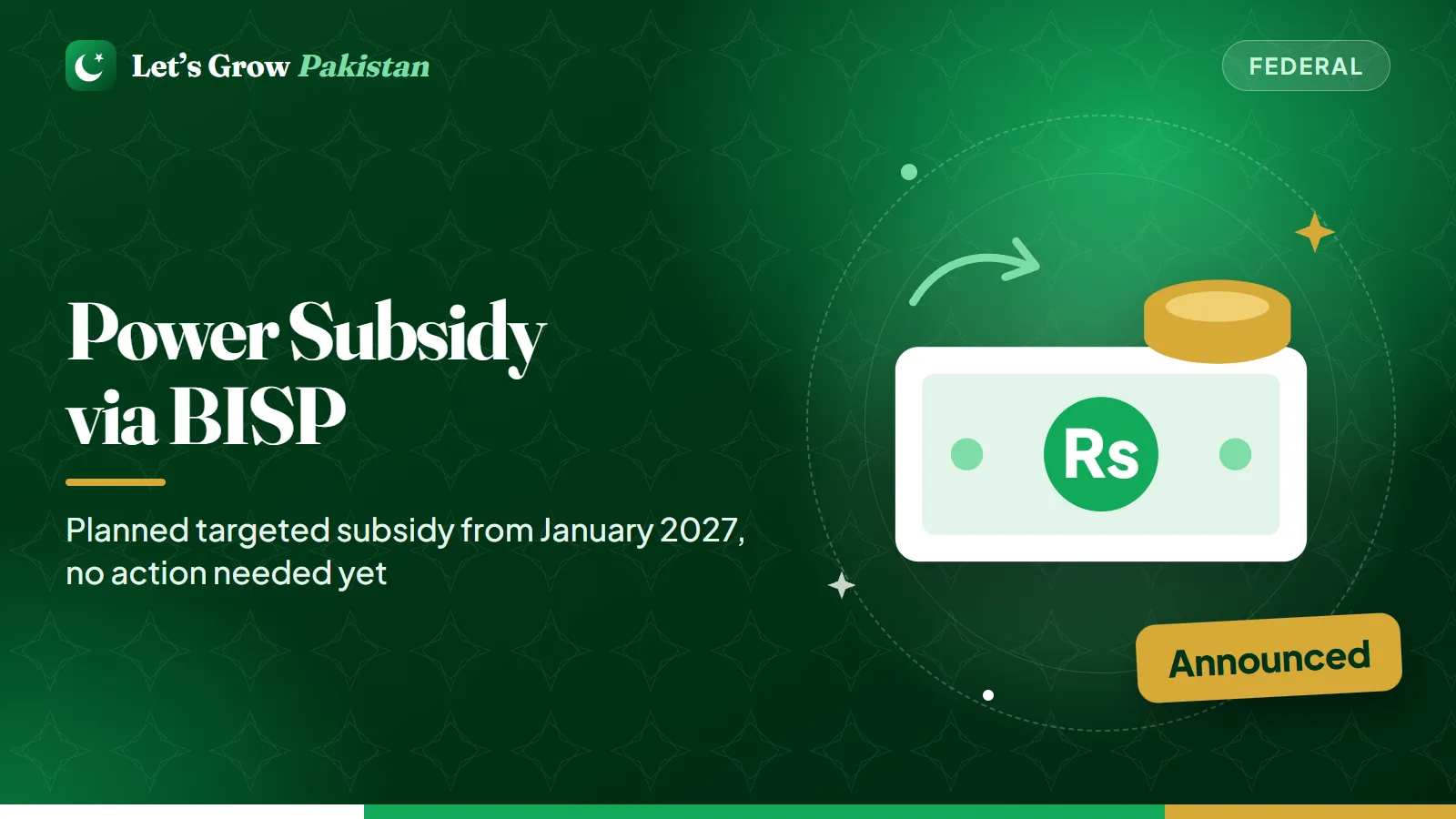
Only announced so far: Pakistan told the IMF it will end the general power subsidy for users up to 200 units from January 2027 and target relief through BISP. No amounts are set.
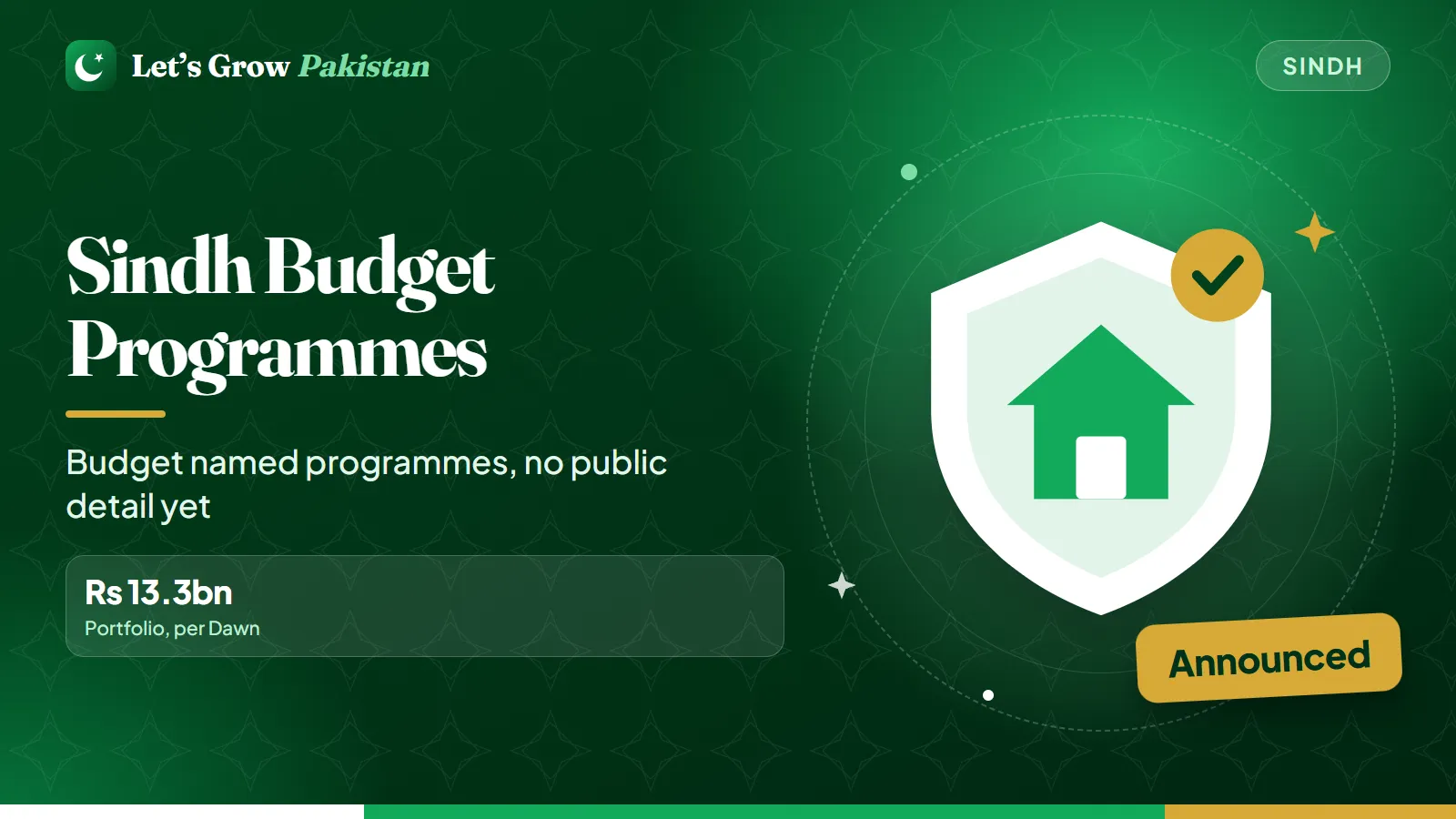
The Sindh budget for 2026 to 2027 names social programmes such as the Sindh Peoples Support Programme and Benazir housing, at Rs 2 billion each, plus kitchen garden kits and livestock. Details are not public yet.
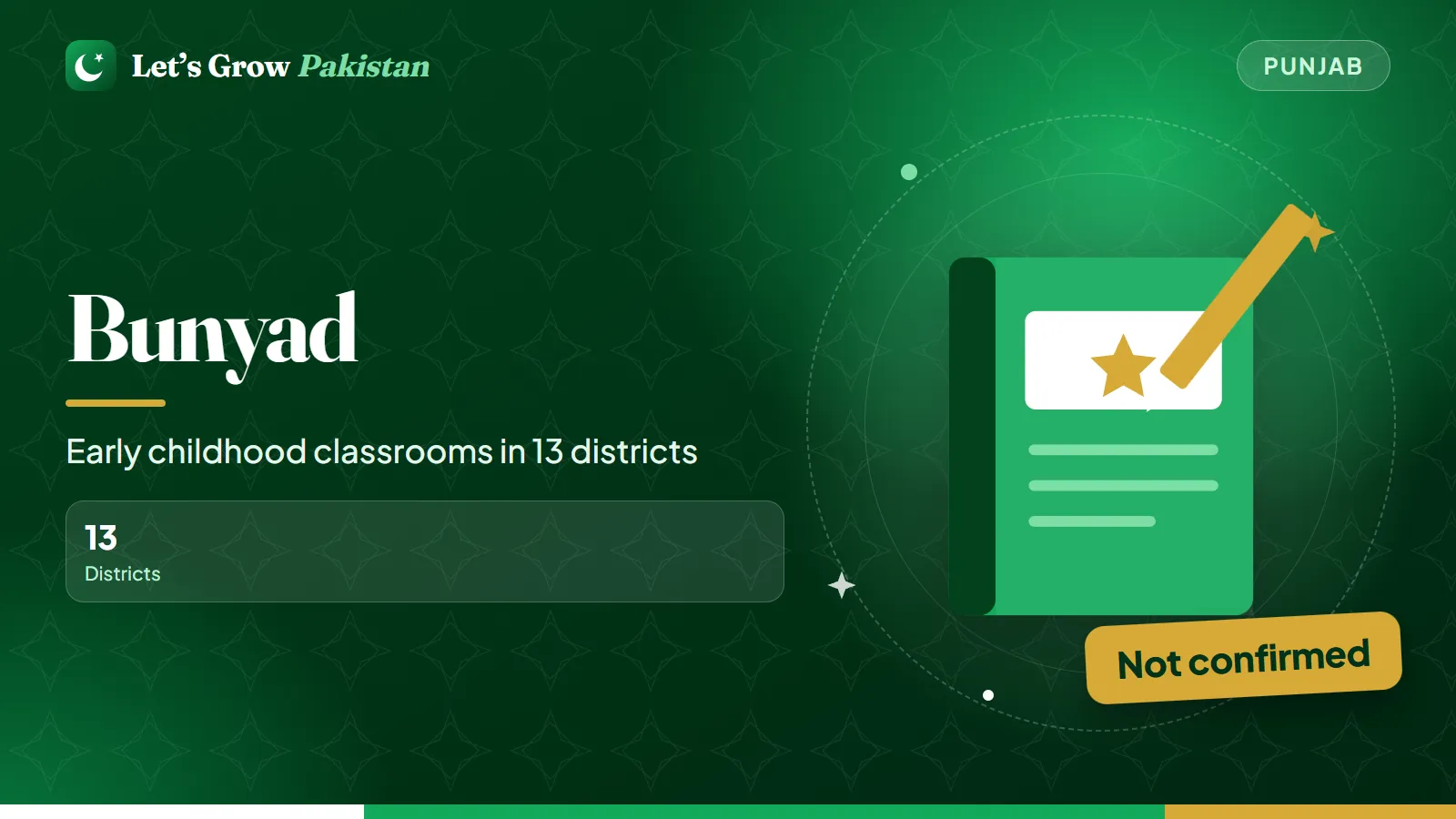
An early childhood education programme that runs classrooms for children aged 3 to 5 in 13 districts of Punjab. It involves no cash payment, and its status is unverified.
A programme that gives young married couples aged 18 to 35 in BISP households productive assets worth up to Rs 150,000, along with training. Its status is unverified.
Treatment for acid attack victims in Punjab, including skin grafts, plus skills training and interest free loans. No amounts are stated and the programme is unverified.
A reported plan to finance efficient 5 star fans through banks, repaid on the electricity bill over 6 to 18 months. Its details are not confirmed and sources disagree on several rules.
The National Poverty Graduation Programme, run through PPAF, is closed and takes no new participants. Details of the support it gave in the past are not confirmed.
Nothing matches these filters.
Apni Zameen Apna Ghar checked 14 November 2026: ballot result by CNIC, free 3 marla plots in 19 Punjab districts, quota list, plot rules and phase 2 status.
6 min read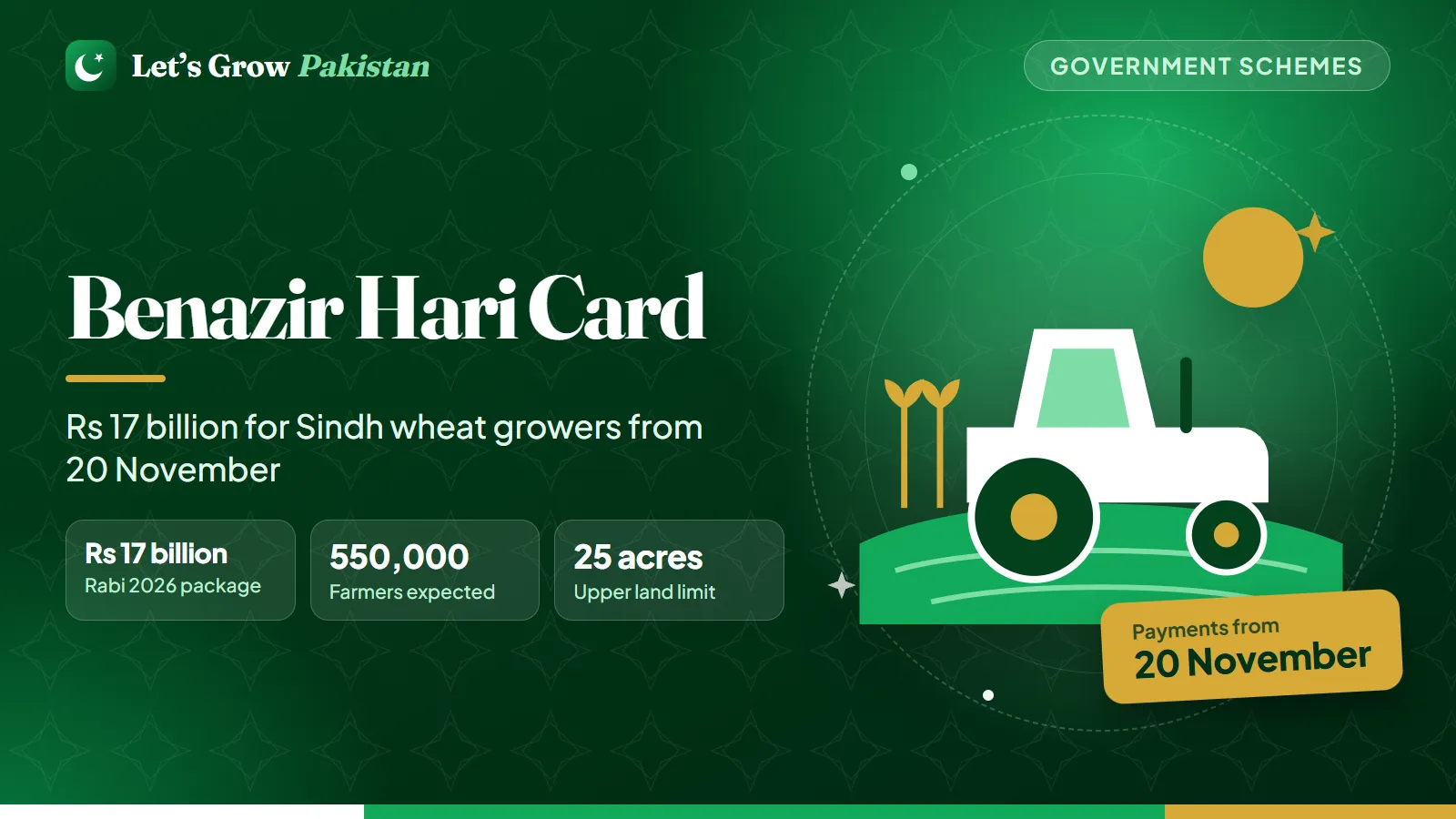
Benazir Hari Card wheat payments in Sindh start on 20 November 2026. Registration, the 25 acre limit, DAP subsidy, Rs 2,000 per maund and status help.
7 min read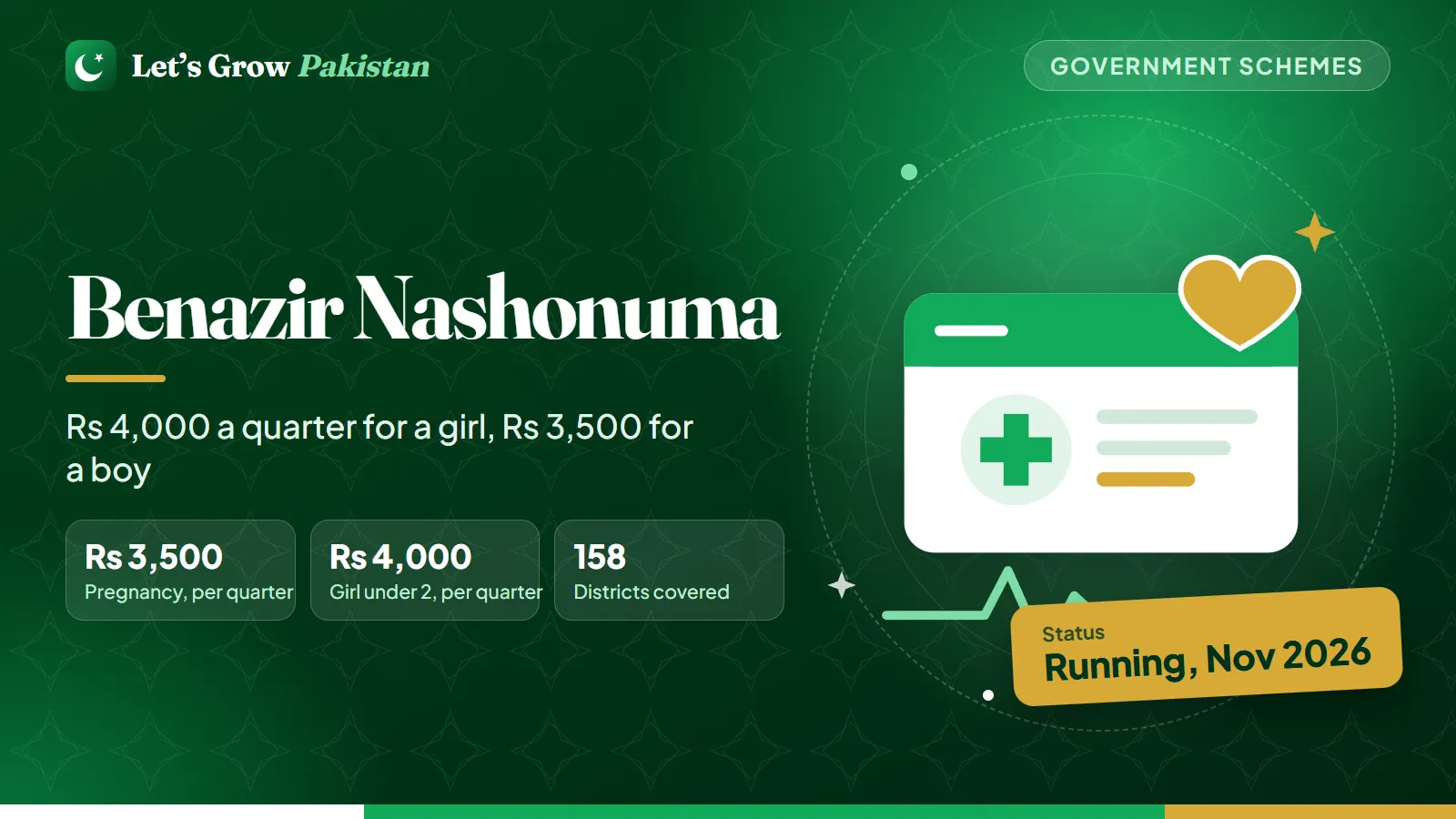
Benazir Nashonuma program checked 14 November 2026: Rs 3,500 a quarter in pregnancy, Rs 4,000 for a girl, who qualifies, centre registration, 8171 and food rules.
7 min read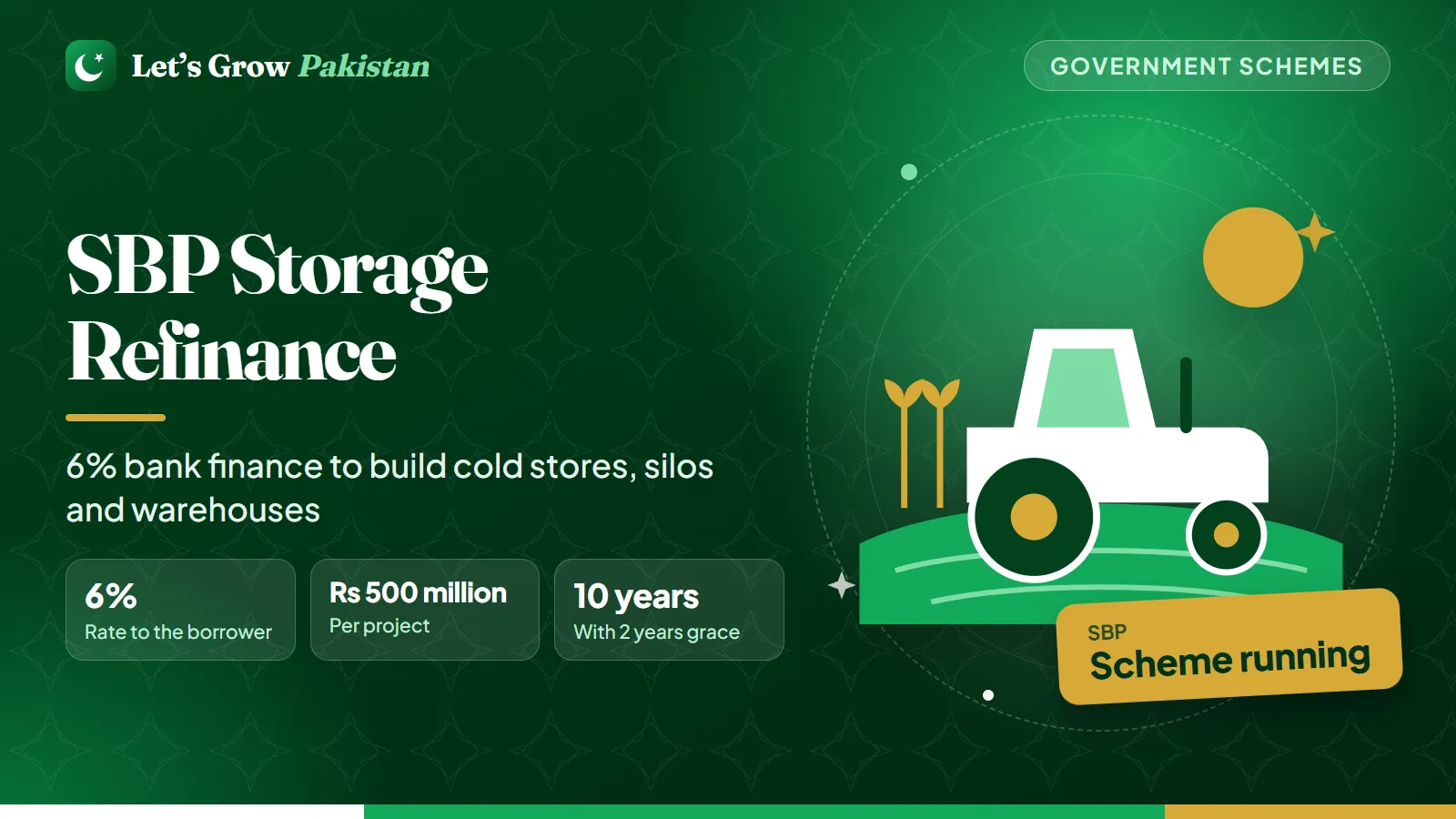
Cold storage loan under SBP's FFSAP checked 14 November 2026: up to Rs 500 million per project at 6% for 10 years, what it pays for, calculator and how to apply.
6 min read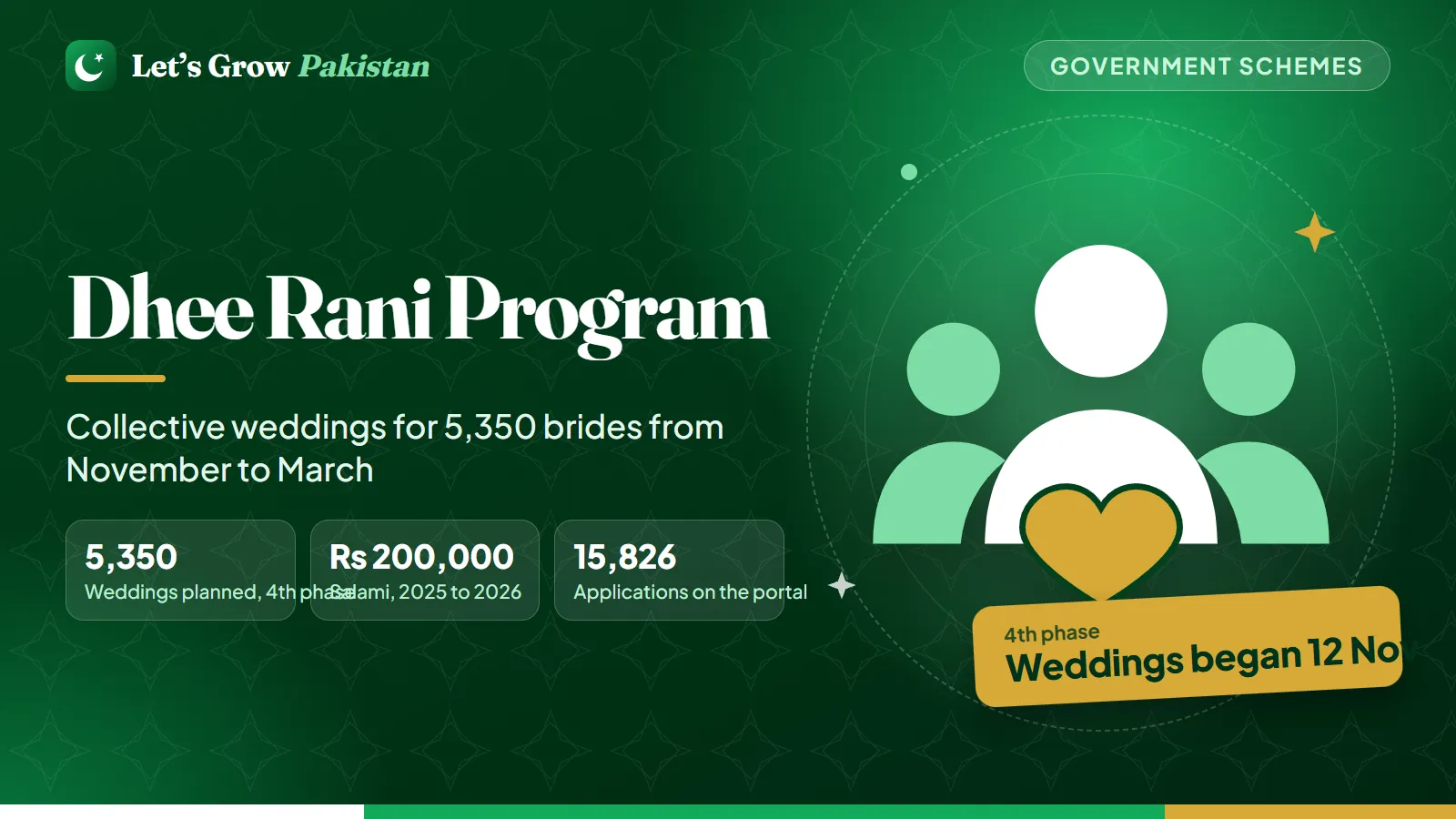
Dhee Rani program checked 14 November 2026: 4th phase weddings run to March 2027, Rs 200,000 salami last round, who qualifies, how to register and track by CNIC.
6 min read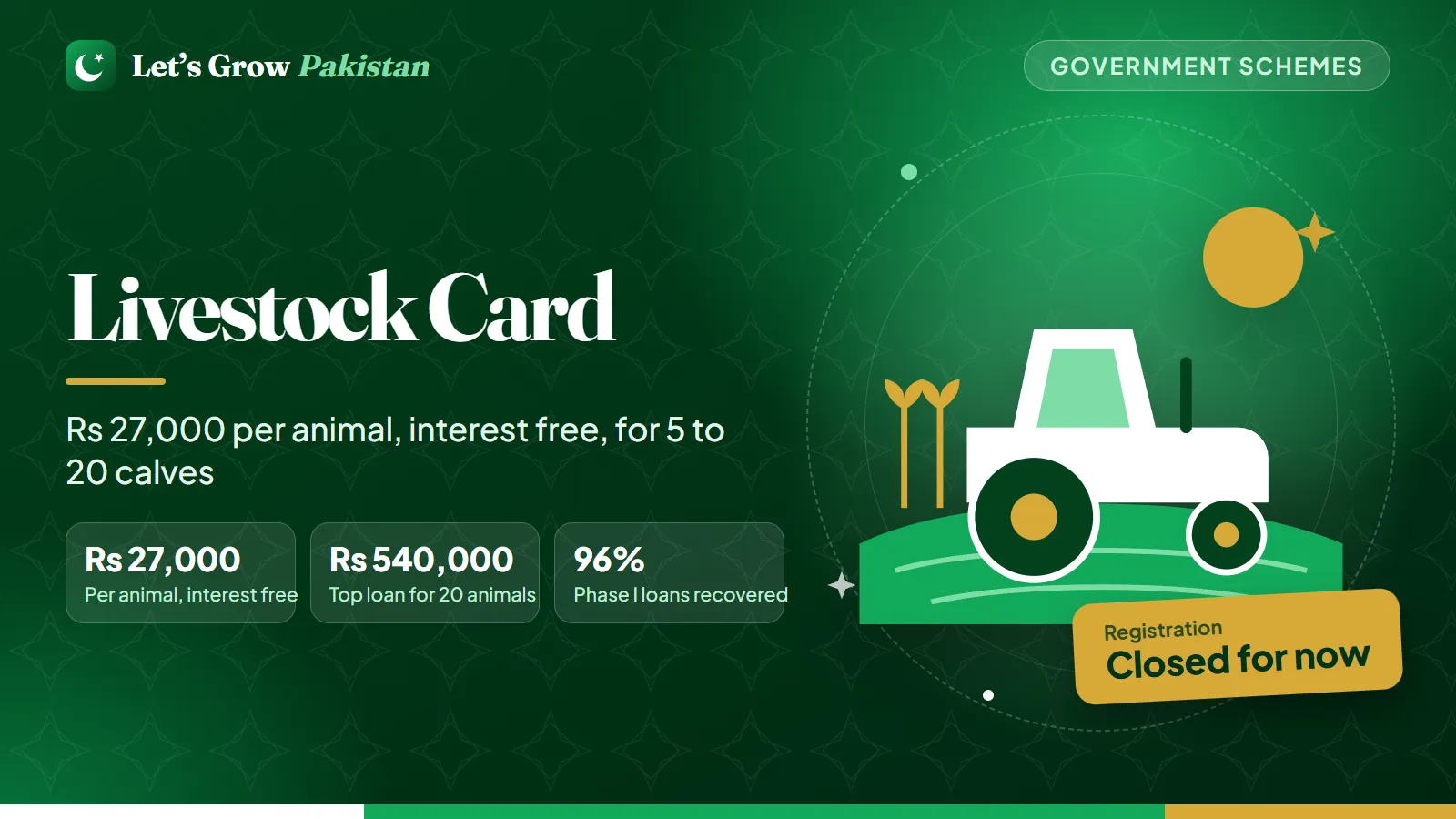
Livestock Card Punjab checked 14 November 2026: Rs 27,000 per animal for 5 to 20 calves, 25% cash, who qualifies, how to apply and why registration is closed.
7 min read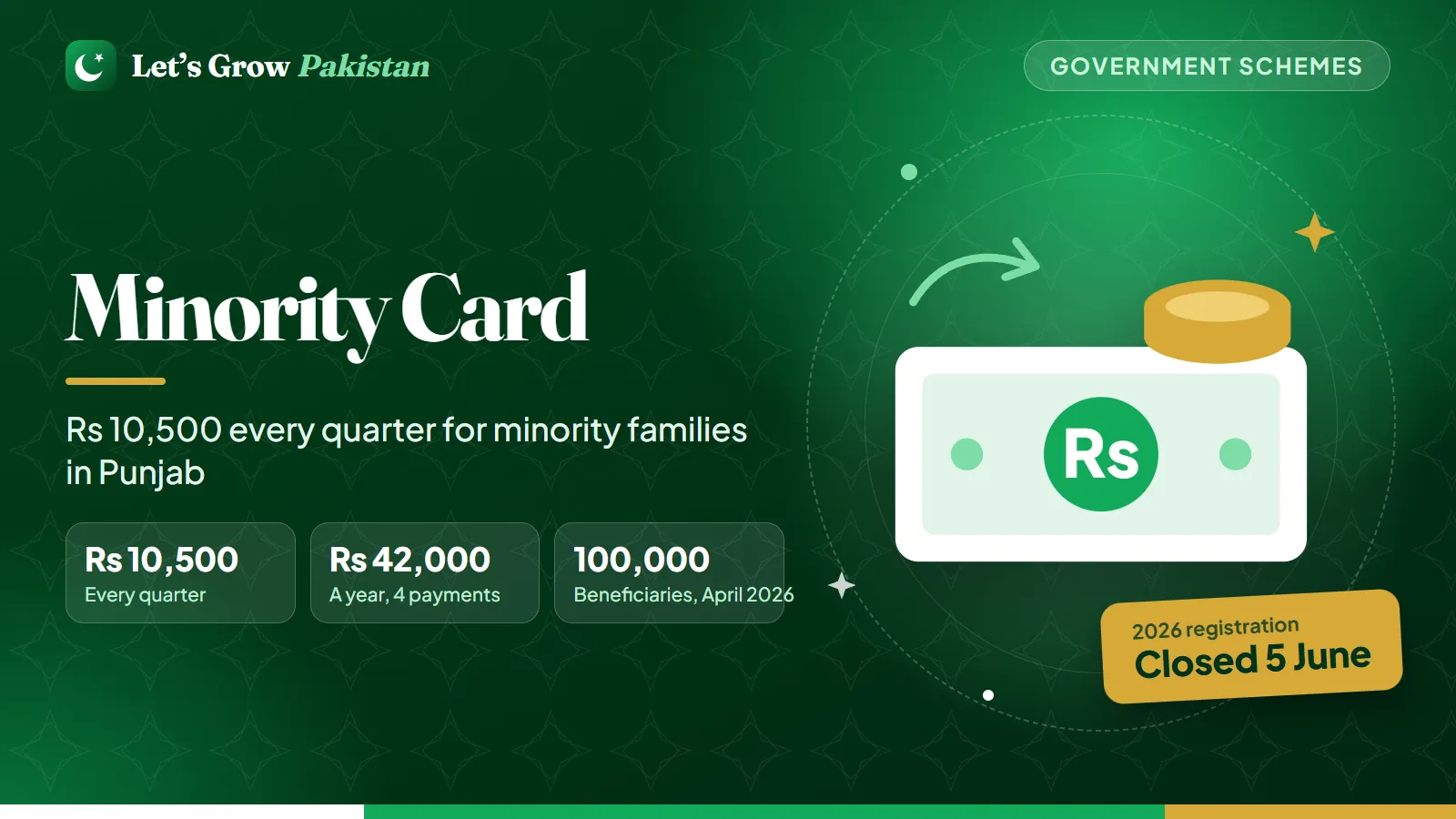
CM Punjab Minority Card checked 14 November 2026: Rs 10,500 a quarter through Bank of Punjab, PMT 45 rule, CNIC status check on the portal and helpline 1040.
5 min read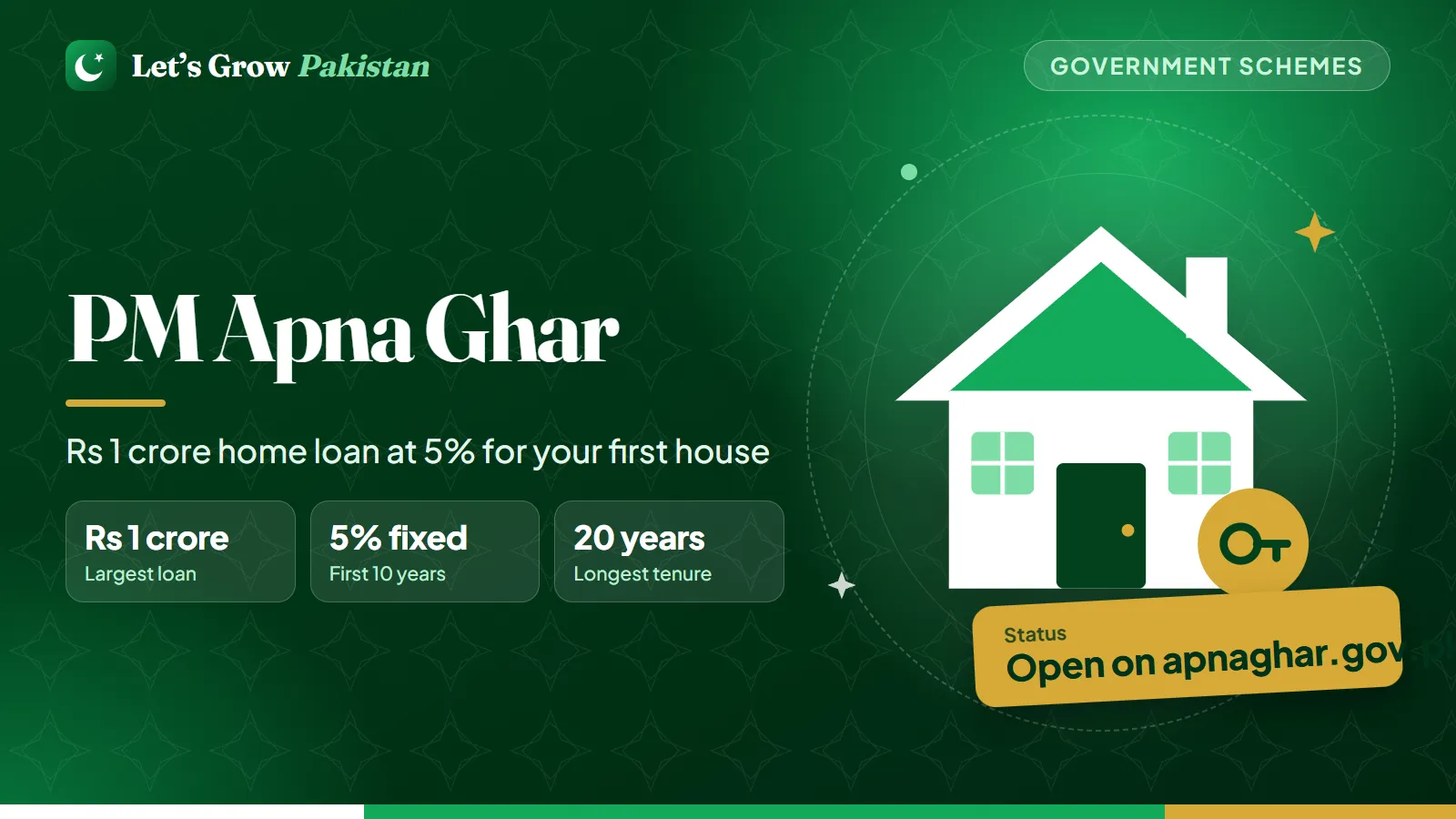
PM Apna Ghar scheme checked 14 November 2026: home loan up to Rs 1 crore at 5% for 10 years, instalment calculator, eligibility, 31 banks and how to apply online.
7 min read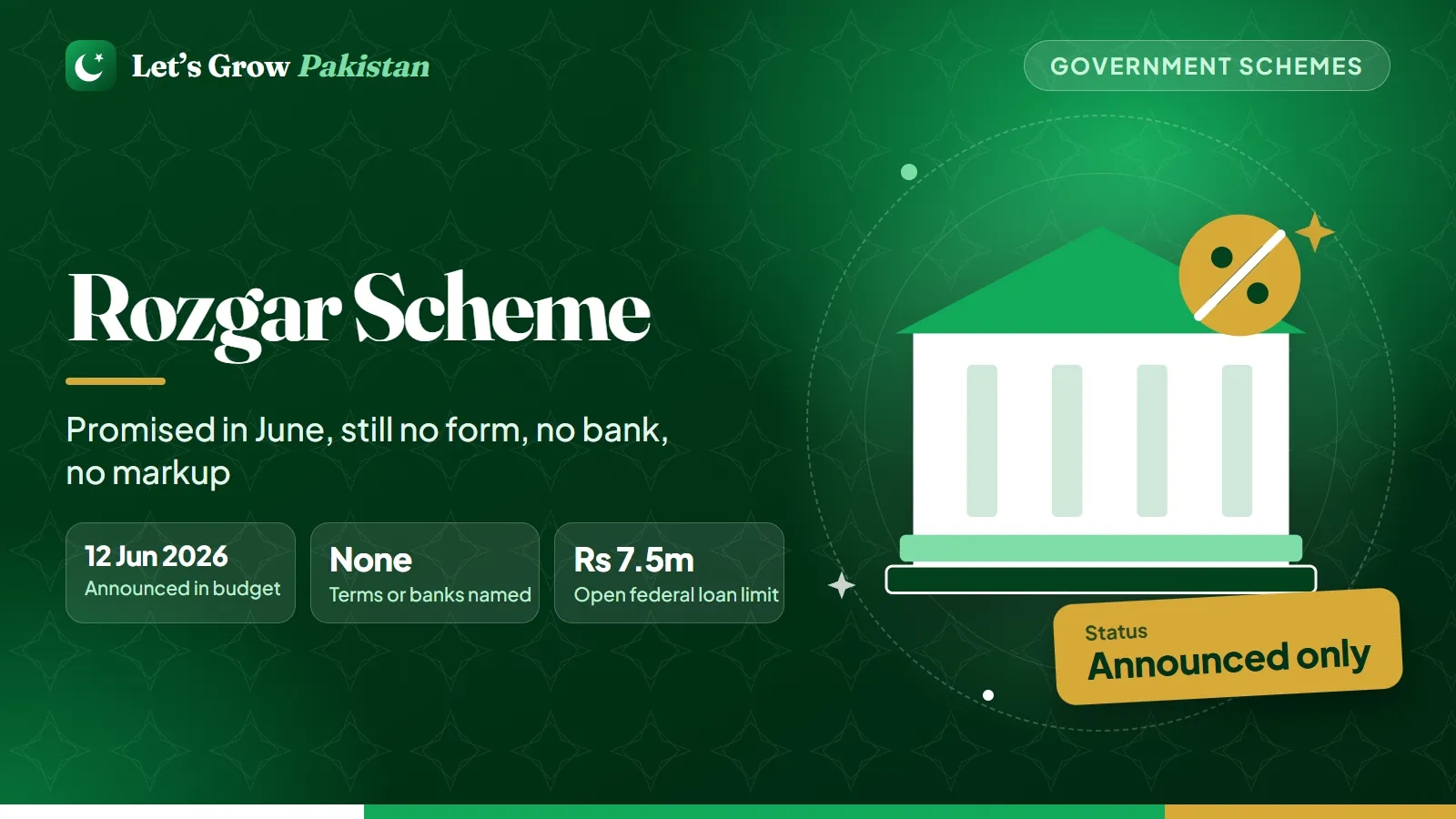
Rozgar scheme checked 14 November 2026: the federal loan promised in the June budget has no terms, banks or portal yet. Older Rozgar schemes and the loans open now.
6 min read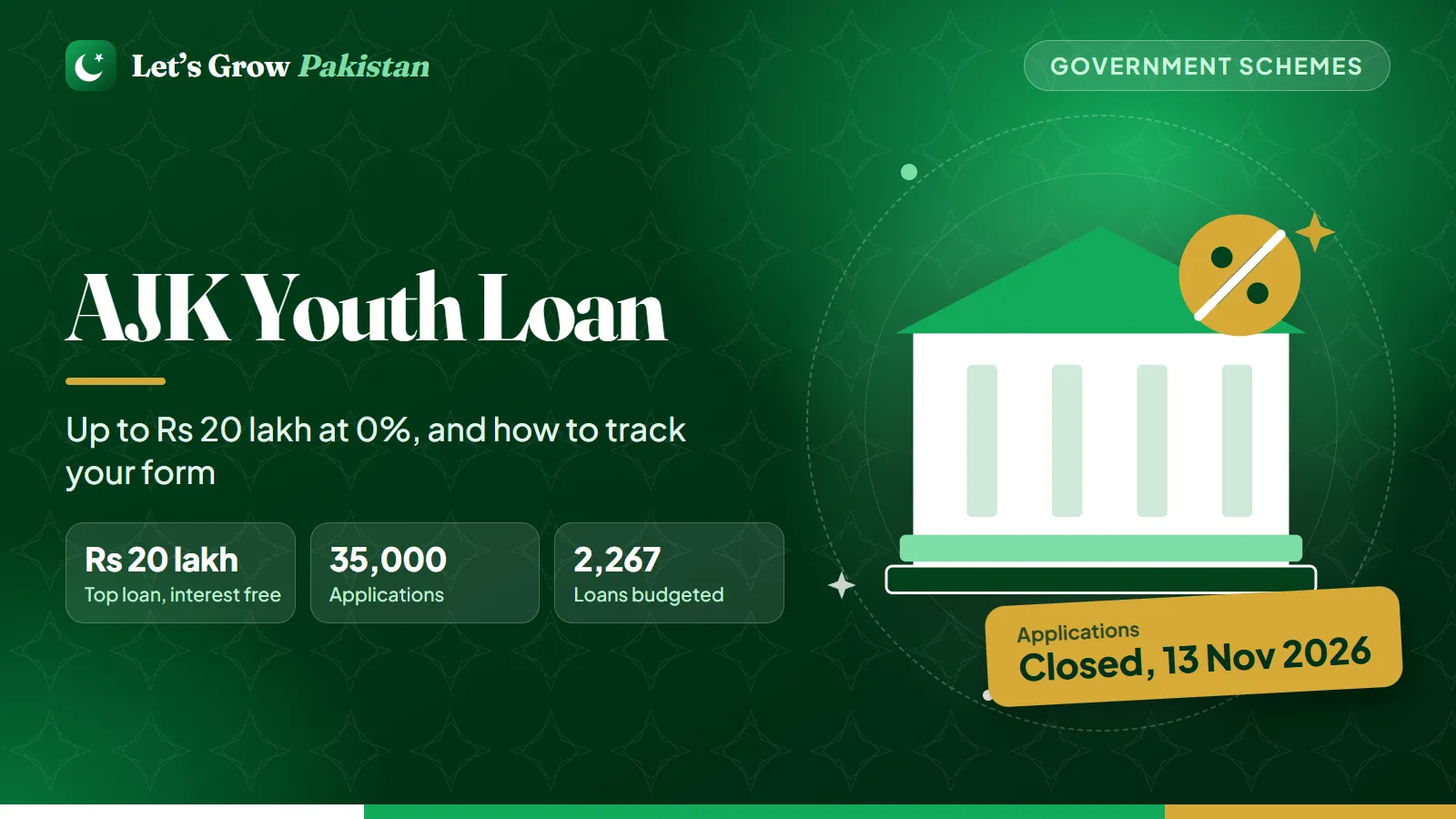
AJK youth loan scheme checked on 13 November 2026: Rs 1 lakh to Rs 20 lakh interest free, CNIC status check, eligibility, quotas and what the new budget funds.
8 min read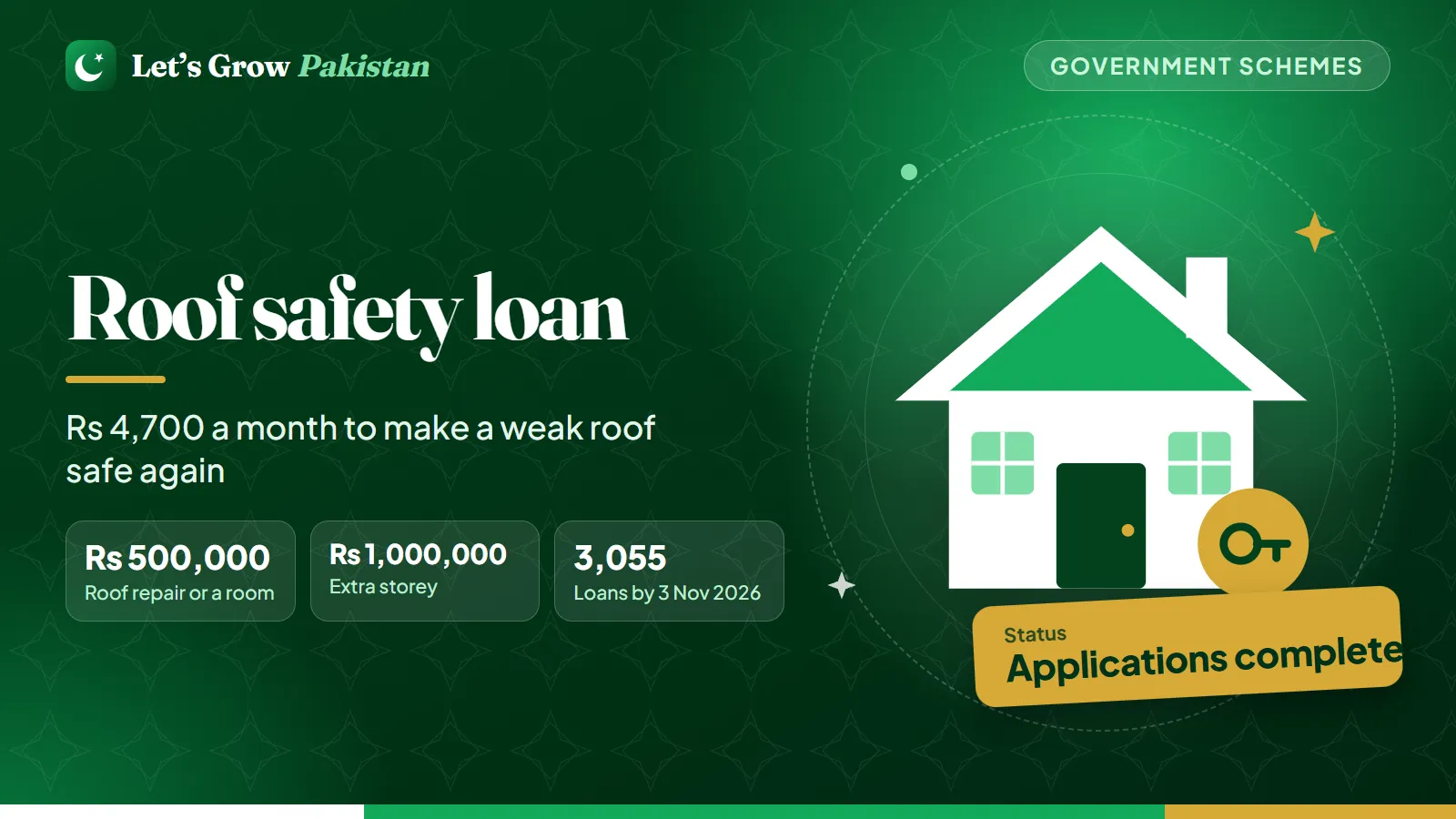
Apni Chhat Mehfooz Chhat lends Punjab homeowners Rs 500,000 for a roof or Rs 1 million for a storey at zero markup. Status, eligibility, instalments and steps.
8 min read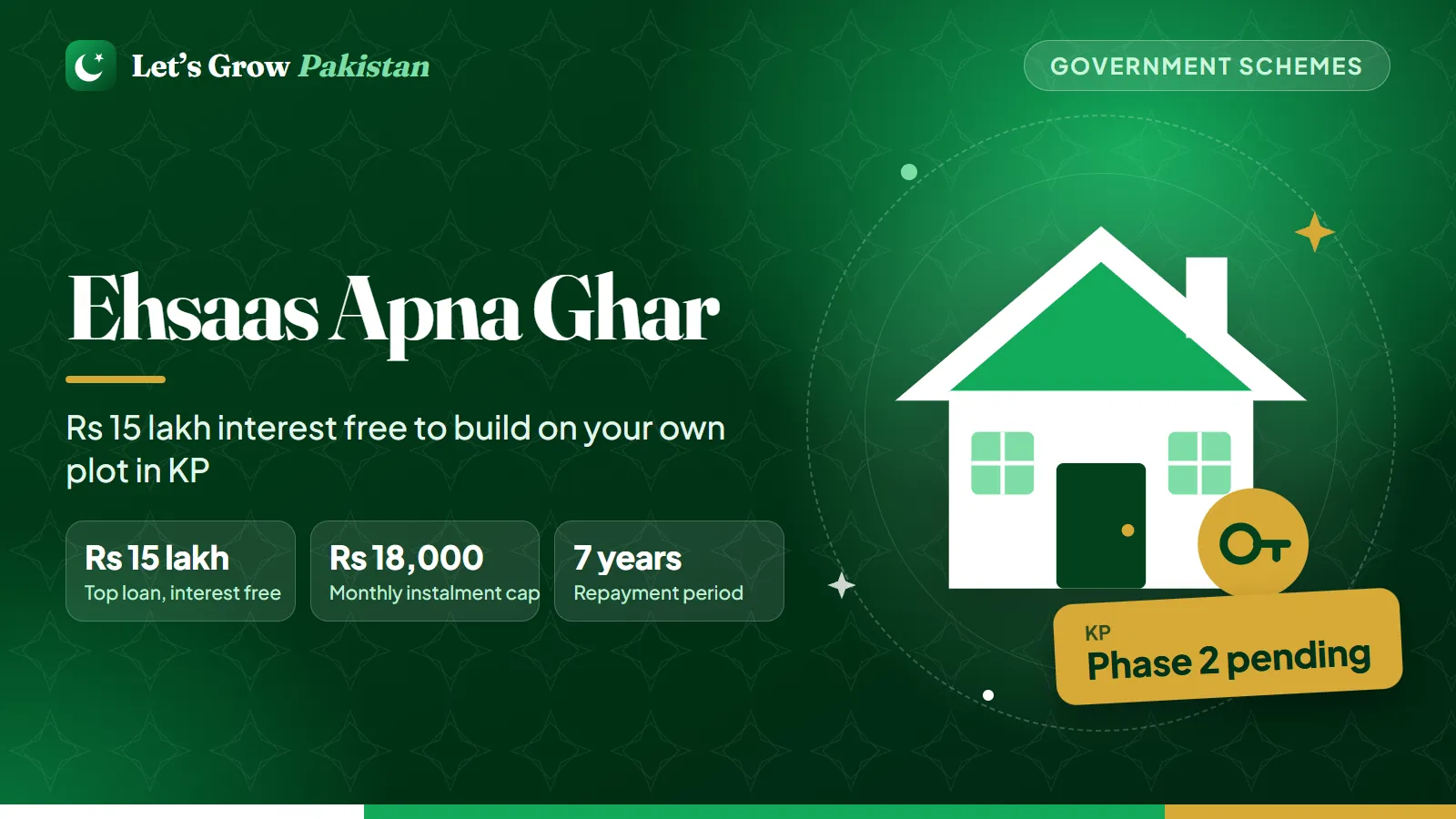
Ehsaas Apna Ghar checked 13 November 2026: Rs 15 lakh interest free over 7 years in KP, who qualifies, how the ballot works and where phase 2 stands.
7 min read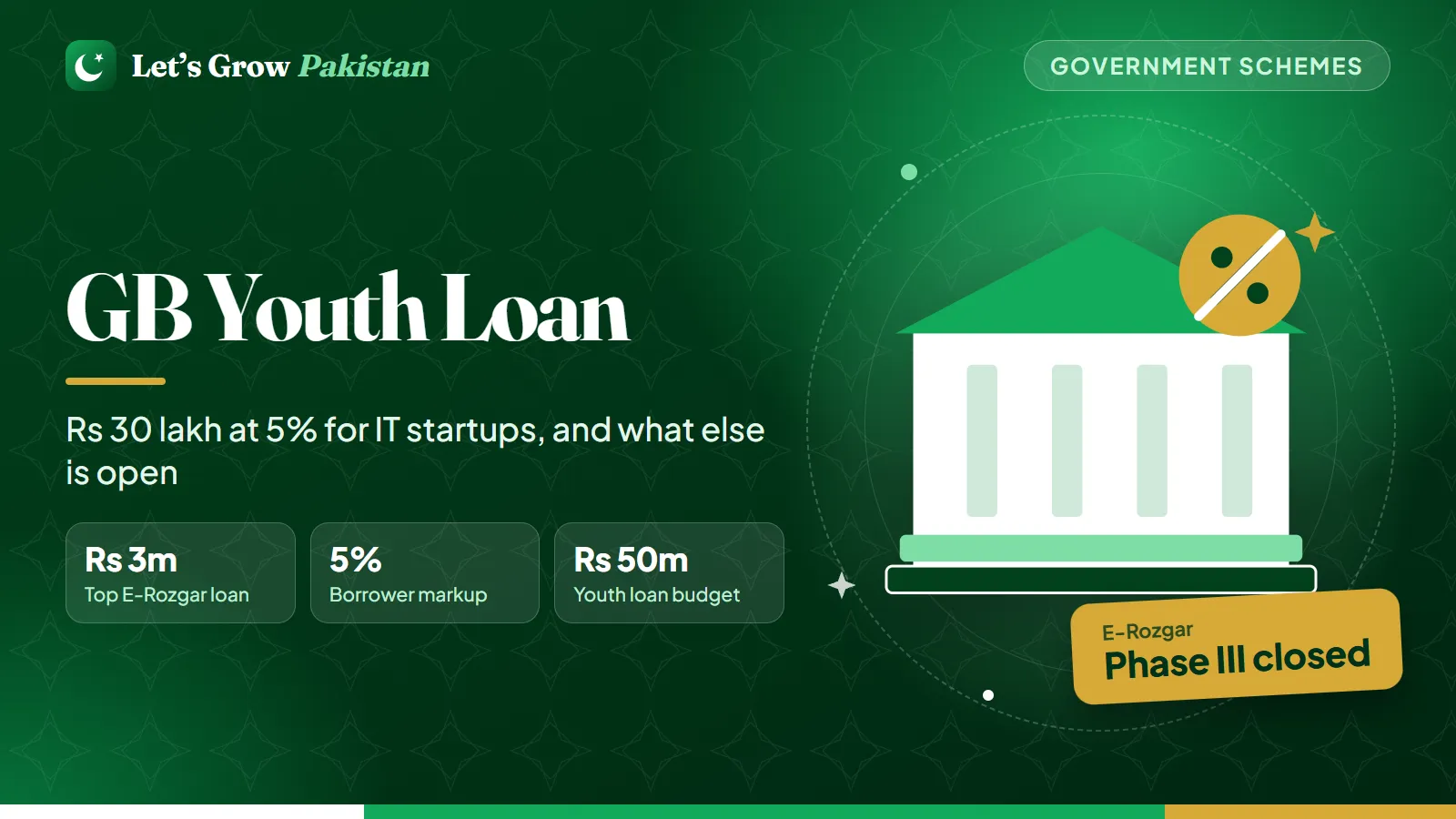
GB youth loan scheme checked 13 November 2026: E-Rozgar soft loans up to Rs 3 million at 5%, Karakoram Bank loans, the federal route and what is unconfirmed.
8 min read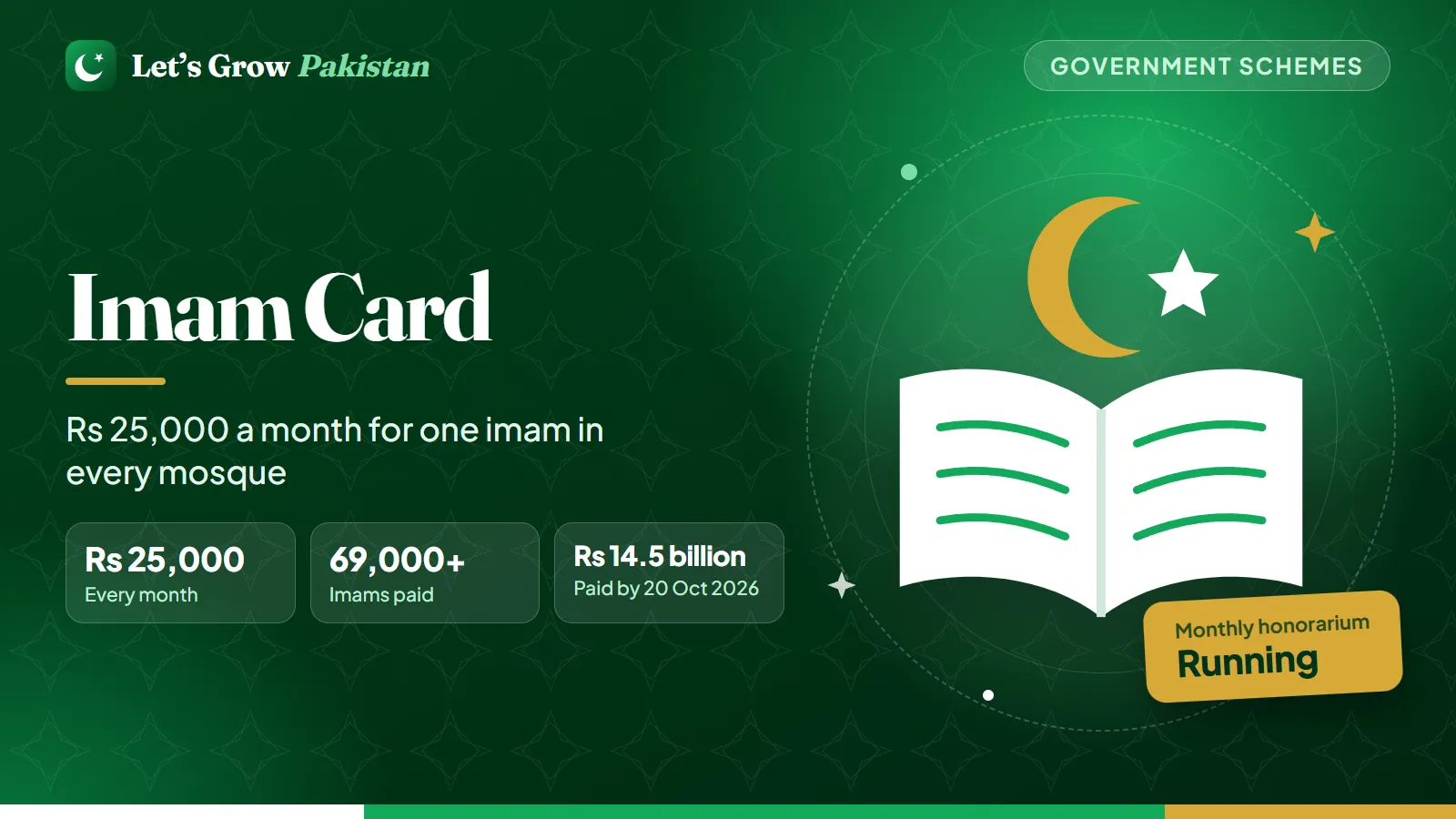
Punjab's Imam Card pays registered mosque imams Rs 25,000 a month through Bank of Punjab. How registration, vetting, payment and status checks work.
10 min read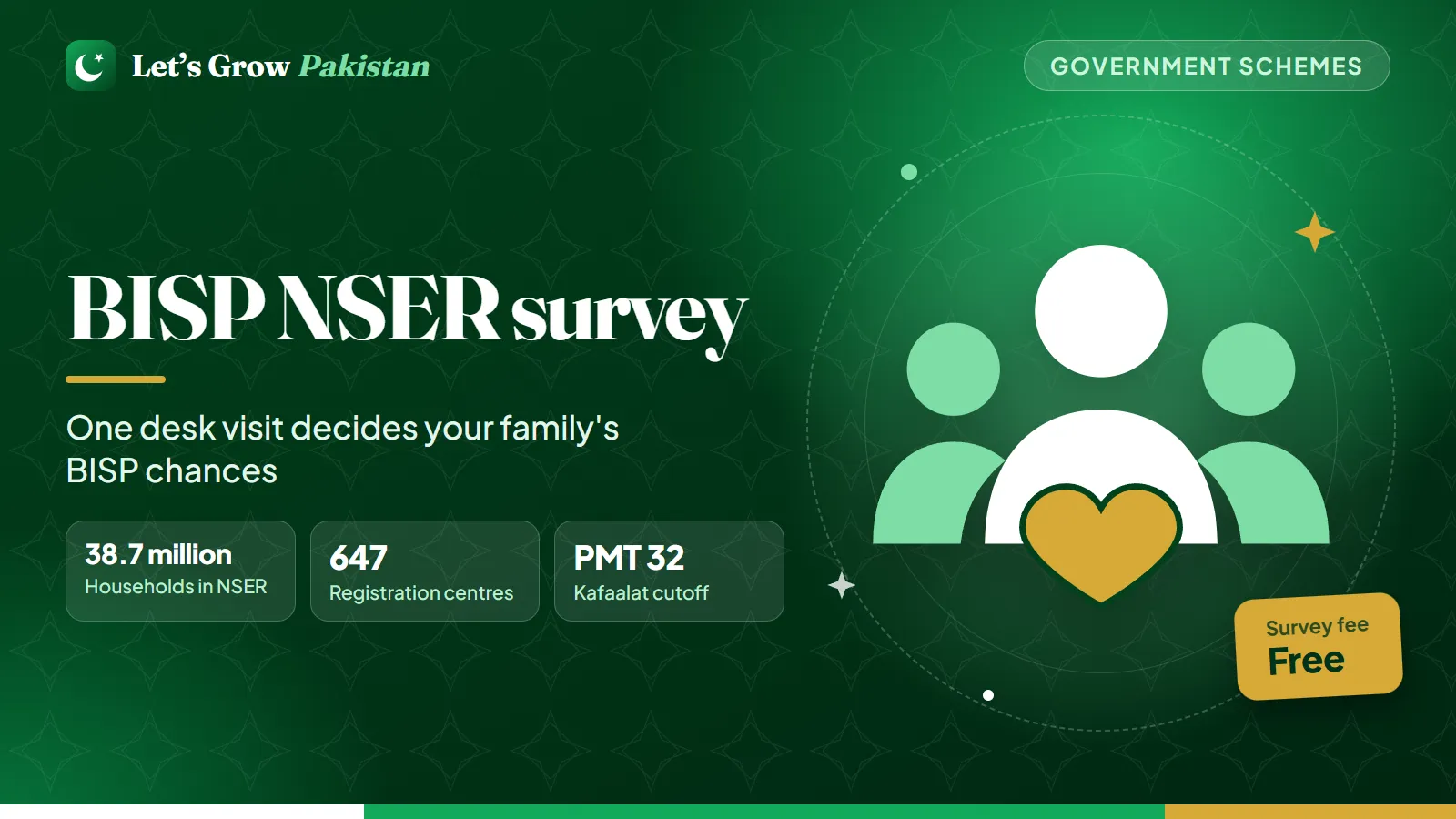
BISP NSER survey registration at the tehsil dynamic desk: documents, steps, PMT score 32 rule, data updates, resurvey timing and the 0800-26477 helpline.
12 min read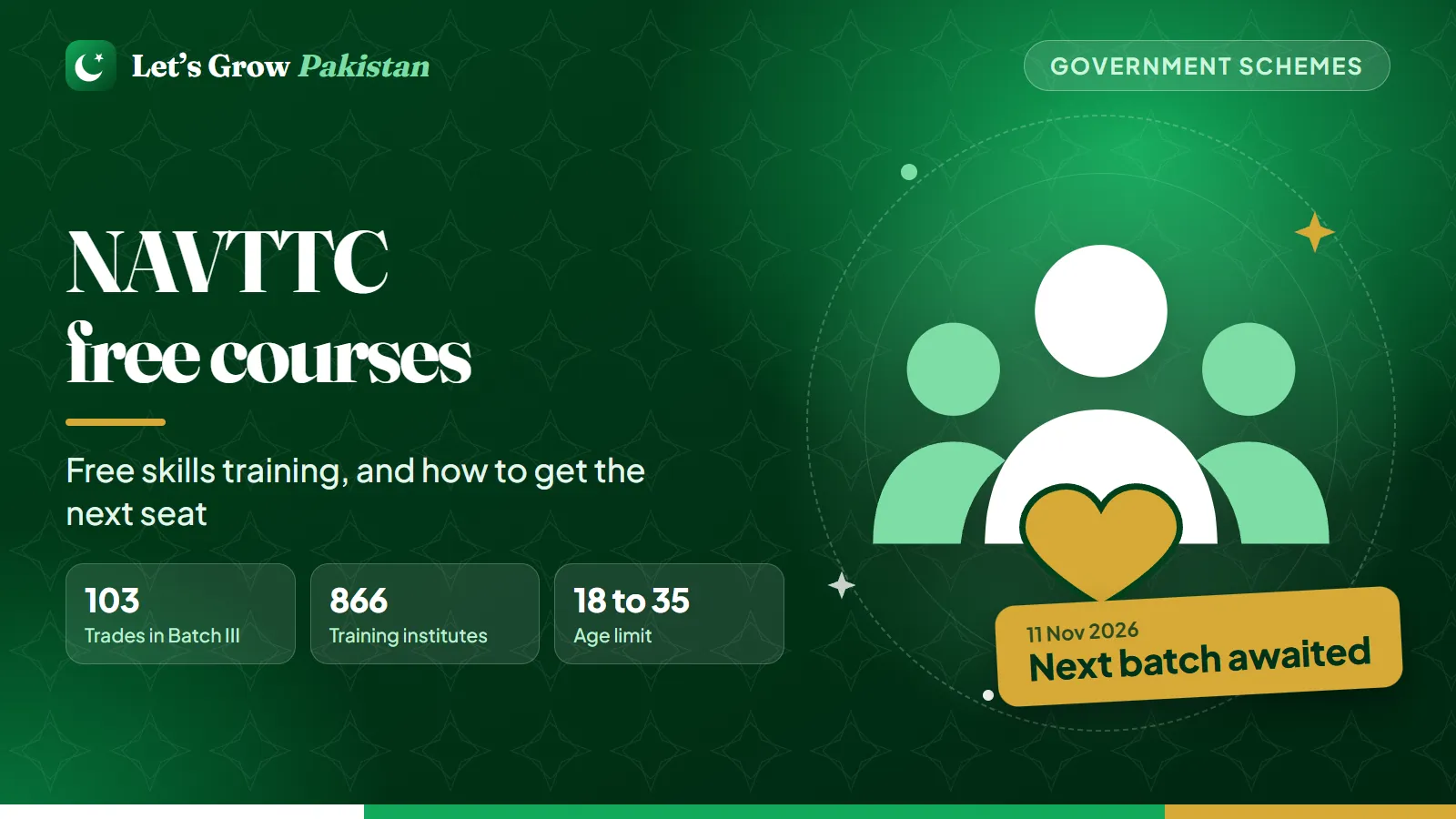
NAVTTC free courses status on 11 November 2026: the 18 to 35 age rule, 103 trades, NTS test, NSIS registration, merit list, stipend facts and certificates.
15 min read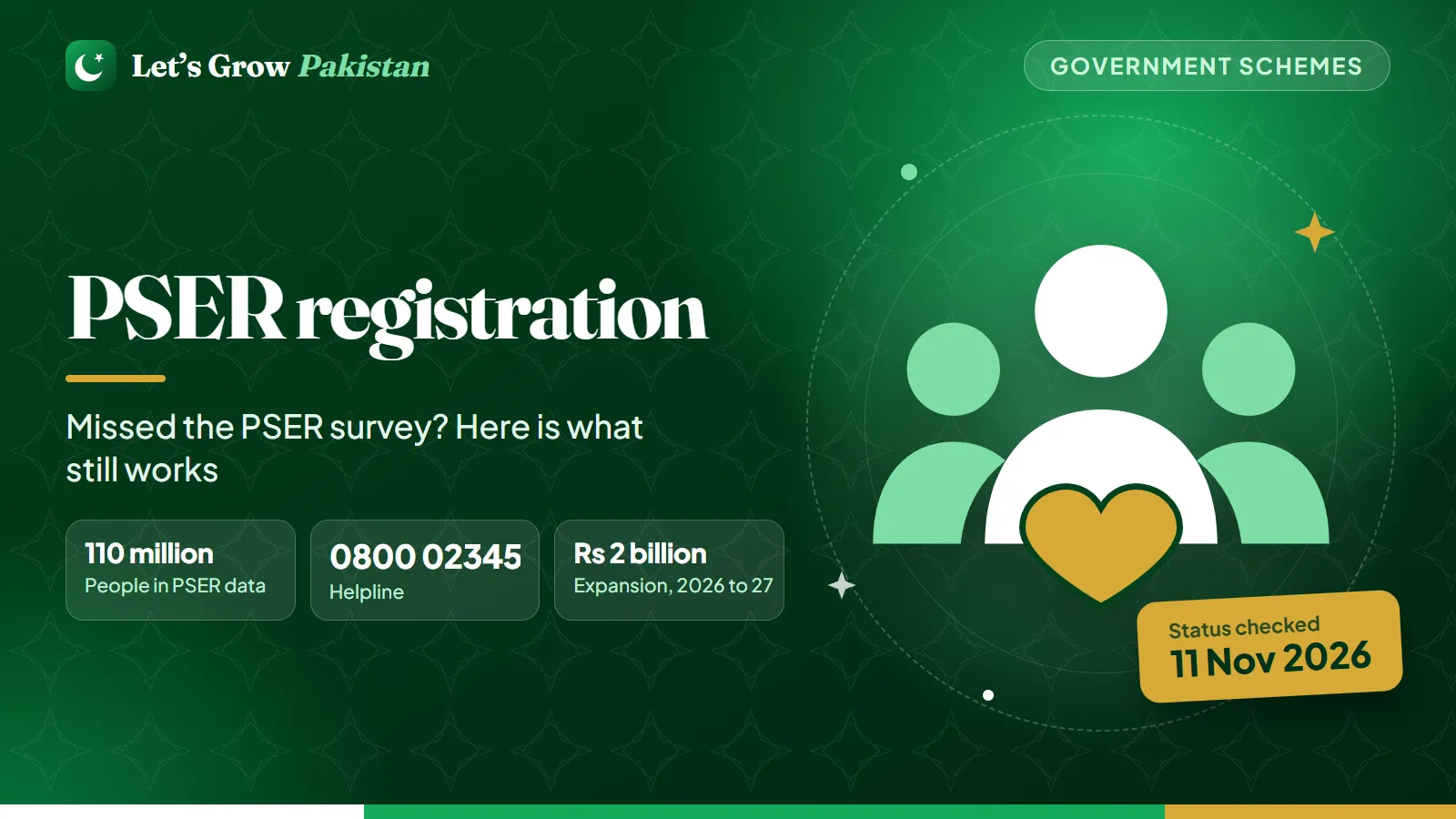
PSER registration online is closed in November 2026. Check PSER status and family status by CNIC, the 0800 02345 helpline, PMT score limits and linked schemes.
16 min read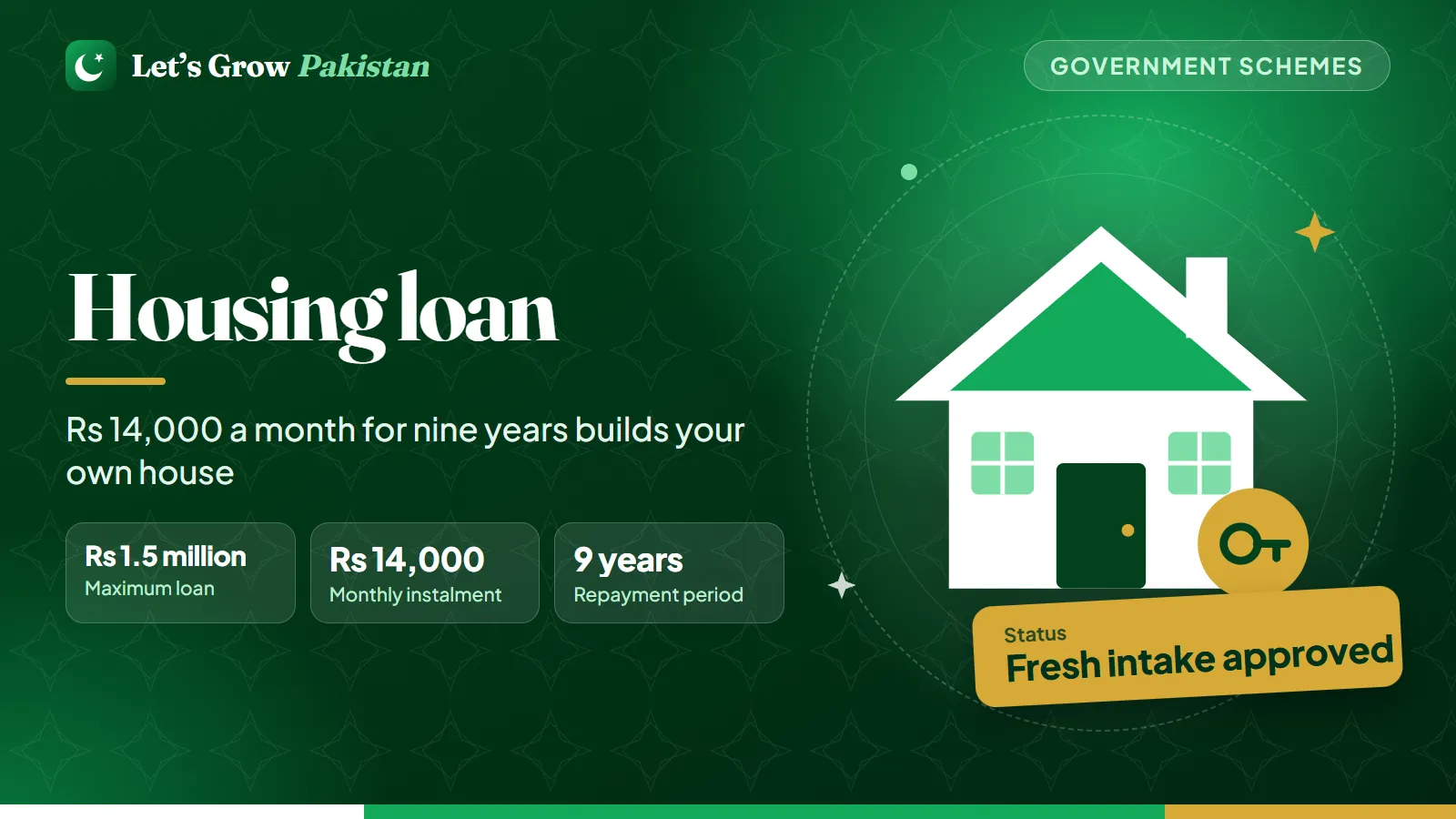
Apni Chhat Apna Ghar lends Punjab plot owners up to Rs 1.5 million interest free at about Rs 14,000 a month. Status, eligibility, tranches and steps, November 2026.
11 min read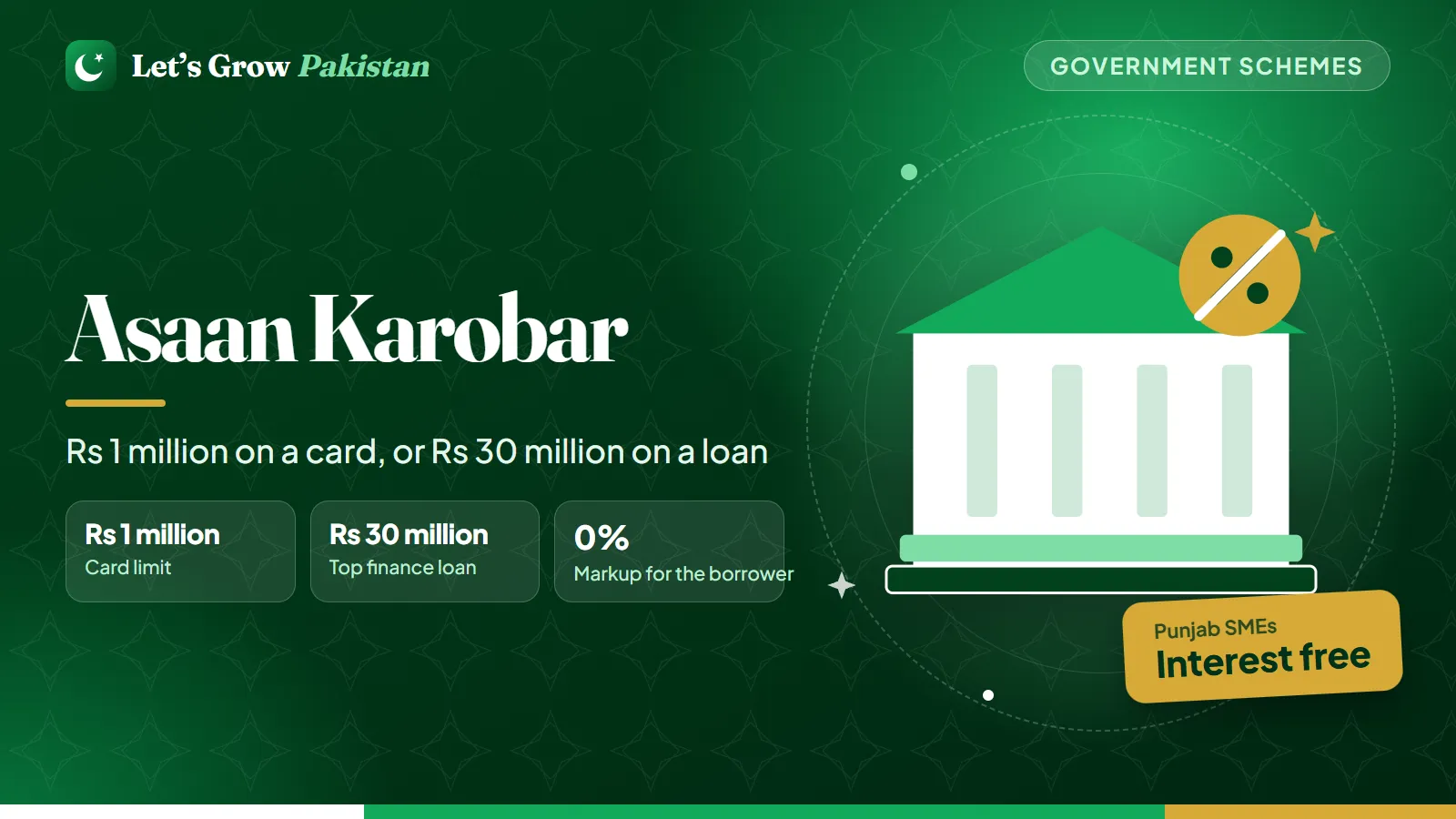
Asaan Karobar Card gives up to Rs 1 million interest free. Asaan Karobar Finance lends Rs 1 to 30 million. Fees, eligibility, repayment and how to apply.
12 min read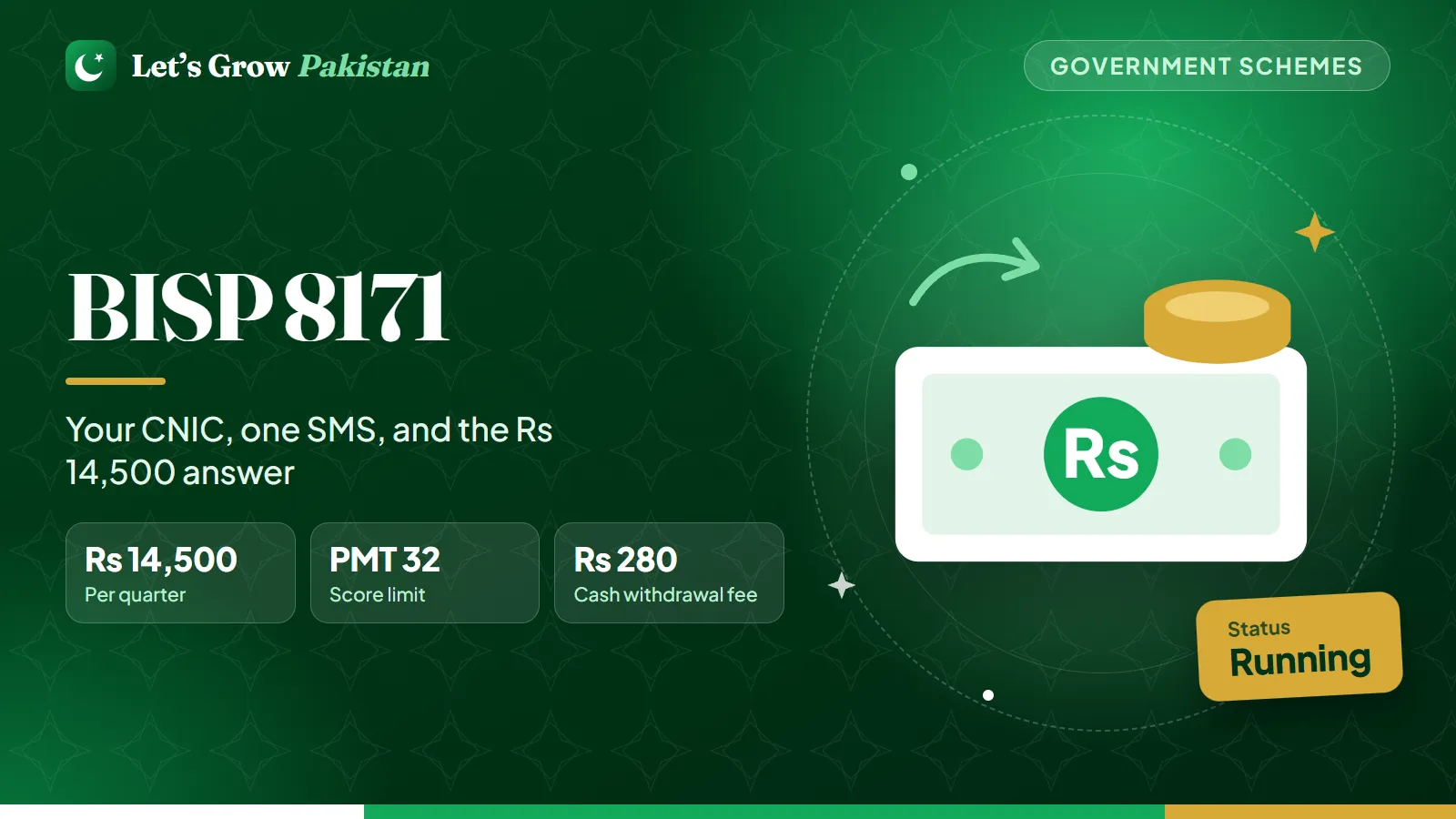
Do the 8171 check online or by SMS with your CNIC. Rs 14,500 Kafaalat amount, digital wallet payment, PMT 32 eligibility, wallet payment issues and complaint steps.
8 min read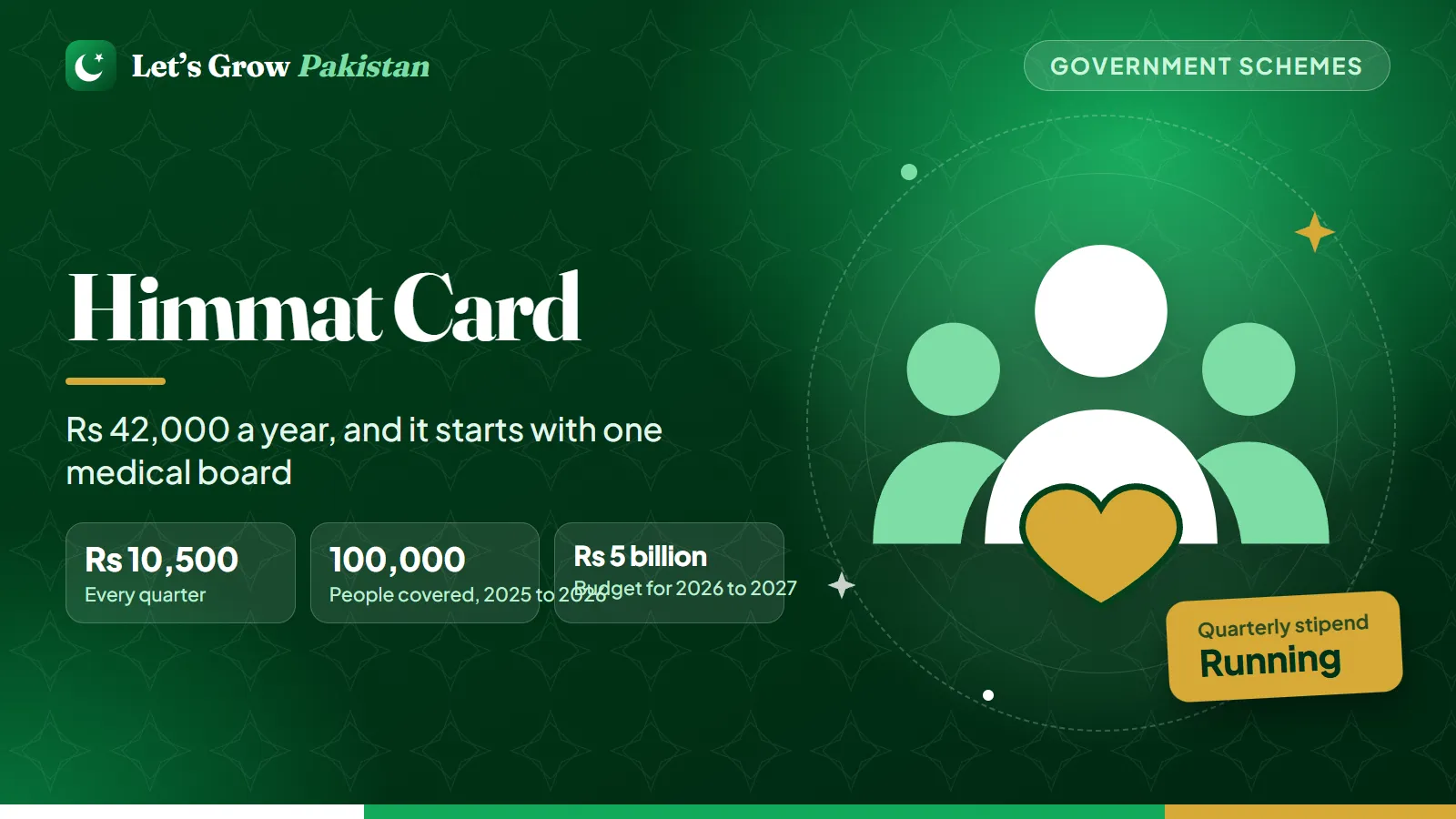
The Himmat Card pays Punjab residents with disabilities Rs 10,500 a quarter. The path from disability certificate to DPMIS registration, eligibility and payment.
12 min read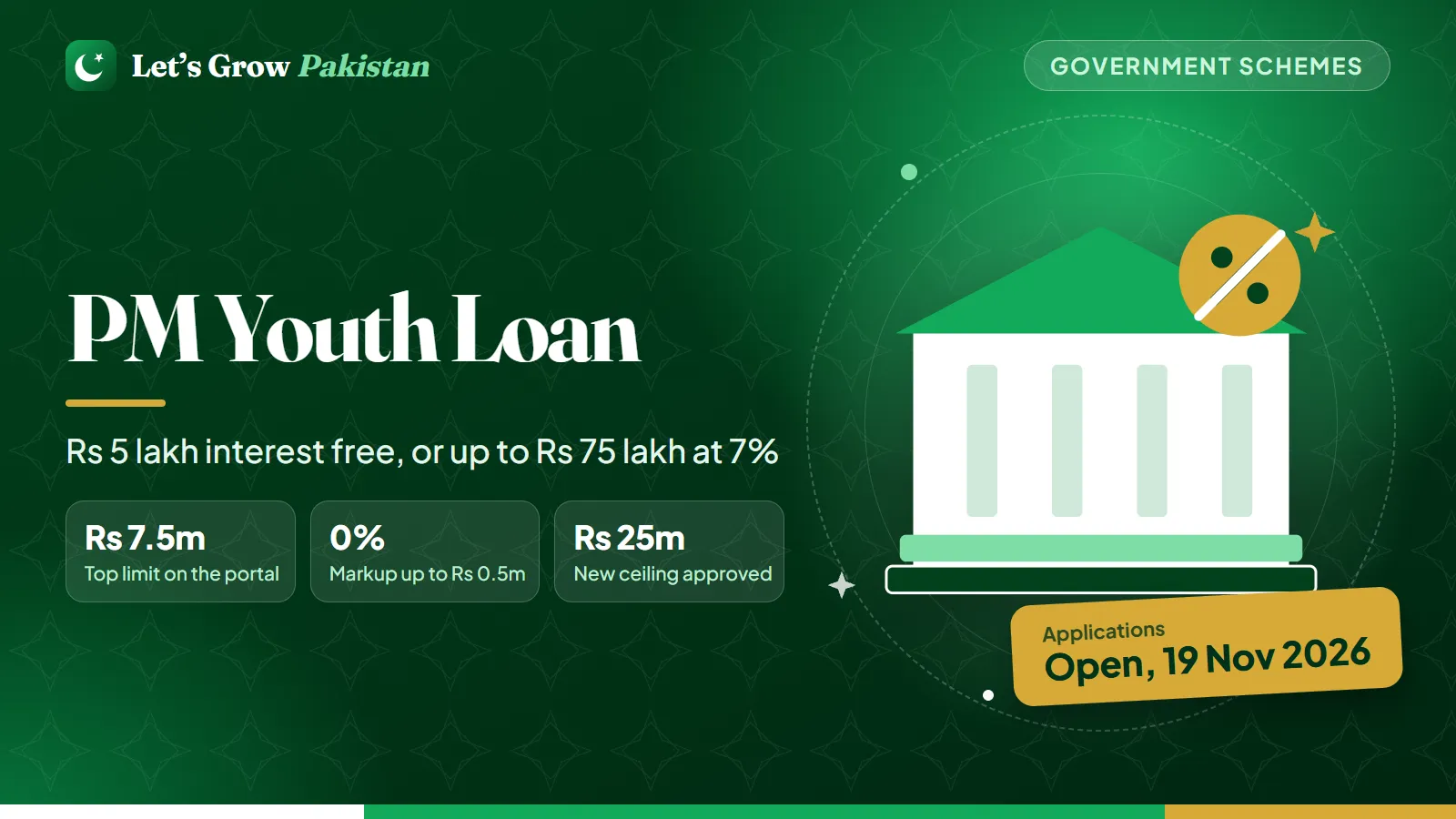
PM youth loan checked on 19 November 2026: three live tiers up to Rs 7.5 million at 0%, 5% and 7%, the approved Rs 25 million tier, documents and status check.
16 min read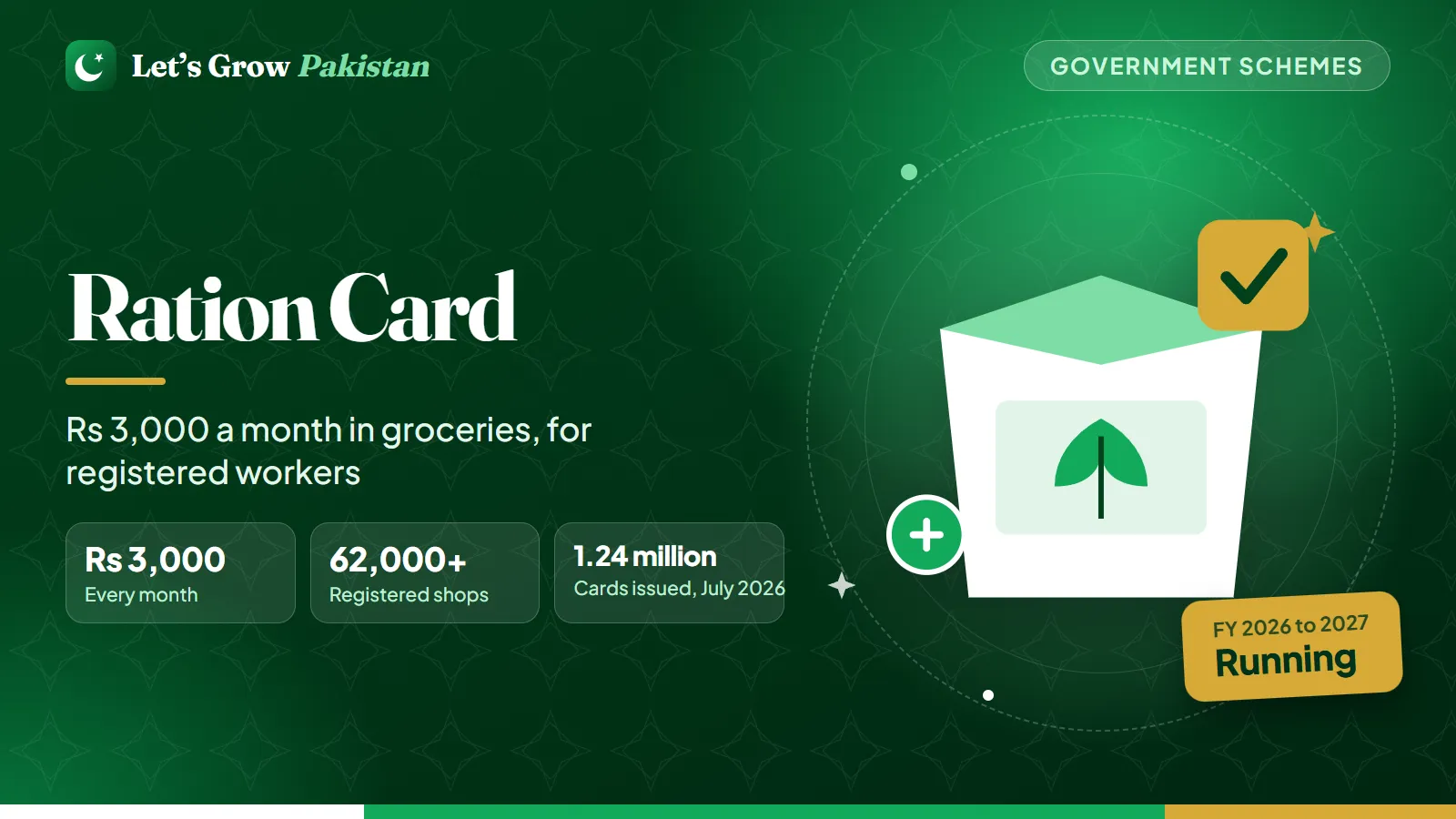
Maryam Nawaz Ration Card gives registered workers in Punjab Rs 3,000 a month for groceries at 62,000 shops. Who qualifies, how to get it, and the 1105 helpline.
9 min read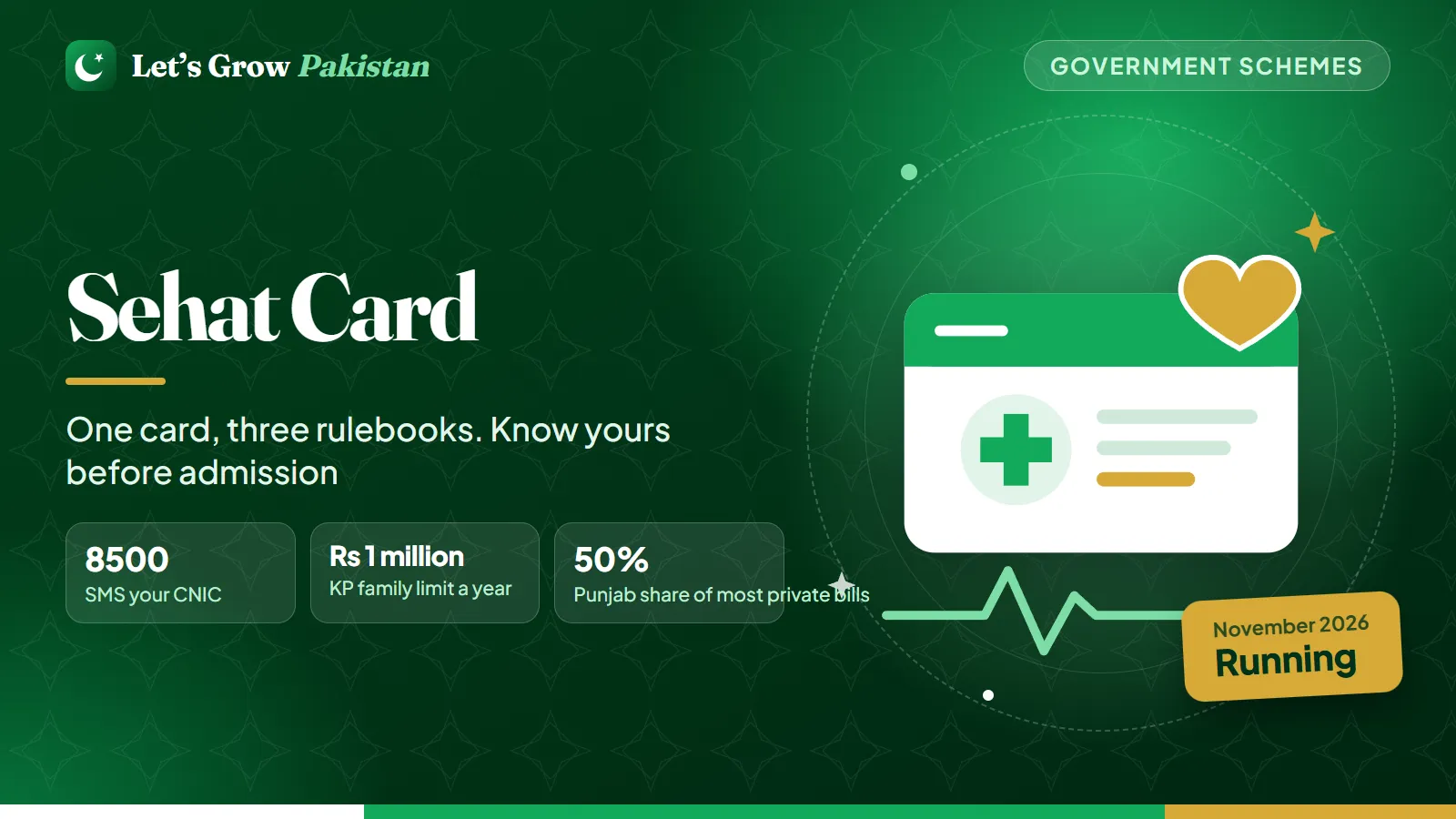
Sehat Card rules now differ by region. Check eligibility by CNIC, then compare Punjab, KP and federal limits, panel hospitals, exclusions and helplines for 2026.
15 min read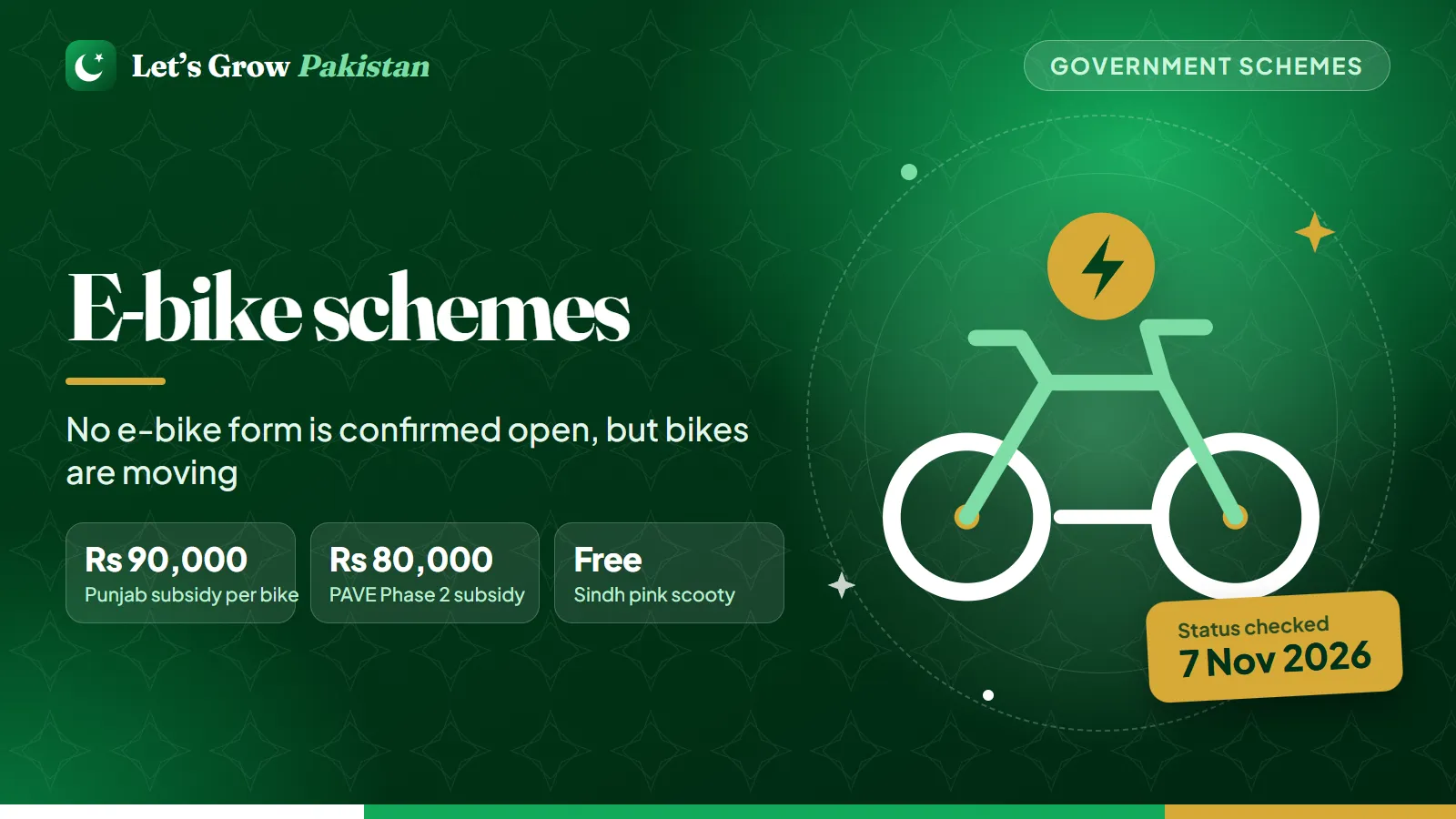
E-bike scheme and scooty scheme status on 7 November 2026: Punjab instalments, Sindh's free pink scooty, PAVE subsidy, Balochistan draw, eligibility and documents.
12 min read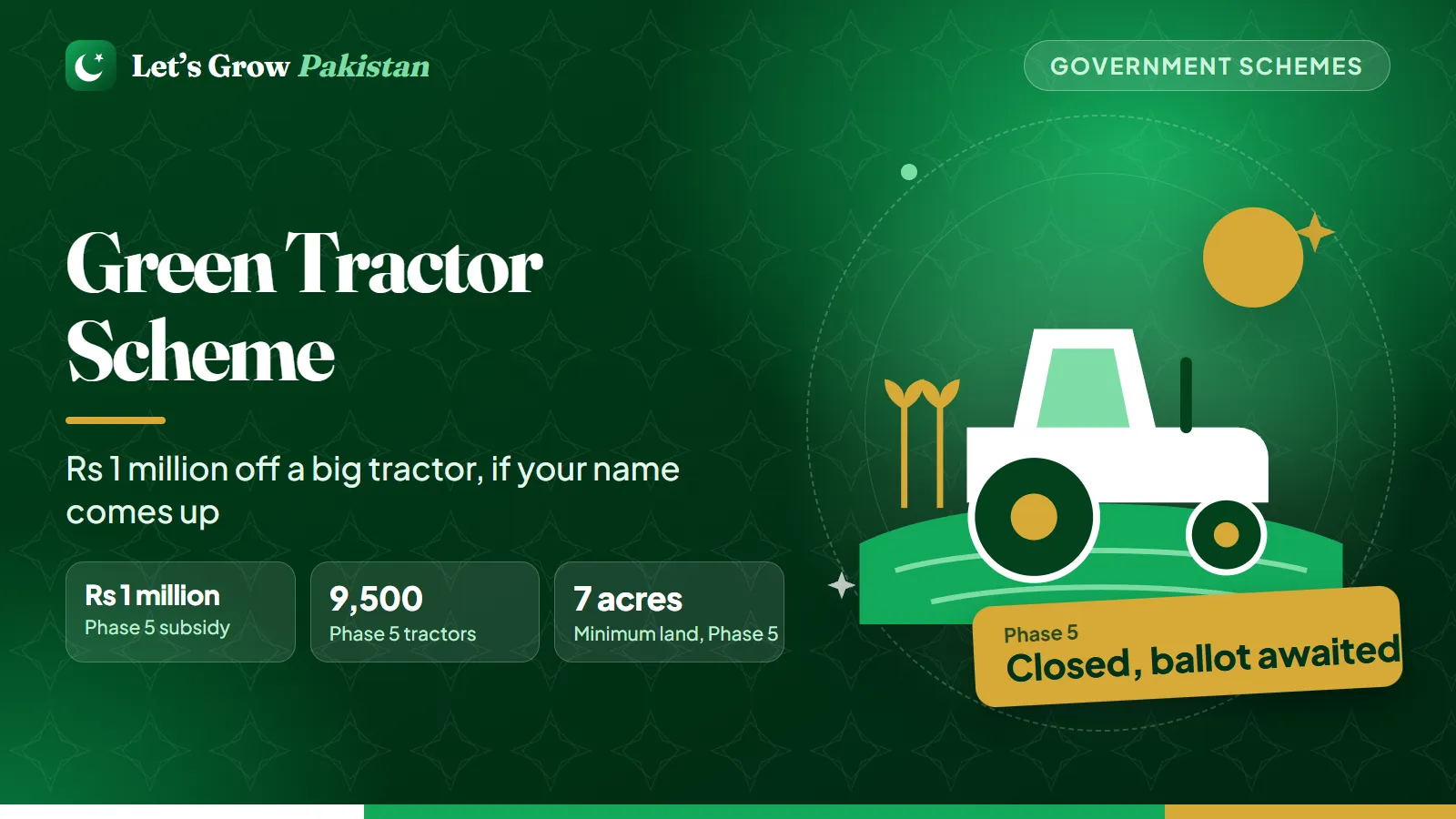
Green tractor scheme Phase 5 closed on 30 October with Rs 1 million off 75 to 125 HP tractors. Subsidy by phase, eligibility, ballot odds and offer letter steps.
9 min read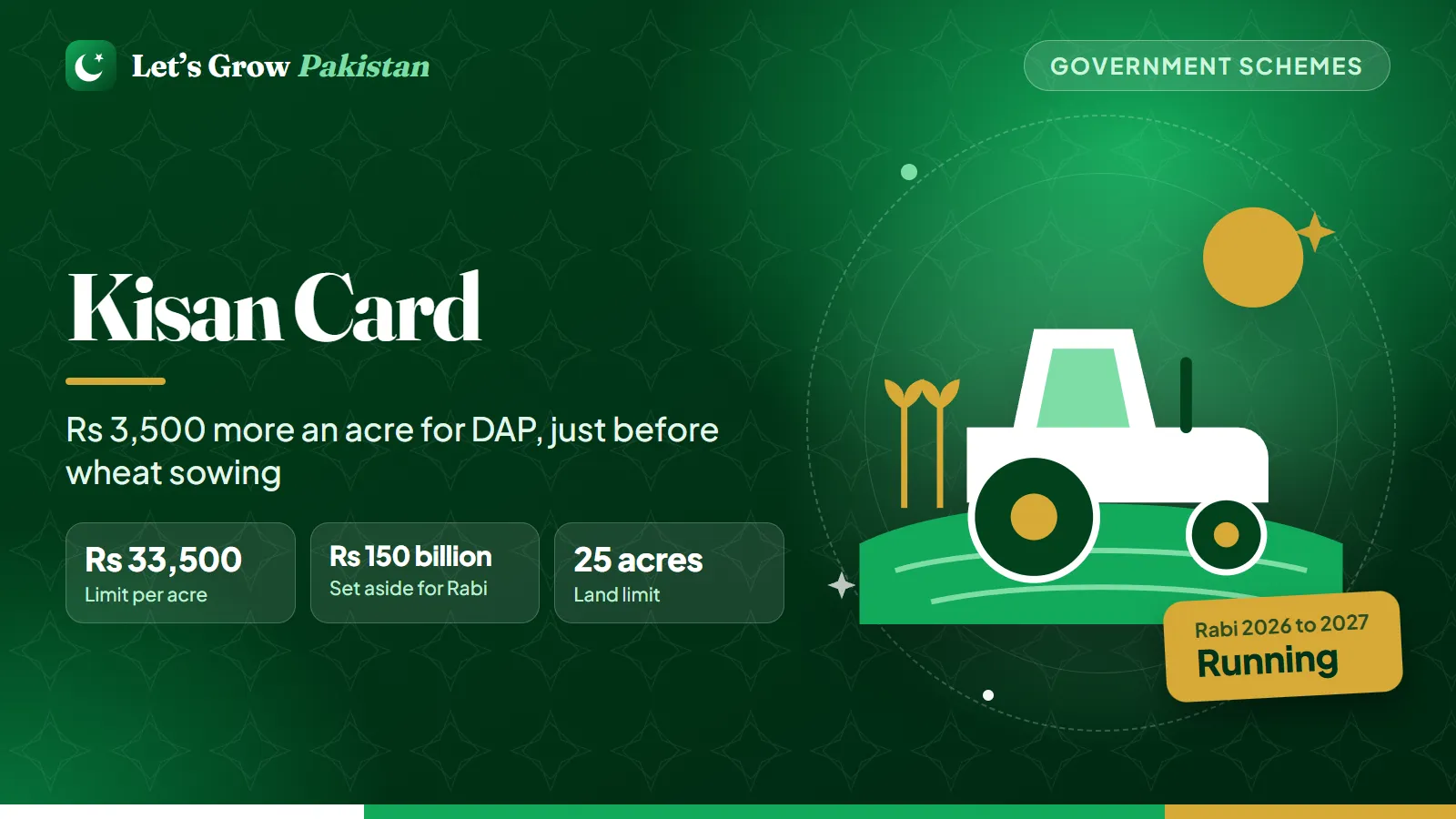
Kisan Card gives Punjab farmers up to Rs 33,500 an acre interest free for Rabi 2026 to 2027. Limits, who qualifies, 8070 registration, repayment and dealer rules.
9 min read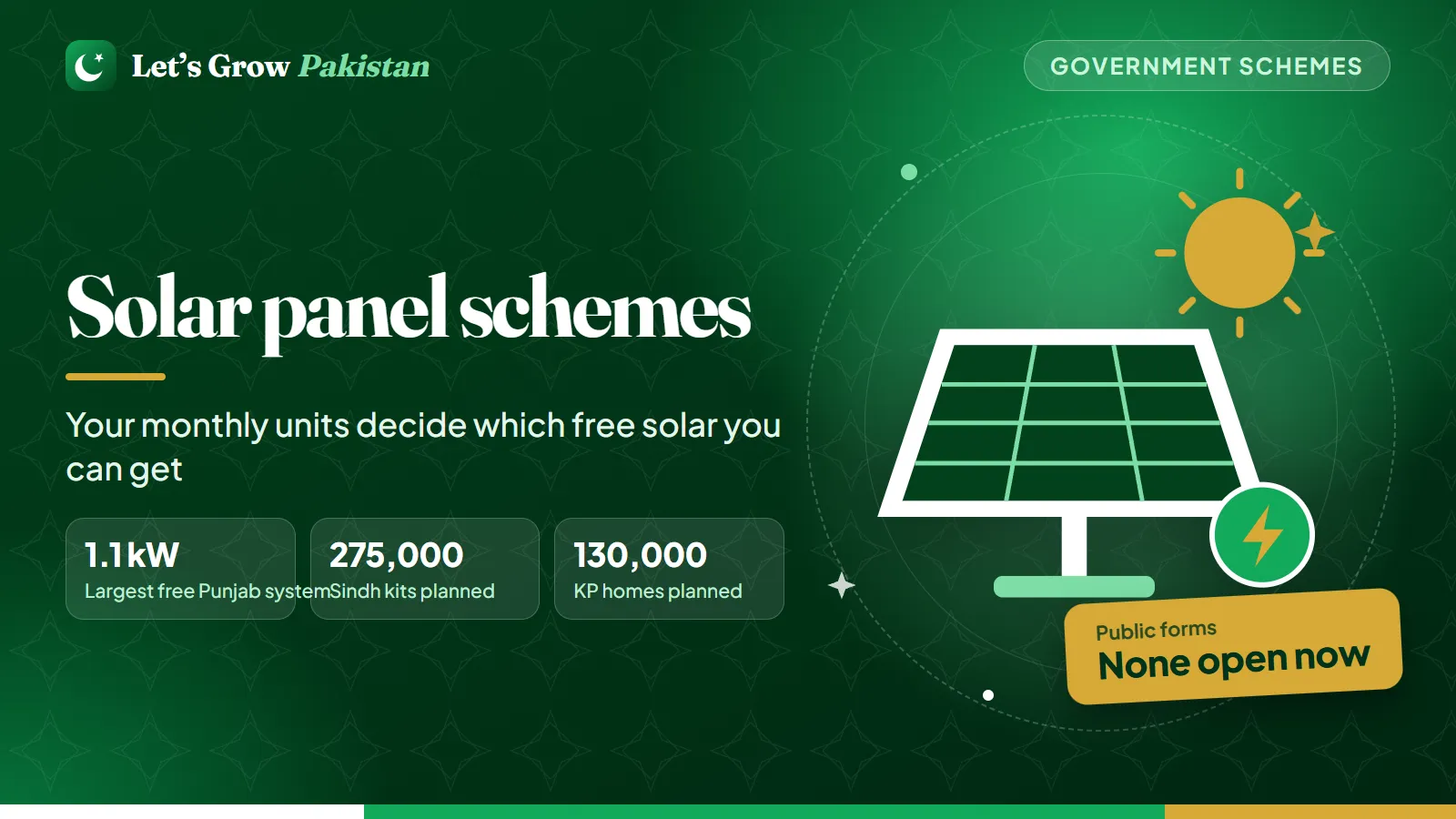
Solar panel scheme status for November 2026: Punjab free systems by units, Sindh free solar kits, KP half price plan, eligibility, balloting and fake site warnings.
10 min readMost support in Pakistan comes from two layers of government. Each layer has its own registry, and your place in that registry decides what you can get.
The Benazir Income Support Programme pays the quarterly Kafaalat instalment to women in low income families. You can do the 8171 check by CNIC, and families not yet listed start with the NSER survey. Youth loans and free skills courses also come from Islamabad, through the PM Youth Loan and NAVTTC courses.
Punjab runs the largest set of provincial programmes. Most of them check your household against the PSER registry first. They include the Himmat Card, the ration card, Apni Chhat Apna Ghar and the Asaan Karobar Card.
The other provinces run their own cards for farmers, health and poor families. Use the region filter in the directory above to see only your province.
A subsidy can be cash, a discounted product, free treatment or a loan without markup. These are the main kinds people search for.
The Kisan Card gives Punjab farmers credit for seed, fertiliser and diesel. The Green Tractor scheme subsidises tractors through a ballot.
The solar panel scheme supports home solar systems. Protected electricity consumers also pay lower slab rates, which our LESCO bill guide explains with a calculator.
Apni Chhat lends money to build a house without markup. The e-bike scheme spreads the cost of an electric bike over easy instalments.
The Sehat Card pays for hospital treatment on a family's CNIC. The ration card helps low income families with the cost of basic groceries.
Applying is free for every programme listed here.
Fake links, agents and SMS messages copy these programmes every day. Use only the official portal, short code or office named in each guide, and never pay anyone to register you.
Each guide shows its status, who qualifies, what it pays and the date we last checked it. Figures come from official portals wherever one exists, and anything we could not confirm is marked.
Federal and provincial governments in Pakistan run dozens of support programmes at once. Some pay cash, some build houses or give land, others lend without markup or cover hospital bills. They change names often, and many close without much notice.
This section lists each scheme with its current status, who qualifies, what it pays and the official way to apply. We separate schemes that are open now from those that have closed, and we mark anything we could not confirm. Figures come from official portals wherever one exists, and each guide shows the date it was last checked.
Applying for a government scheme is free. Fake links, agents and SMS messages copy these programmes every day, so use only the official portal, SMS code or office named in each guide. We never ask for your CNIC or phone number.

Install the Let's Grow Pakistan app
Bills, live rates, schemes and mobile prices in one tap. Opens fast and uses little data.